India Rejects Boundary Commission
India Rejects Pakistan-China Boundary Commission Over Kashmir Territorial Disputes
Anonymous
Key Points
1
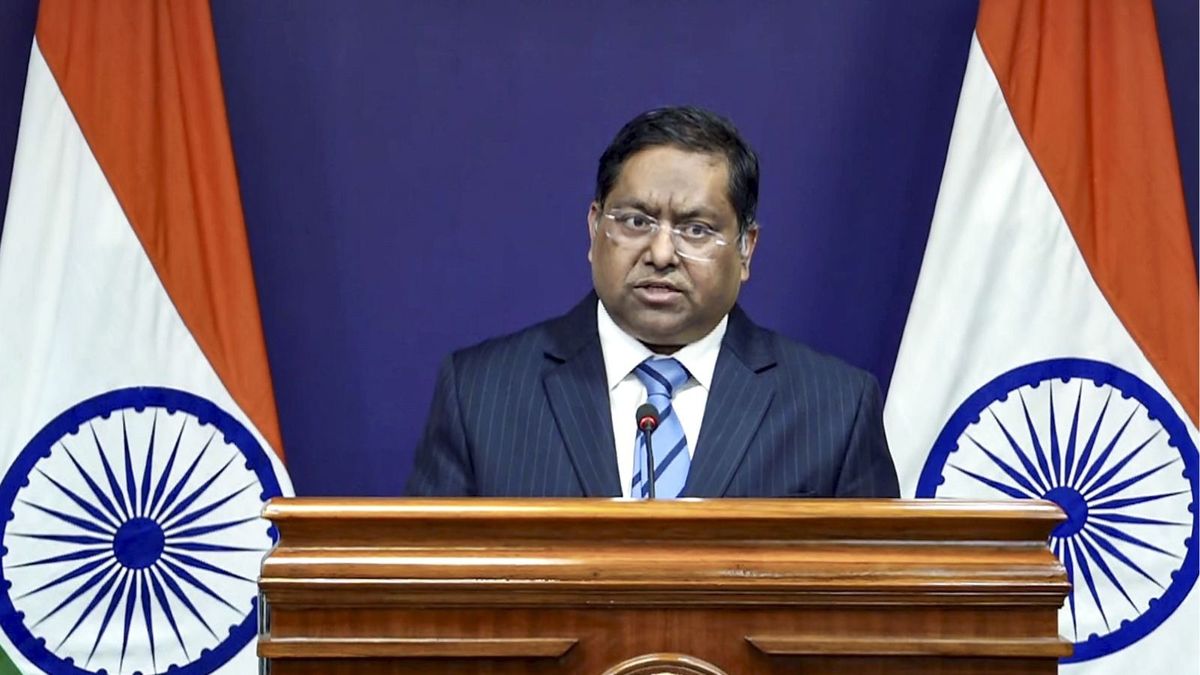
MEA spokesperson Randhir Jaiswal said India’s position was “clear and consistent” in response to media queries about the reported commission.
2
India said any purported China-Pakistan boundary cooperation involving the territories would have “no bearing whatsoever” on its sovereignty over them.
3
Jaiswal accused Pakistan of engaging in “such theatrics” and called on Islamabad to immediately withdraw from the areas India says are under its illegal and forcible occupation.
4
India said it “resolutely opposes and rejects” efforts to alter the status of the territories or legitimize what it describes as illegal occupation, warning that such efforts impinge on India’s sovereignty and territorial integrity.
5
The statement was issued in New Delhi on September 16, 2026, according to India Today, amid India’s continuing opposition to China-Pakistan arrangements involving territories it claims.
India rejected a newly formed Pakistan-China Boundary Joint Commission on September 16, calling it legally baseless and a deliberate attempt to legitimize disputed territory. Ministry of External Affairs spokesperson Randhir Jaiswal said there is "no boundary between Pakistan and China" and that Pakistan has no right to make arrangements involving Jammu and Kashmir and Ladakh, which India claims as integral parts of its territory.
The commission held its first meeting in Islamabad the same day to formalize border management and trade infrastructure. India says the 1963 China-Pakistan boundary agreement that transferred 5,180 square kilometers of the Shaksgam Valley to China was illegal and invalid, and that any new cooperation between Beijing and Islamabad over these lands will have "no bearing whatsoever" on India's sovereignty.
India's Long-Standing Rejection of 1963 Agreement
India has never recognized the 1963 Sino-Pakistan Boundary Agreement, which Pakistan signed without India's consent. Pakistan ceded approximately 5,180 square kilometers—roughly 2,000 square miles—of the Shaksgam Valley to China under that deal. Ministry of External Affairs maintained that Pakistan had no legal right to transfer territory since it illegally occupied parts of Kashmir starting in 1947.
The original agreement itself included a clause acknowledging the border was provisional pending resolution of the Kashmir dispute between India and Pakistan. New Delhi argues this means the arrangement was always temporary and legally incomplete. India Today reported that Jaiswal reiterated India's position that the entire union territories of Jammu and Kashmir and Ladakh are integral and inalienable parts of India.
Pakistan's Illegal Occupation and No Right to Negotiate
India accused Pakistan of "engaging in theatrics" by establishing the joint commission without any legal standing. MEA spokesperson Jaiswal said Pakistan controls territories under what New Delhi calls "illegal and forcible occupation" and therefore cannot make territorial arrangements with any third country. He called on Pakistan to "immediately vacate" these areas.
According to DNA India, India stated the commission is "completely unacceptable" because it lacks legal basis. New Delhi emphasized that any efforts by Pakistan and China to alter the status of the territories or legitimize what it describes as illegal occupation would impinge on India's sovereignty and territorial integrity.
China-Pakistan Economic Corridor and Strategic Overlap
The joint commission's formation comes as China and Pakistan deepen ties through the China-Pakistan Economic Corridor (CPEC), a $54 billion infrastructure megaproject that runs through disputed territory. Hindustan Times noted that key transport and pipeline routes pass directly through Pakistan-administered Kashmir and the Shaksgam region, areas India claims as its own.
The institutionalization of a formal boundary commission allows Beijing and Islamabad to build an administrative record through regular meetings and joint surveys. Analysts warn this creates a documented trail that other countries might view as evidence of settled practice, further entrenching China's control over territory India disputes and raising military tensions along both the Line of Control and Line of Actual Control.
Beijing and Islamabad Frame It as Routine Border Governance
Pakistan and China have framed the joint commission as ordinary bilateral cooperation to manage security along shared borders and facilitate trade. Both nations argue the commission will improve border administration, conduct joint surveying, and establish security protocols for regional connectivity projects like CPEC.
India rejects this framing entirely, viewing the commission as a deliberate move by Beijing and Islamabad to cement Chinese control over disputed lands. New Delhi maintains that any agreements between China and Pakistan regarding the Shaksgam Valley, Gilgit-Baltistan, and other contested areas will have "no bearing whatsoever" on India's sovereign claims and territorial integrity claims.
Sentiment
Mostly NegativeNEGATIVENEUTRALPOSITIVE
Publishers
27
Articles
22
Reach
49
A
AnonymousAuthor


