India-Pakistan Naval Collision Triggers Diplomatic Protest
India-Pakistan Naval Collision Triggers Diplomatic Protest
Anonymous
Key Points
1
Article 10 of the 1991 agreement prohibits Indian and Pakistani ships and submarines from coming within three nautical miles of one another in international waters.
2
The agreement was signed in New Delhi on April 6, 1991, took effect after ratification on August 19, 1992, and was registered by India with the United Nations in December 1994.
3
Indian sources described the Indian warship as being on a routine surveillance mission in the North Arabian Sea when the Pakistani vessel approached it.
4
Government sources alleged that the Pakistani vessel first shadowed the Indian warship and then executed a high-speed bow manoeuvre; they characterized the movement as deliberate rather than an accidental navigational error.
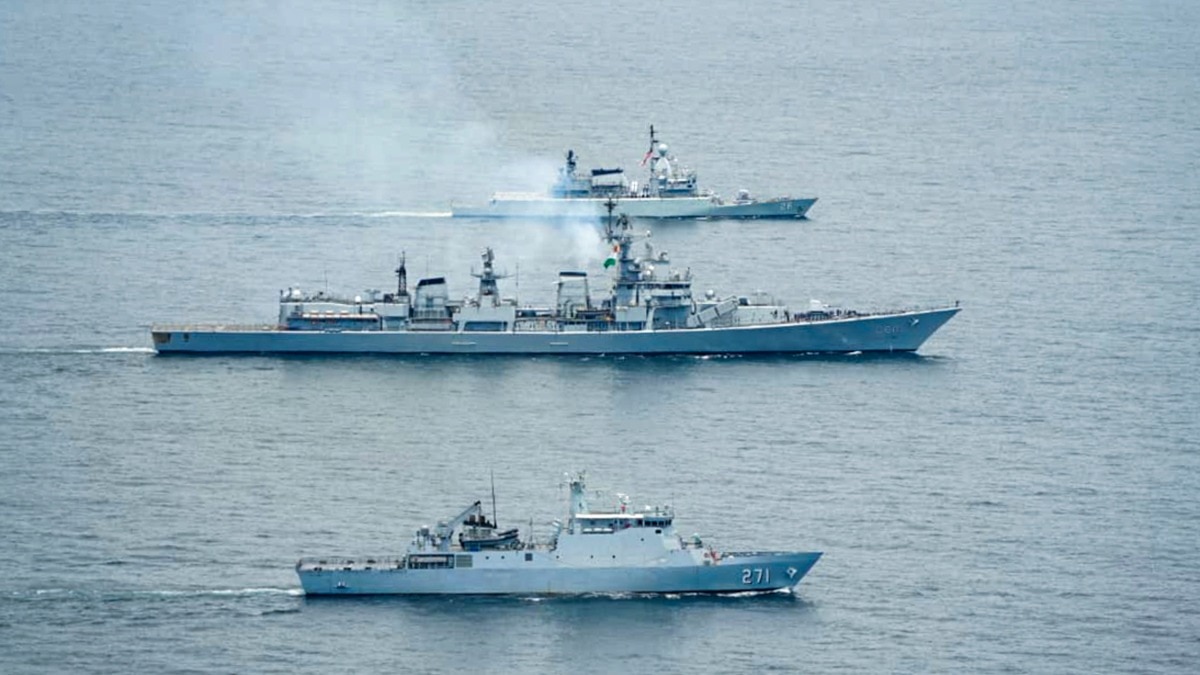
An Indian Navy destroyer and a Pakistani patrol vessel collided in the North Arabian Sea on September 15, escalating tensions between the nuclear-armed rivals. India Today reported that India summoned Pakistan's top diplomat in New Delhi to lodge a strong protest, while Pakistan delivered a counter-protest alleging the Indian ship violated its maritime zone. No major damage or casualties were reported, but both countries blame each other for unsafe maneuvering that violated a 1991 treaty designed to prevent exactly this kind of accident.
The collision exposes a dangerous gap in how the two nations enforce maritime safety rules. Moneycontrol explained that Article 10 of their 1991 agreement requires naval vessels to stay at least three nautical miles apart in international waters. Each side accuses the other of reckless maneuvering, but no independent observers have verified what actually happened that evening 118 nautical miles east of Oman.
India Blames Pakistan for High-Speed Bow Maneuver
India's Ministry of External Affairs said the Pakistani corvette PNS *Hunain* approached the Indian destroyer INS *Kolkata* at high speed and executed an unsafe bow maneuver during a routine surveillance mission. Outlook India reported that Indian sources characterized the move as deliberate, not an accidental navigation error. The Pakistani ship first shadowed the Indian vessel, then suddenly turned across its path, forcing the collision. India called this a direct violation of Article 10 of the 1991 agreement.
The incident occurred while INS *Kolkata*, a stealth guided-missile destroyer, was conducting anti-piracy operations in the Arabian Sea. Indian officials described the Pakistani vessel's conduct as "unacceptable and unprofessional," prompting New Delhi to summon Pakistan's Chargé d'Affaires Saad Warraich for the diplomatic dressing-down on September 16 morning.
Pakistan Accuses India of Entering Exclusive Economic Zone
Pakistan's Foreign Office rejected India's account and alleged that INS *Kolkata* executed aggressive maneuvers dangerously close to Pakistani vessels inside Pakistan's Exclusive Economic Zone. 24 News reported that Pakistan lodged a counter-protest describing the Indian ship's actions as "highly provocative and unacceptable." Pakistan said the Indian destroyer attempted to enter the exclusion zone during Pakistan Navy's biennial SEASPARK-26 exercise, which began September 1 in a designated maritime area.
Pakistan framed the incident as an Indian attempt at espionage and aggressive posturing. The Foreign Office characterized India's presence near the exercise zone as a deliberate violation of international law and bilateral treaties. Pakistan summoned India's Chargé d'Affaires in Islamabad to deliver its own formal protest on the morning of September 16.
The 1991 Treaty Failed to Prevent This Collision
Both nations invoked the Agreement on Advance Notice of Military Exercises signed in April 1991 and ratified in August 1992. Article 10 explicitly prohibits naval ships and submarines from coming closer than three nautical miles to each other in international waters. Moneycontrol explained that the treaty was designed to prevent exactly these kinds of accidental escalations between nuclear-armed neighbors. India and Pakistan registered the agreement with the United Nations in December 1994.
Yet the treaty did not stop the collision on September 15. This marks a repeat of grey-zone tactics: in 2011, Pakistani warship PNS *Babur* rammed Indian Navy vessel INS *Godavari* in similar circumstances. The latest incident occurred roughly 118 to 120 nautical miles east of the Gulf of Oman, in what India calls international waters but Pakistan claims as its Exclusive Economic Zone—a murky boundary that neither side fully accepts about the other.
Tensions Rise as Diplomatic Ties Remain Fractured
This collision worsens already strained relations between New Delhi and Islamabad. Dev Discourse reported that both nations have lacked full ambassadors in each other's capitals since August 2019, leaving only lower-level diplomats to manage crises. The exchange of protests on September 16 morning underscores how quickly naval incidents can escalate when high-level diplomatic channels lie dormant.
The PNS *Hunain*, a 2,600-ton Yarmook-class corvette commissioned in July 2024, reportedly sustained bow and hull damage requiring return to harbor. No casualties were reported from either vessel. Going forward, both navies are likely to increase operational readiness and deploy shadowing assets in the North Arabian Sea, raising the risk of a more serious incident unless both capitals take urgent steps to clarify their maritime boundaries and enforce the three-nautical-mile safety buffer mandated by their 1991 treaty.
Sentiment
Mostly NegativeNEGATIVENEUTRALPOSITIVE
Publishers
43
Articles
16
Reach
59
A
AnonymousAuthor