Climate Disrupts Air Travel
Climate Change Is Driving More Flight Disruptions and Delays Across Global Airports
Anonymous
Key Points
1
During extreme heat, airlines have asked passengers to volunteer to leave aircraft or have offloaded baggage so planes could depart safely; such restrictions have occurred at Las Vegas and other U.S. airports when temperatures exceeded 110°F.
2
The underlying problem is reduced air density: hotter air produces less lift at a given speed, meaning aircraft may need more runway or lower takeoff weight, limiting both passenger numbers and cargo capacity.
3
Long-term data indicate that clear-air turbulence—the type that can strike without visible clouds—is increasing; a study of North Atlantic conditions from 1979 to 2020 found a measurable rise in moderate-or-greater turbulence.
4
Tim Atkinson, an airline risk consultant and former pilot, said aviation is moving from weather disruptions that the system can generally absorb to events that could, with little predictability, affect all of London’s airports simultaneously.
5
Airlines may respond to rising temperatures by moving more departures to cooler parts of the day, while airports may require capital spending on heat-tolerant infrastructure; higher temperatures could also produce more frequent payload limits at airports with short runways.
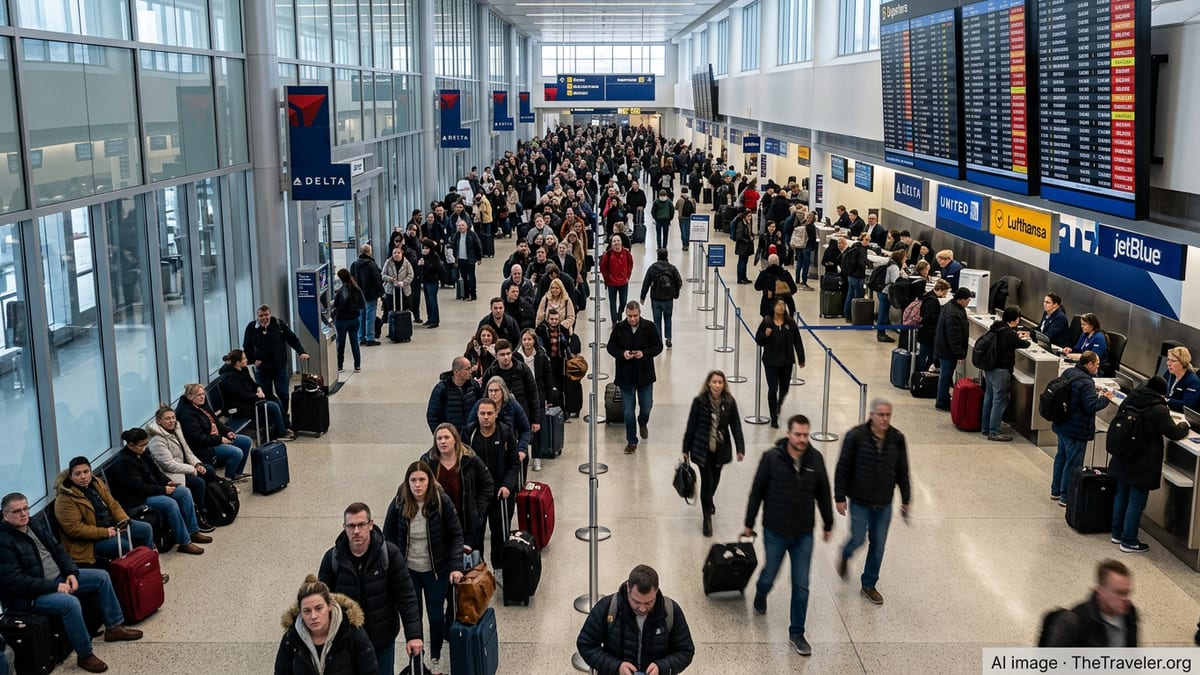
Climate change is making air travel less reliable. Hotter air, stronger storms, and bumpier conditions are forcing airlines to delay flights, offload baggage, and cancel routes—especially during peak travel times. The Traveler reports that as temperatures rise, the risks to aviation are shifting from occasional disruptions to widespread cascading failures that could ground entire fleets.
A late-June storm over southern England showed what's coming. About 900 flights at London's Heathrow and Gatwick were delayed up to 11 hours, and dozens were canceled. Airlines and airports now face a choice: invest in heat-resistant infrastructure and adjust schedules, or accept that passengers will encounter more cancellations, longer waits, and higher ticket prices.
Extreme Heat Forces Airlines to Reduce Flight Loads
When air heats up, it becomes thinner. Thin air produces less lift, so planes need longer runways or lighter loads to take off safely. The Traveler explains that airlines have already begun asking passengers to volunteer to leave aircraft or have offloaded baggage at Las Vegas and other U.S. airports when temperatures exceeded 110°F.
The math is simple but harsh: a full plane on a hot day at a short-runway airport may be too heavy to fly. Airlines must choose between carrying all passengers or taking off on time. As heat waves become more common, this trade-off will hit travelers in their wallets and calendars.
Clear-Air Turbulence Is Getting Worse and Harder to Predict
Clear-air turbulence strikes without warning—no visible storm clouds, no radar blips, just sudden violent shaking. The Traveler reports that researchers tracking North Atlantic conditions from 1979 to 2020 found a measurable rise in moderate-or-greater turbulence. As the climate warms, these invisible danger zones are becoming more frequent and intense.
Pilots and passengers have no defense against clear-air turbulence. It can't be seen in time to change course. Airlines are studying how to predict it better, but experts say some increase is inevitable as atmospheric instability grows.
London's Airports Face Simultaneous Disruption Risk
Tim Atkinson, an airline risk consultant and former pilot, warns that aviation is entering dangerous territory. In the past, the system could absorb weather disruptions. Now, extreme heat or storms could strike all of London's major airports at once. "We're moving from disruptions the system can generally absorb to events that could, with little predictability, affect all of London's airports simultaneously," Atkinson said.
If all three major London airports ground planes on the same day, delays will cascade across Europe. A flight delayed in London backs up connecting flights in Paris, Frankfurt, and Amsterdam. The Traveler notes that northern Europe's already-congested airspace makes these cascading failures more likely and harder to recover from.
Airlines and Airports Prepare for a Hotter, Riskier Sky
Some adjustments are already underway. Airlines are shifting more departures to early morning and late evening when air is cooler. Airports are planning upgrades to heat-tolerant infrastructure—thicker runways, better cooling systems, stronger buildings. But these changes cost millions and take years.
In the short term, travelers should expect higher ticket prices to offset delays and canceled flights. The Traveler reports that airlines will likely build capacity buffers into schedules, meaning fewer seats sold per flight but higher per-ticket revenue to maintain profit margins. Heat-driven disruptions are not coming—they're already here.
Sentiment
Mostly NegativeNEGATIVENEUTRALPOSITIVE
Publishers
14
Articles
8
Reach
22
A
AnonymousAuthor


