Cosmic Binary Explosions
Scientists discover evidence of binary companion stars that violently ended their cosmic marriage.
Anonymous
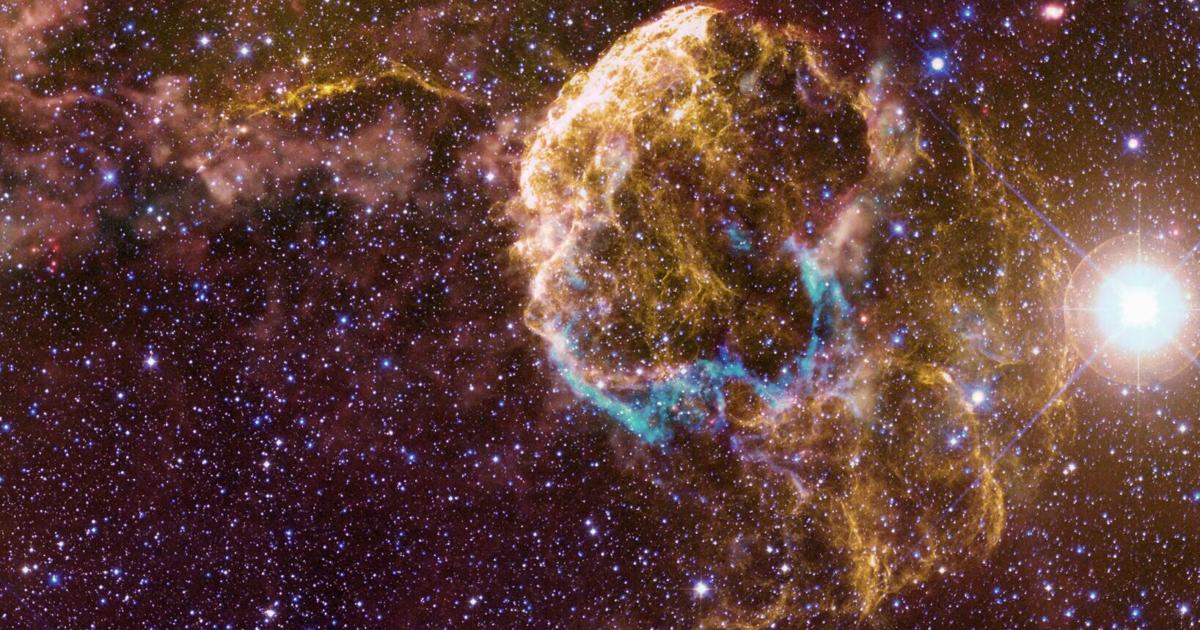
Scientists have found evidence that two massive stars in a binary system — a pair of stars born and bound together by gravity — both exploded as supernovas within a relatively short time of each other, according to Greensboro.com. The discovery is rare and offers a new window into how paired stars live and die together.
The dying stars left behind glowing clouds of gas called nebulae, including the well-known Jellyfish Nebula, according to York News-Times. Scientists say this find gives them new clues about the life cycles of the universe's biggest stars.
Most Giant Stars Are Born in Pairs
Unlike our sun, which travels alone through space, most of the largest stars in the cosmos are born with a companion star, according to NP Telegraph. These pairs are called binary systems. The two stars orbit each other, gravitationally locked together for millions of years.
Scientists describe this bond as a kind of cosmic marriage. But like all relationships, it does not last forever. Eventually, each star runs out of fuel and explodes in a powerful blast called a supernova, according to Channel 3000.
Two Stars Exploded in Quick Succession, Leaving Glowing Remnants
In this newly studied case, both stars in the binary system ran out of fuel and exploded within a short period of each other, according to Wisconsin State Journal. That back-to-back timing is unusual and hard to catch. The explosions left behind nebulae — large, glowing clouds of gas and dust.
One of those remnants is the Jellyfish Nebula, a well-known structure in space that gets its name from its shape, according to Greensboro.com. Scientists matched the nebulae to the original binary system, piecing together the story of how both stars lived and died.
Why This Discovery Matters for Stellar Science
Finding clear evidence of two companion stars that both went supernova is very rare. Scientists say it helps confirm long-held theories about how massive binary stars evolve, according to Missoulian. Until now, most evidence came from computer models, not direct observation.
The discovery gives researchers a real-world example to study. It could help explain how binary stars exchange material, age at different rates, and ultimately explode, according to Waco Tribune-Herald. Each clue brings scientists closer to understanding the full life cycle of the universe's biggest stars.
Binary Stars Are Common, But Hard to Study at Death
Binary systems are far from unusual. The vast majority of massive stars — far larger than our sun — are believed to form in pairs, according to Helena Independent Record. But catching both stars at the moment of death, and finding the evidence they leave behind, is extraordinarily difficult.
Nebulae fade over time, and the window to study them is narrow in cosmic terms. This discovery shows that with the right tools and timing, scientists can reconstruct the final chapters of a binary star's life from the glowing wreckage left behind, according to Buffalo News.
Sentiment
NeutralNEGATIVENEUTRALPOSITIVE
Publishers
12
Articles
12
Reach
12
A
AnonymousAuthor


