New Wild Cat Discovery
Scientists Identify First New Wild Cat Species in a Century in Bolivia
Anonymous
Key Points
1
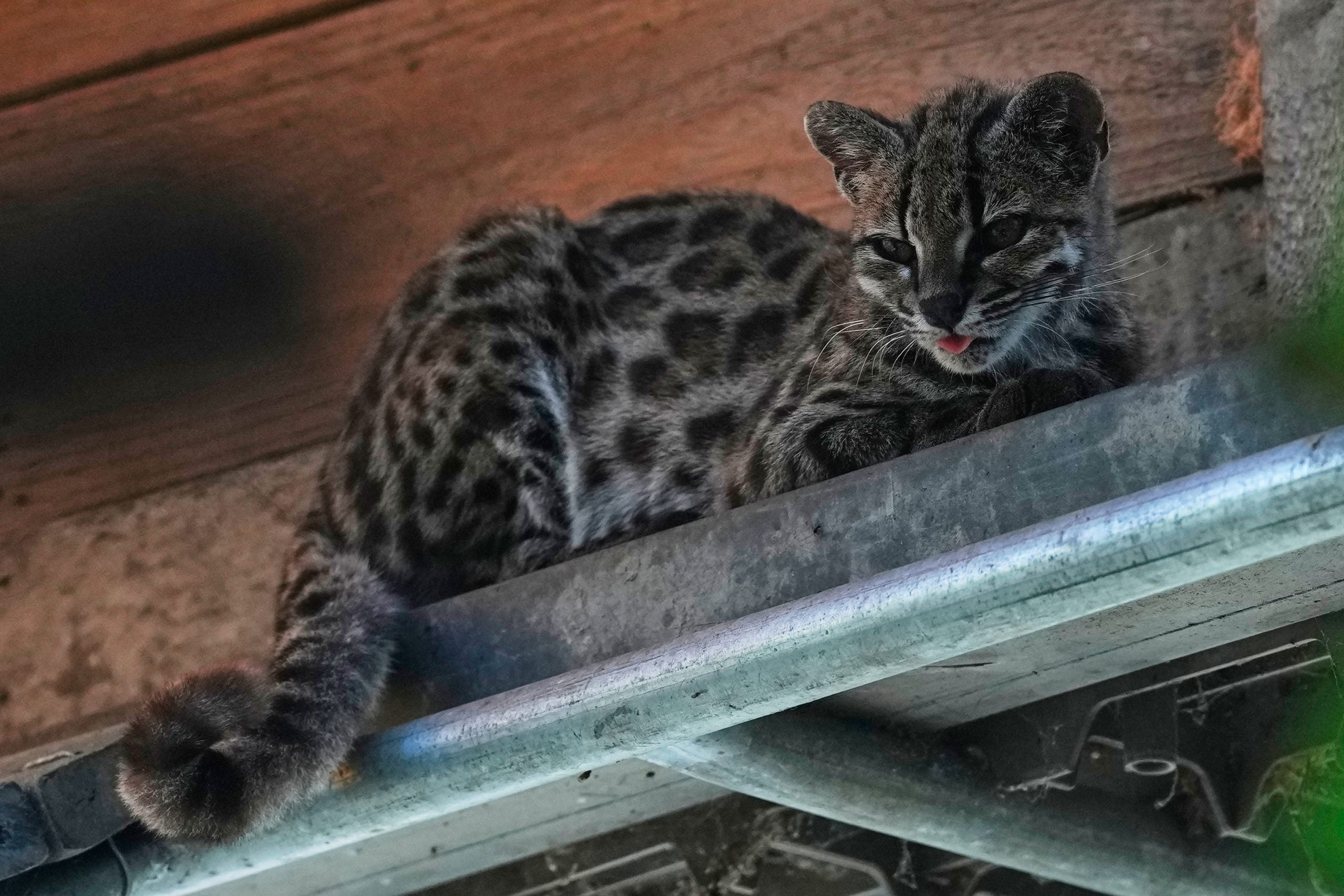
The report was accompanied by AP video footage shot by Adithi Ramakrishnan and Carlos Guerrero, providing visual documentation of the newly identified feline and its sanctuary setting.
2
Images of the cat were associated with Joel Sartore’s National Geographic Photo Ark, linking the discovery to a major wildlife-photography and conservation documentation project.
3
The AP report was produced by Victor R. Caivano, with the story presented as a video-supported account rather than only a written report.
Scientists have identified a completely new wild cat species living at a sanctuary in Bolivia — the first living wild cat species named by science in over a century. The tiny spotted cat, called Leopardus tilcayo and nicknamed "Tigrino," was brought to the Senda Verde Wildlife Sanctuary in 2017 after a local family found it as a kitten along a forest road. Current Biology published the discovery on September 17, 2026, following genetic analysis that revealed the cat was actually a distinct species, not just another variant of the South American tiger cat.
The cat weighs just 3 pounds and measures 18 inches long — smaller than a typical house cat. Researcher Paola Nogales-Ascarrunz, who first observed the animal at the sanctuary, noted that historical naturalists "never collected and never properly described" this species during expeditions spanning the 17th through 19th centuries. The discovery highlights how much hidden biodiversity still exists in South America's cloud forests.
Genetic Testing Revealed a Hidden Species
For centuries, scientists thought all small South American spotted cats belonged to a single species called Leopardus tigrinus, first described in 1775. A new genetic study examining whole-genome sequences from 38 feline samples across Colombia, Peru, Brazil, and museum collections revealed the truth: what scientists had classified as one species actually contained at least five distinct lineages. According to Current Biology, the tiger cats are what scientists call "cryptic species" — animals that look nearly identical to the human eye but are genetically distinct.
The newly identified Leopardus tilcayo diverged from its closest feline relatives approximately 1.4 million years ago. Co-author Eduardo Eizirik explained that genomic analysis was essential because "South American tiger cats were once thought to be a single species based on their similar appearance." Until now, scientists have only evaluated two living individuals of this species — the 10-year-old male at Senda Verde and a female rescued after human conflict.
A Kitten's Accidental Journey to Scientific History
The story began in 2017 when a local family in Bolivia discovered a small kitten along a forest road and initially tried to keep it as a pet. After realizing it could not adapt to domestic life, they brought it to the Senda Verde Wildlife Sanctuary, nestled in the Yungas cloud forest near La Paz. Sanctuary staff named the cat "Tigrino" and provided long-term care. Researcher Paola Nogales-Ascarrunz first observed the animal and recognized it might be something unusual.
Formal genetic research began in 2021 under an international collaboration. Photographer Fernando Faciole documented the sanctuary cat for National Geographic's Photo Ark in September 2026, just days before Current Biology published the official description. The discovery transformed Tigrino into a tourist attraction, drawing curious visitors to the sanctuary to see the world's newest wild cat species.
Urgent Conservation Challenge in Cloud Forests
The formal naming of Leopardus tilcayo puts an immediate spotlight on habitat loss in Bolivia's Yungas cloud forest. Deforestation driven by mining and agriculture threatens the sanctuary's region and the species' wild population. Scientists state that virtually nothing is known about the cat's behavior, exact territorial range, or how many individuals survive in the wild. The designation will help conservation efforts by drawing international attention and research funding to the threatened ecosystem.
Researchers plan to conduct field surveys, camera trapping, and non-invasive genetic sampling to better understand the wild population. The choice of the scientific name tilcayo was deliberate — it honors Indigenous Andean terminology and ecological knowledge that long preceded Western scientific description. Conservation biologists praise the discovery as a breakthrough in revealing what they call "cryptic diversity" — the hidden biodiversity of South America that remains largely unknown.
Sentiment
Mostly NegativeNEGATIVENEUTRALPOSITIVE
Publishers
46
Articles
88
Reach
134
Topics
A
AnonymousAuthor


