UK Tests First Torpedo From Undersea Drone
UK Tests First Torpedo From Undersea Drone
Anonymous
Key Points
1
The torpedo is believed to be the Mk 48 Mod 7 Common Broadband Advanced Sonar System (CBASS), a heavyweight weapon designed to attack both submarines and surface ships using acoustic homing and optional wire guidance.
2
The trial may have taken place at the British Underwater Test and Evaluation Centre near Kyle of Lochalsh, a QinetiQ-operated range that provides real-time, three-dimensional tracking of vessels, weapons and targets.
3
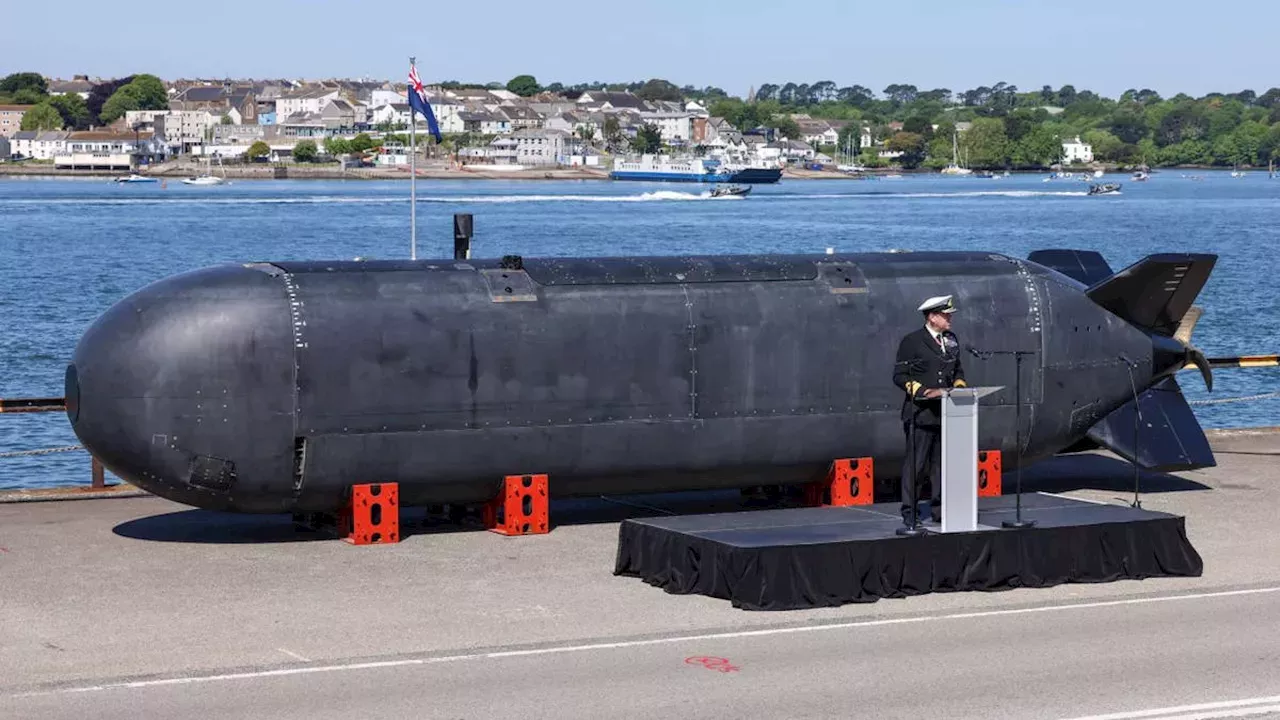
XV Excalibur does not have conventional torpedo tubes. Its Mk 48-compatible launch arrangement may have involved a cradle attached temporarily to the underside of the vehicle because the 5.8-metre torpedo is too long for the submarine’s standard central payload bay.
4
Excalibur was conceived as a technology demonstrator rather than an operational submarine, intended to test underwater autonomy, bespoke payloads and ways for crewed and uncrewed systems to operate together.
5
The vessel can reportedly be controlled remotely from almost 10,000 miles away, highlighting the potential for operators to deploy and manage an armed autonomous underwater system without being physically near the launch area.
Britain has fired a heavyweight torpedo from an unmanned underwater drone for the first time, marking a historic milestone for autonomous weapons systems. The test, conducted with US participation under the AUKUS partnership with Australia, launched a Mk 48 torpedo from the XV Excalibur — a 12-meter, 19-ton experimental submarine built in Plymouth Navy Lookout. The trial demonstrates how crewless vessels could one day carry weapons once reserved for manned submarines, reshaping naval warfare.
UK officials framed the test as critical for defending undersea cables and infrastructure against Russian threats in the North Atlantic LBC. The Excalibur can travel up to 1,000 nautical miles, stay submerged for days, and be controlled remotely from nearly 10,000 miles away LBC. The success signals Britain's push toward a 'hybrid navy' blending crewed and uncrewed systems, a strategic shift with major implications for future deterrence.
How Excalibur Launches Weapons It Wasn't Built For
The XV Excalibur was never designed to carry torpedoes in its central payload bay. The Mk 48 torpedo measures 5.8 meters — too long to fit inside Navy Lookout. Engineers solved this by attaching a temporary cradle to the drone's underside, allowing the massive weapon to be launched externally. This workaround proved effective enough to enable the test, but raises questions about how future autonomous submarines might be purpose-built for weapons integration.
AUKUS Partnership Drives Autonomous Weapons Development
The torpedo test is a joint effort between Britain, the US, and Australia under AUKUS, a defense alliance focused on advanced military technology 24newshd. The Mk 48 Mod 7 is a US-Australian heavyweight weapon designed to hunt both submarines and surface ships using acoustic tracking and optional wire guidance 24newshd. By test-firing it from an unmanned platform, the three nations are signaling their commitment to autonomous naval systems — a technology that could reshape how navies operate in contested waters.
Defending Cables and Deterring Russian Incursions
Russian submarines and surface vessels have increasingly probed undersea cables that carry critical global communications and financial data LBC. Britain's Royal Navy sees autonomous drones armed with torpedoes as a potential counter to these threats in the North Atlantic LBC. By demonstrating that uncrewed systems can deploy serious weapons, the UK aims to raise the cost of interference with vital infrastructure while freeing crewed submarines for other missions.
The Excalibur's Remote-Control Reach Spans the Globe
The XV Excalibur is a technology demonstrator — not yet an operational submarine. What makes it remarkable is its ability to be piloted from nearly 10,000 miles away LBC. Operators could theoretically launch the drone and manage it from a command center far removed from any conflict zone. This remote capability removes geographic constraints, allowing armed autonomous systems to be deployed without putting controllers in harm's way or requiring a nearby support ship.
Sentiment
Mostly PositiveNEGATIVENEUTRALPOSITIVE
Publishers
33
Articles
35
Reach
68
Topics
A
AnonymousAuthor


