UK Develops Turbojet Engines for Drones, Aircraft
UK Develops Turbojet Engines for Drones, Aircraft
Anonymous
Key Points
1
Ukrainian President Volodymyr Zelenskyy said Kyiv is testing a new generation of drone interceptors and argued that Ukraine needs “a functional defence tool in sufficient quantities and with the necessary effectiveness.”
2
Zelenskyy said Russia launched about 2,100 drones at Ukraine in the preceding week, with a significant share believed to be jet-powered Shahed drones.
3
Small turbojets can provide sustained propulsion over long distances, unlike rockets that burn propellant rapidly, while offering greater speed and thrust for a given size and leaving more room for fuel or payload.
4
The programme is being delivered through a co-investment model in which Ministry of Defence funding is matched by Alloyed, rather than through government funding alone.
5
The Ministry of Defence says the initiative supports the Strategic Defence Review’s commitment to strengthening Britain’s defence industrial base and could help support future defence exports.
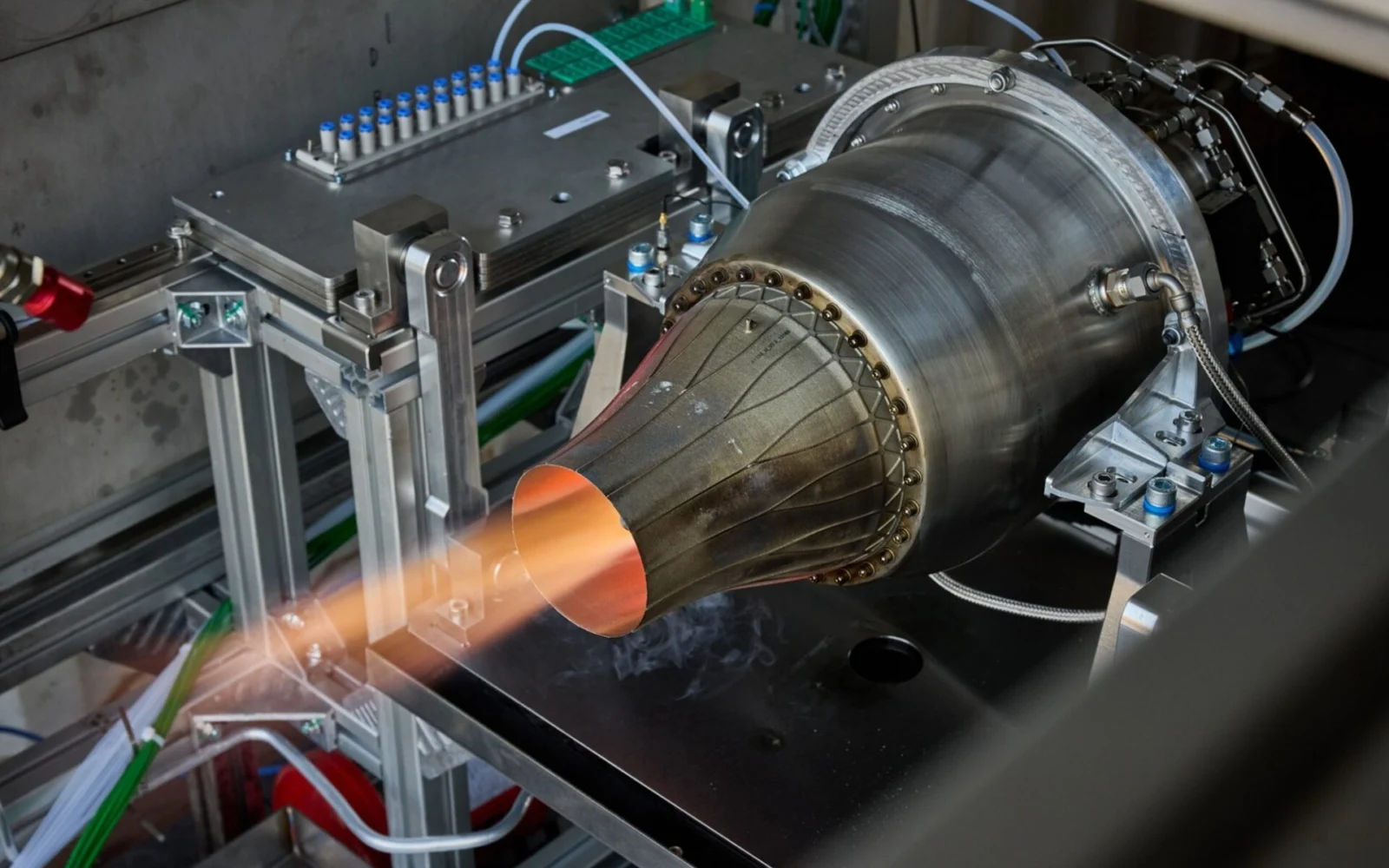
The UK has developed a family of homegrown turbojet engines designed to power everything from small drones to larger aircraft, marking a major step toward energy independence. 3D Printing Industry reports that the Ministry of Defence and startup Alloyed took one 1,100-thrust-newton engine from concept to flight in under seven months—a timeline that typically takes years. A 300-thrust-newton engine has already completed flight testing and entered UK serial production.
The programme creates more than 60 jobs immediately, with 45 more expected, and reduces reliance on overseas suppliers by tapping a network of over 40 UK suppliers. Next Gen Defense notes the engines span 30N to 2,000N of thrust, offering sustained propulsion over long distances—a key advantage over rockets that burn fuel rapidly. The timing matters: Ukraine is pushing for faster interceptors against Russia's increasing use of jet-powered drones.
From Concept to Flight in Seven Months
Speed was the priority. Aerospace Testing International reports the 1,100-newton engine went from design to airworthy status in under seven months—a feat achieved through digital manufacturing and a co-investment model where the Ministry of Defence matched Alloyed's funding dollar-for-dollar. The 300-newton variant finished flight trials and entered serial production, proving the design works at scale.
Cobseo explains the engines are fully designed, built and tested in the UK using digital manufacturing methods. This speeds up development because engineers can simulate, iterate and manufacture without delays from overseas suppliers or complex supply chains. The entire family ranges from 30N to 2,000N of thrust, covering multiple mission types.
Why Turbojets Beat Rockets for Long-Range Drones
Small turbojets offer a big advantage: they burn fuel slowly and provide steady thrust over long distances. Rockets, by contrast, ignite rapidly and exhaust propellant within seconds. Machinery Market notes that turbojet engines give greater speed and thrust for their size while leaving more room in the airframe for fuel or payload—critical for drones that need range and endurance.
Ukraine Needs Faster Interceptors Against Russian Shahed Drones
The programme lands as Ukraine battles an intensifying drone campaign. Russian forces increasingly rely on jet-powered Shahed drones, which are harder to intercept because they fly faster and farther than conventional drones. Ukrainian President Volodymyr Zelenskyy said Russia launched roughly 2,100 drones against Ukraine in one week alone, with many believed to be Shahed variants. Zelenskyy stressed that Ukraine needs interceptors "in sufficient quantities and with the necessary effectiveness" to counter the threat.
Sovereign Capability and Future Defence Exports
The UK Ministry of Defence frames the project as strengthening Britain's defence industrial base and reducing dependence on foreign suppliers. Cobseo reports the initiative aligns with the Strategic Defence Review's push for sovereign propulsion technology. Officials suggest the engines could also support future defence exports, turning the UK into an exporter of advanced propulsion systems rather than an importer.
Sentiment
Mostly PositiveNEGATIVENEUTRALPOSITIVE
Publishers
16
Articles
5
Reach
21
A
AnonymousAuthor