AI Health Chatbot Adoption
Pew Survey Finds 34% of Americans Use AI Chatbots for Health Guidance
Anonymous
Key Points
1
The Pew survey underlying the report surveyed 3,488 U.S. adults and was conducted June 22–28, providing a baseline for how widely health AI chatbots are being used across the population.
2
Speed is the leading adoption driver: 28% of Americans use chatbots to get health information quickly.
3
Chatbots are often used as a diagnostic first stop, with 25% using them to figure out what is causing their symptoms and 22% using them to learn more about a diagnosis a doctor has already given.
4
Cost considerations and lab-result interpretation are notable factors: 22% turn to chatbots because information is low-cost or free, and 20% use them to help interpret lab results.
5
User sentiment shows mixed but generally positive views on usefulness, with 47% finding chatbot health information extremely or very helpful, 48% somewhat helpful, and 5% not helpful, alongside mixed comfort about sharing personal health data (29% very comfortable vs. 26% not comfortable).
More than one in three Americans now use AI chatbots for health advice, according to Pew Research Center. The survey of 3,488 adults found that 34% have turned to AI for at least one health-related reason—from checking symptoms to interpreting lab results. Speed is the main draw, with 28% saying they use chatbots to get health information quickly.
Usage splits sharply by age and race. Among adults 18–29, adoption hits 44%. Asian American adults lead all groups at 56%. But only 17% of those 65 and older use health chatbots. Most users find the information helpful, though many worry about privacy and feel they have little control over when AI enters their care.
Speed and Symptoms Drive Chatbot Use
Americans turn to health chatbots mainly for quick answers. Pew Research Center found that 28% use them to get information fast. Another 25% use chatbots to figure out what's causing their symptoms. Twenty-two percent use them to learn more about a diagnosis their doctor already gave them.
Cost plays a role too. Twenty-two percent say they use chatbots because health information is free or cheap. Twenty percent use them to understand lab results from their doctor. This suggests Americans see AI chatbots as a convenient first step before—or instead of—seeing a doctor.
Young and Asian American Adults Lead Adoption
Health AI chatbot use clusters among younger, wealthier, and more educated groups. Adults aged 18–29 use them at nearly twice the rate of older Americans. Pew Research Center's data shows 44% of this age group have tried a health chatbot, compared with just 17% of those 65 and older.
Asian American adults show the highest adoption across all groups at 56%. This gap reveals which Americans feel most comfortable with AI health tools—and which may be falling behind. Age matters more than other factors, with each generation showing lower adoption rates than the one before it.
Americans Want Doctors to Disclose AI Use
Most Americans demand transparency when AI plays a role in their care. Pew Research Center found that a majority across all demographic groups say it is highly important that healthcare providers tell them if AI is used for diagnoses, medical scans, or explaining lab results.
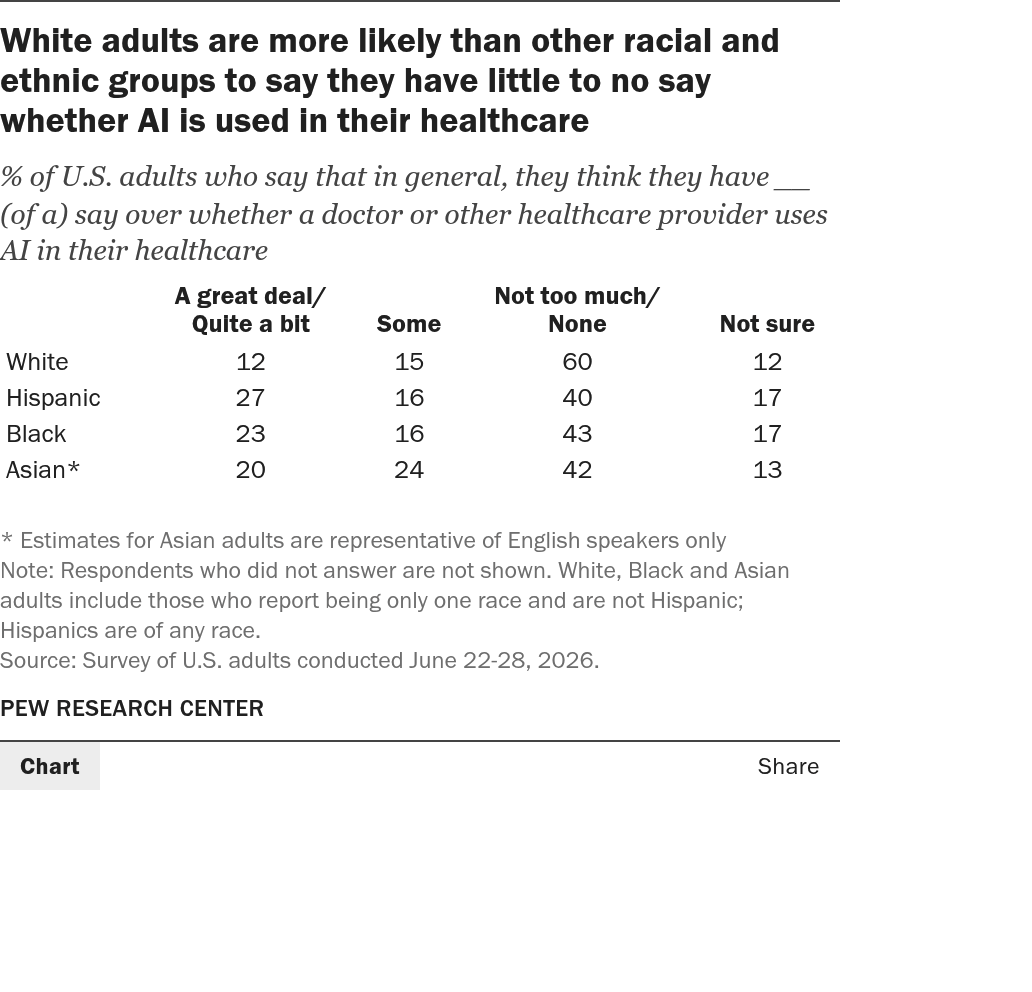
Yet a troubling gap exists. Pew Research Center data shows that many Americans believe they have little control over whether AI gets used in their healthcare. White adults are more likely than Black or Hispanic adults to want AI use disclosed. Overall, Americans say they lack influence over AI deployment—and want more of a voice.
Mixed Comfort About Sharing Health Data
Most Americans find health chatbot information useful. Forty-seven percent say it is extremely or very helpful. Another 48% find it somewhat helpful. Only 5% say it was not helpful. But comfort with sharing personal health data with AI remains divided.
Twenty-nine percent feel very comfortable sharing their health data with chatbots. But 26% are not comfortable. This split suggests Americans see value in AI health tools while worrying about privacy risks. As more people use chatbots, trust—and clear rules—will become more important.
Sentiment
Mostly NegativeNEGATIVENEUTRALPOSITIVE
Publishers
12
Articles
1
Reach
13
A
AnonymousAuthor