German Election Setbacks
German Chancellor Friedrich Merz Faces Major Pressure After State Election Setbacks
Anonymous
Key Points
1
The Mecklenburg-Western Pomerania result could mark the first time the CDU has been shut out of a state parliament since the Federal Republic was founded in 1949.
2
The poor results have intensified calls within the CDU for Merz to step down; the article says his personal popularity has fallen to a record low for a postwar German chancellor.
3
Merz defended continuing his agenda, saying, “I am taking on this responsibility because I want to move our country forward,” and arguing that Germany is capable of reform.
4
A Civey poll before the election projected the Greens at 16% and the SPD at 12% in Berlin, while the Sahra Wagenknecht Alliance and Free Democrats were below the 5% threshold for winning seats.
5
With Berlin’s existing CDU-SPD coalition expected to lose its majority, the most likely alternative identified before the vote was a three-party alliance between Die Linke, the Greens and the SPD; the SPD’s lead candidate was also facing corruption investigations that emerged during the polling period.
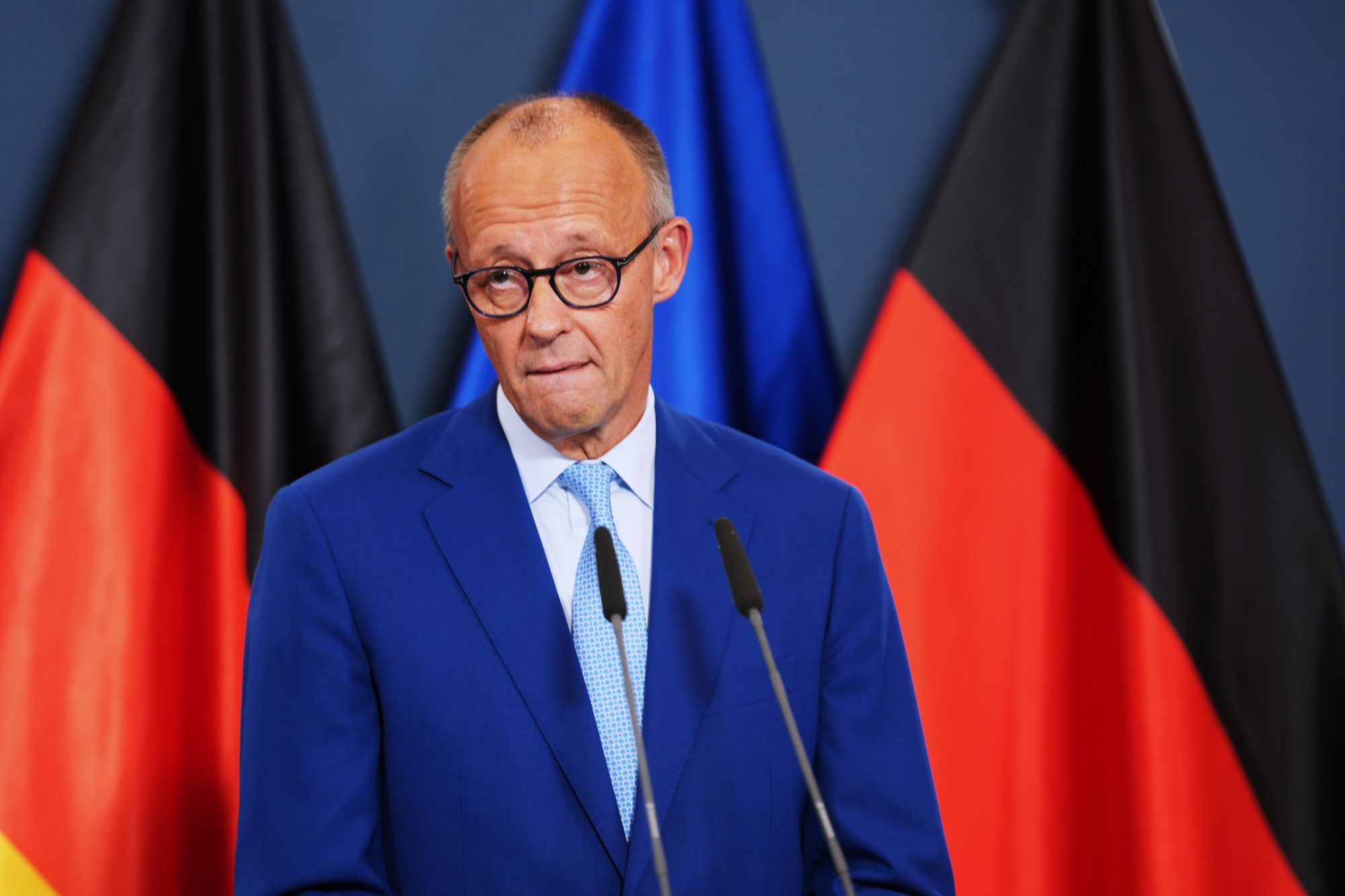
German Chancellor Friedrich Merz's Christian Democratic Union suffered devastating losses in Sunday's state elections, winning just 5.5% in Mecklenburg-Western Pomerania and falling to 20% in Berlin exit polls. Channel 4 reported the far-right Alternative for Germany surged to 37% in the eastern state, while Die Linke claimed 24.5% support in Berlin, forcing complex coalition talks. Merz called the results a "disaster" but pledged to remain party leader and push forward with his reform agenda.
The Mecklenburg result marks a historic collapse for the CDU—potentially the first time since 1949 that Radio Royal says the party failed to enter a state parliament. The double defeat has intensified pressure on Merz, whose personal approval has dropped to a postwar record low. Sunday Guardian Live described the outcome as a "postwar catastrophe" that reshapes Germany's political landscape and threatens Merz's coalition government.
Far-Right and Far-Left Dominate Eastern and Western States
The two elections revealed a sharp geographic split in German politics. Yahoo reported that in Mecklenburg-Western Pomerania, the AfD's 37% victory dwarfed the governing Social Democrats at 35.5%, while the CDU's 5.5% result left it barely above the 5% threshold needed for parliament seats. In Berlin, exit polls showed Die Linke and the Greens gaining ground as traditional establishment parties collapsed.
This represents a stunning reversal from Berlin's 2023 election, when the CDU won 28.2% and Die Linke drew just 12.2%. The shift signals voter frustration with Merz's economic platform and reflects deepening polarization toward protest parties on both ends of the spectrum. No party captured a majority in either state, making coalition negotiations messy and unpredictable.
Merz Vows to Stay Despite Record-Low Personal Approval
Radio Royal reported that Merz acknowledged the electoral disaster but said he would not resign. "I am taking on this responsibility because I want to move our country forward," he stated, insisting Germany is capable of reform despite the political turbulence. His defiant stance contrasts sharply with mounting internal CDU calls for his removal.
Merz's personal approval has fallen to its lowest level for any postwar German chancellor, Channel 4 confirmed. The twin election defeats expose deep fractures in his coalition strategy and raise questions about whether he can stabilize the party before the next federal elections. Former Chancellor Angela Merkel voted by mail but made no public statement on the results.
Berlin Likely Needs Three-Party Coalition to Form Government
With the CDU-SPD coalition expected to lose its majority, Sunday Guardian Live indicated the most likely path forward is a three-party alliance between Die Linke, the Greens, and the SPD. Pre-election polling from Civey projected the Greens at 16% and the SPD at 12%, while the far-right AfD and Sahra Wagenknecht Alliance remained below the 5% threshold in Berlin.
Coalition talks are expected to be complicated by corruption investigations into the SPD's lead candidate, which surfaced during the campaign. A left-wing government would mark a dramatic shift for Berlin and could intensify conflicts with Merz's federal administration over economic policy and spending priorities.
Part of Broader Conservative Collapse Across Germany
The CDU's poor showing follows the AfD's recent victory in Saxony-Anhalt and reflects a wider erosion of support for Germany's traditional center-right party. Channel 4 noted the results signal voter rejection of Merz's economic agenda and growing appeal of populist alternatives on both the left and right. The double defeat threatens to weaken Merz's position ahead of potential federal elections.
Sentiment
Mostly NegativeNEGATIVENEUTRALPOSITIVE
Publishers
27
Articles
45
Reach
72
A
AnonymousAuthor


