German Far-Right Surges
Germany's Far-Right AfD Wins Saxony-Anhalt in Landmark Regional Elections
Anonymous
Key Points
1
A recent INSA poll put the AfD at 37% in Mecklenburg-Western Pomerania, narrowly ahead of the SPD at 35%, while the CDU stood at just 7%. Social Democratic Premier Manuela Schwesig’s personal approval rating was above 60%, a factor that could help an SPD–Left Party–Green coalition keep the AfD out of government.
2
Saxony-Anhalt’s structural weaknesses helped magnify the AfD’s result: it has Germany’s oldest population profile and lowest GDP per capita, alongside high public debt, a weak municipal tax base and continuing out-migration. Record turnout also mobilized voters who had previously stayed home.
3
Charlotte Knobloch, who survived the Holocaust by posing as the daughter of non-Jewish farmers, said some Jews were again considering leaving Germany after the AfD’s victory. She warned that AfD lead candidate Ulrich Siegmund could become the first head of a state government from a right-wing extremist party since World War II and said, “We can’t allow any of those people to become state premier.”
4
Ulrich Siegmund, the AfD’s lead candidate in Saxony-Anhalt, has represented the state in parliament since 2016 and has co-chaired the party’s parliamentary group since 2022. Before entering politics, he co-founded a scent-marketing company and wrote his bachelor’s thesis on how fragrances influence consumer purchasing behavior.
5
Although the AfD narrowly lost the Saxony vote to the CDU, its 30.6% result followed a first-place finish in the state’s June 2024 European election, when it won 31.8% compared with the CDU’s 21.8%. The repeated strong performances indicate that the party’s support is not merely a short-lived protest vote.
Germany's far-right Alternative for Germany (AfD) won 43.8% in Saxony-Anhalt on September 6, becoming the state's strongest party but still needing coalition partners to govern Open Democracy. The result marks a turning point: the AfD is now the dominant force in eastern Germany, winning despite—or because of—economic struggles, migration concerns, and distrust of Chancellor Friedrich Merz's government.
The AfD's rise reflects deeper problems in the east: Saxony-Anhalt has Germany's oldest population, lowest per-capita income, and continuing out-migration WSWS. Record voter turnout mobilized people who had previously stayed home, many switching from abstention directly to AfD.
Eastern States Turning to Far-Right AfD
The AfD is sweeping eastern Germany in state elections. In Saxony, it finished second with 30.6%—a strong performance after winning 31.8% in the June 2024 European elections Open Democracy. This consistency shows AfD support is not a passing protest vote. Mecklenburg-Western Pomerania polls show the AfD at 37%, narrowly leading the Social Democrats at 35%, though popular Premier Manuela Schwesig's 60%+ approval rating could enable a coalition without the far-right party.
The mobilization of previously abstaining voters drove much of the AfD's gains, according to analysis by Democrata. These voters shifted directly from staying home to voting far-right, rather than switching from other mainstream parties Democrata.
Saxony-Anhalt's Economic Crisis Fuels Extremism
Saxony-Anhalt's structural collapse has made voters receptive to radical alternatives. The state has Germany's oldest population profile, lowest GDP per capita, high public debt, weak municipal tax revenue, and ongoing out-migration WSWS. When economic hope evaporates, people turn to anti-establishment parties blaming outsiders—immigrants and the federal government.
Migration and federal distrust rank highest among voter complaints Democrata. Online networks amplify these grievances, spreading AfD messaging to isolated eastern communities where mainstream media reach is weaker.
Jewish Leaders Warn of Renewed Fear in Germany
Charlotte Knobloch, a Holocaust survivor, said the AfD's victory has revived fear among German Jews. Some are
Knobloch warned that AfD lead candidate Ulrich Siegmund could become the first far-right state premier since World War II Open Democracy. "We can't allow any of those people to become state premier," she said, urging mainstream parties to block AfD rule at all costs. Siegmund has represented the state in parliament since 2016 and co-chairs the AfD's parliamentary group.
Chancellor Merz Faces Pressure Over Coalition Options
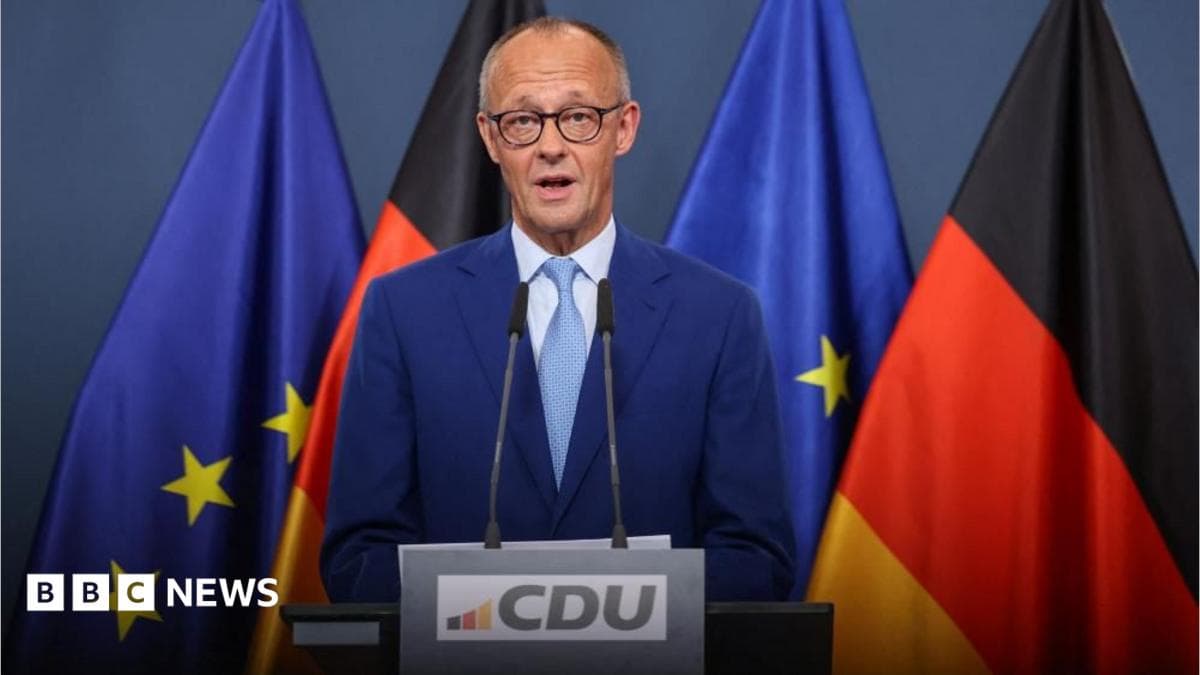
The CDU's defeat in Saxony-Anhalt has intensified questions about Chancellor Friedrich Merz's leadership Open Democracy. Eight CDU state premiers publicly backed him, signaling party unity but also revealing anxiety about the AfD threat. Merz has ruled out any coalition with the far-right party—a "cordon sanitaire" or firewall that mainstream parties must maintain Z Network.
The real risk is governance deadlock: winning elections alone no longer guarantees the ability to form governments Democrata. If AfD finishes first but is excluded from coalitions, other parties must build often-fragile three-party alliances just to keep the far-right out of power Democrata.
Sentiment
Mostly NegativeNEGATIVENEUTRALPOSITIVE
Publishers
20
Articles
4
Reach
24
A
AnonymousAuthor