Parthenon optical illusion myth debunked
New Oxford study challenges the long-held belief that Parthenon curves correct optical illusions.
Anonymous
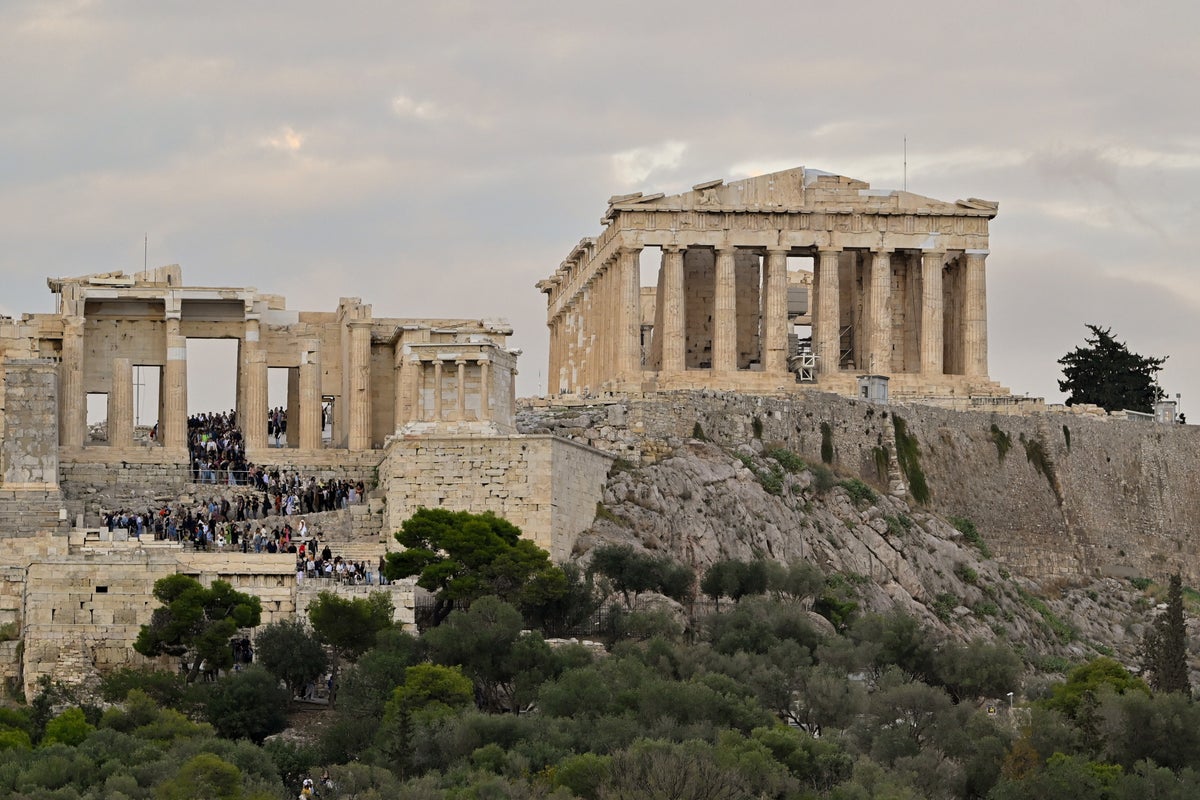
A new study by Oxford mathematician Alain Goriely challenges the longstanding belief that the Parthenon’s curves were deliberately designed to correct optical illusions. Published in Royal Society Open Science, the research found no evidence that the temple’s curved base was needed to prevent horizontal lines from appearing to sag, or that its columns created an illusion of narrowing in the middle. The Parthenon’s stylobate rises about 6 centimeters at the center, while its columns’ entasis—their slight thickening—measures roughly 18 millimeters and is barely perceptible from a typical viewing distance. Goriely traced the explanation to the Roman architect Vitruvius, who wrote about the temple centuries after its construction, and concluded that the features may instead reflect architectural tradition or purposes that remain unknown.
Key Points
1
The Parthenon was built between 447 and 432 B.C. during Athens’ Golden Age under Pericles and was dedicated primarily to Athena Parthenos, the city’s patron goddess.
2
Goriely’s analysis found that the proposed optical corrections generally require viewers to stand in a very specific area, yet there is no evidence that the ancient architects designed the temple around such a restricted viewing position.
3
The explanation involving the Hering illusion is also problematic: that illusion applies to parallel lines on a two-dimensional surface, is strongest when intersecting lines meet at acute angles, and has not been shown to operate in the same way in three-dimensional space. The Parthenon’s columns are too vertical for the proposed effect to be strong.
4
The study found no evidence that the ancient Greeks possessed knowledge of the specific visual illusions later invoked to explain the Parthenon’s refinements, leaving the creators’ intentions unresolved: they may have sought a straight, curved, regular or irregular appearance—or a particular aesthetic effect—or none of these.
5
Goriely described the belief as potentially “the oldest myth that we have, apart from religion,” noting that the account became established through architectural literature and is still repeated by AI chatbots.
Sentiment
Mostly NegativeNEGATIVENEUTRALPOSITIVE
Publishers
9
Articles
13
Reach
22
Topics
A
AnonymousAuthor


