Yemen Displacement Crisis
Yemen Displacement Hits 112,000 as Houthi Forces Advance Toward Strategic Strait
Anonymous
Key Points
1
UNICEF said the renewed violence has affected children across Taiz, Hudaydah and Marib, after Yemen had experienced relative calm following a UN-backed truce in 2022.
2
“For children who have already endured years of hunger, displacement and disrupted schooling, this latest violence is eroding what little stability they had left,” said Edouard Beigbeder, UNICEF’s regional director for the Middle East and North Africa.
3
UNICEF is expanding its emergency response to reach up to 231,000 people, including by redeploying nine health and nutrition mobile teams to displacement sites and affected communities in Aden, Marib and Taiz.
4
A fuel shortage in Yemen has slowed refugee crossings to Djibouti, but IOM regional director Frantz Celestin said many people remain ready to leave: “We expect more to come. ... They simply don’t have fuel to make the journey.”
5
Celestin warned that a sustained influx could eventually overwhelm Djibouti’s capacity to house and accommodate refugees, although he said the country was managing the arrivals effectively at the time of the report.
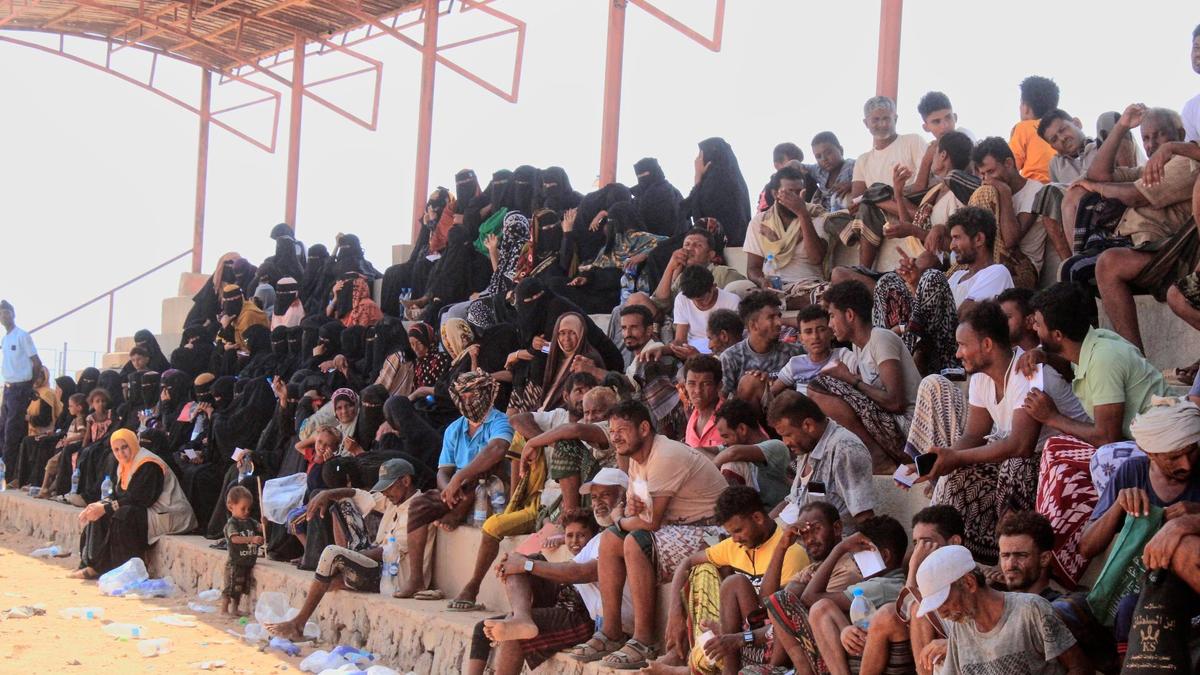
Renewed fighting in Yemen has displaced at least 112,000 people in just two weeks, as Iran-aligned Houthi forces advance toward the strategic Bab el-Mandeb Strait. UN Migration Agency reports that nearly 3,000 Yemenis have fled across the Red Sea to Djibouti in overcrowded boats, often with little food or water. The escalation marks a sharp reversal after Yemen experienced relative peace following a UN-backed truce in 2022.
UNICEF confirmed that more than 57,000 displaced children face immediate danger. At least nine children have been killed and 12 injured. Fighting has damaged 26 health facilities and 243 schools, affecting over 137,000 students and cutting off access to essential services across Yemen's west coast.
Houthis Push Toward Red Sea's Critical Chokepoint
The Houthi advance has concentrated along Yemen's Red Sea coast, moving toward the Bab el-Mandeb Strait—one of the world's most important shipping routes. The Print documented terrified Yemeni families fleeing the group's push on the port city of Mocha. The fighting has forced residents from Taiz, Hudaydah, and Marib provinces, reversing years of hard-won stability.
Thousands Risk Dangerous Sea Crossing to Djibouti
Nearly 3,000 Yemenis have already crossed the Red Sea to Djibouti in overcrowded boats. UN Migration Agency regional director Frantz Celestin warned that fuel shortages are currently slowing departures. But he said many more people remain ready to leave: "We expect more to come. They simply don't have fuel to make the journey."
Djibouti is preparing to receive as many as 10,000 refugees in coming weeks. Celestin cautioned that a sustained influx could overwhelm Djibouti's capacity for housing and services, though the country is managing current arrivals. Arrivals have also spiked in Somaliland and Puntland, straining already fragile health and education systems across the region.
Children Bearing the Heaviest Cost of Renewed Violence
UNICEF's regional director Edouard Beigbeder said the violence is catastrophic for Yemen's youngest. "For children who have already endured years of hunger, displacement and disrupted schooling, this latest violence is eroding what little stability they had left," he said. More than 57,000 displaced children now face food insecurity and limited access to health care.
UNICEF is expanding emergency response to reach 231,000 people. The agency is redeploying nine mobile health and nutrition teams to displacement sites in Aden, Marib, and Taiz. Humanitarian groups urgently need shelter, clean water, food, and protection supplies—but damaged infrastructure and restricted access hamper aid deliveries across the conflict zone.
Sentiment
Mostly NegativeNEGATIVENEUTRALPOSITIVE
Publishers
17
Articles
139
Reach
156
Topics
A
AnonymousAuthor


