Major Houthi Territorial Advance
Houthis Capture Strategic Yemeni Port and Threaten Critical Global Trade Routes
Anonymous
Key Points
1
The Houthis, formally known as Ansar Allah, emerged from a Zaydi revivalist movement in northern Yemen during the 1990s, captured Sanaa and much of northern Yemen in 2014, and fought Saudi-led forces until a ceasefire in 2022.
2
The Houthi advance put the group roughly 32 kilometers (20 miles) from Djibouti, where the United States and other countries maintain military bases, adding a direct security dimension to the takeover of the Bab el-Mandeb area.
3
The 745-mile East–West pipeline carries an estimated 4 million to 5 million barrels of Saudi oil per day to Red Sea export terminals; its disruption was followed by Brent crude rising to $108 a barrel, compared with about $60 in January before the US-Israeli war with Iran began.
4
On the government side alone, the fighting reportedly left about 1,500 soldiers injured and 500 confirmed dead, with battles continuing in Al Jawf, Marib and around Taiz as Houthi forces seek to secure the highlands overlooking their newly captured coastal territory.
5
Ansar Allah controls territory containing more than three-quarters of Yemen’s population and dominates the country’s de facto leadership coalition, an uneasy alliance of factions united largely by opposition to the internationally recognized government.
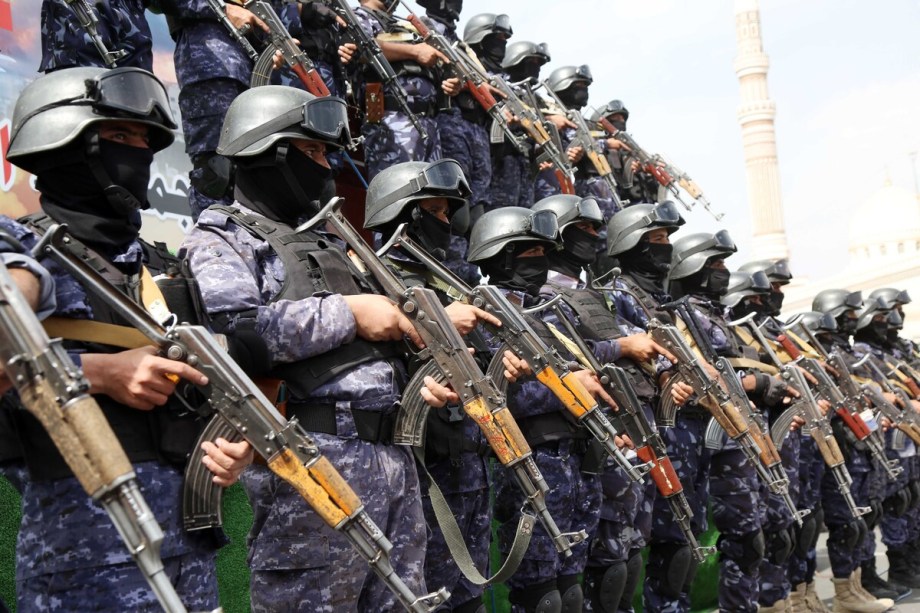
Yemen's Houthi movement has captured the strategic Red Sea port of Mokha and nearby islands, marking its largest territorial advance in years. Times of India reports that the takeover displaced Saudi-backed government forces and brought the Iran-aligned group closer to global shipping lanes through which roughly 12% of world trade passes. The offensive has already disrupted Saudi oil supplies and sent Brent crude surging to $108 per barrel, up from $60 in January.
About 125,000 civilians have been displaced by the fighting, with more than 500 government soldiers confirmed dead and 1,500 injured. Middle East Monitor notes that the Houthis have outmaneuvered both Washington and Riyadh despite a decade-long Saudi military intervention that cost billions of dollars. The capture of Perim Island inside the Bab el-Mandeb Strait gives the Houthis effective control over a maritime chokepoint that funnels one-eighth of global commerce.
How the Houthis Broke Saudi Arabia's Decade-Long Hold
Saudi Arabia has spent over a decade and billions of dollars trying to contain the Houthis (formally Ansar Allah) on its southern border. Times of India calls the result a "graveyard of Saudi ambition." The Iranian-backed group first captured Sanaa in 2014 and consolidated control over Yemen's populous north. Informal ceasefires after 2022 allowed the Houthis to entrench their military networks while Saudi-UAE rivalries fractured opposition forces into competing factions.
The latest offensive began September 3, 2026, when Houthi forces launched coordinated attacks along Yemen's western coast. Within days they seized Mokha, then Perim Island on September 11, followed by the Greater and Lesser Hanish islands. Union Bulletin reports that the rebels now eye the oil-rich eastern highlands around Al Jawf and Marib. Fighting continues in these regions with about 500 government soldiers confirmed dead and 1,500 injured on the Saudi-backed side alone.
Red Sea Takeover Threatens Global Oil and Trade Routes
The capture of Mokha and Perim Island gives the Houthis control over the Bab el-Mandeb Strait, a shipping bottleneck between Yemen and Djibouti. King's College London security analyst Andreas Krieg told NBC News that this position delivers "an extraordinary shock to global trade." About 12% of world commerce passes through these waters. The disruption has already spiked energy prices: Brent crude jumped to $108 per barrel, double the $60 price seen before the US-Israeli tensions with Iran intensified in January.
Saudi Arabia's 745-mile East-West pipeline normally ships 4 million to 5 million barrels of oil daily to Red Sea terminals. Recent attacks on Saudi energy facilities and the pipeline itself have crippled this export route. Idaho State Journal notes that the Houthi takeover of the Red Sea coast now threatens what little remains of Saudi Arabia's alternative to the Strait of Hormuz. Global energy markets face severe pressure as Tehran's proxy forces now control or threaten two vital chokepoints.
Civilian Toll and Displacement Mount as Fighting Spreads Inland
The conflict has killed more than 150,000 people overall and now threatens famine across Yemen. The latest offensive alone has displaced 125,000 civilians, with more than 94,000 fleeing in recent weeks. Residents in Mokha described panic and fear. One civilian told BBC Arabic: "Panic spread throughout the area. Everyone is afraid for their safety." About 200 schools have been converted into emergency shelters in southwestern Yemen.
Idaho Press reports that fighting continues to expand inland toward Taiz, Al Jawf, and Marib as Houthi forces seek to secure the highlands overlooking newly captured coastal territory. Thousands of fleeing civilians have crossed the sea to Djibouti, home to major U.S. military bases roughly 20 miles away. The Houthis control territory containing over 75% of Yemen's population, giving them de facto dominance over the country's political and military landscape despite the existence of a Saudi-backed government.
Iran's Proxy Network Now Threatens Two Global Chokepoints
The Houthi offensive has dramatically expanded Tehran's leverage over global shipping and energy. Middle East Monitor describes the movement as an autonomous, self-directed force with its own regional agenda, not merely an Iranian puppet. Yet analysts writing for JNS and The New York Times note that Iran now possesses strategic control or influence over two vital maritime passages: the Strait of Hormuz and the Bab el-Mandeb Strait. This dual leverage enables Tehran's proxy network to project power across the Red Sea and Indian Ocean.
Houthi military spokesman Yahya Sarea declared the offensive a success, claiming that "maritime navigation is safe for all companies, with the exception of Saudi ships." The positioning on the southern Red Sea coast, just 20 miles from Djibouti, adds direct security implications for U.S. military bases in the region. Western policy analysts argue the takeover stems from past failures—such as the 2018 Stockholm Accords—which left Houthi coastal positions intact rather than dismantling their military structure entirely.
Sentiment
Mostly NegativeNEGATIVENEUTRALPOSITIVE
Publishers
37
Articles
35
Reach
72
A
AnonymousAuthor


