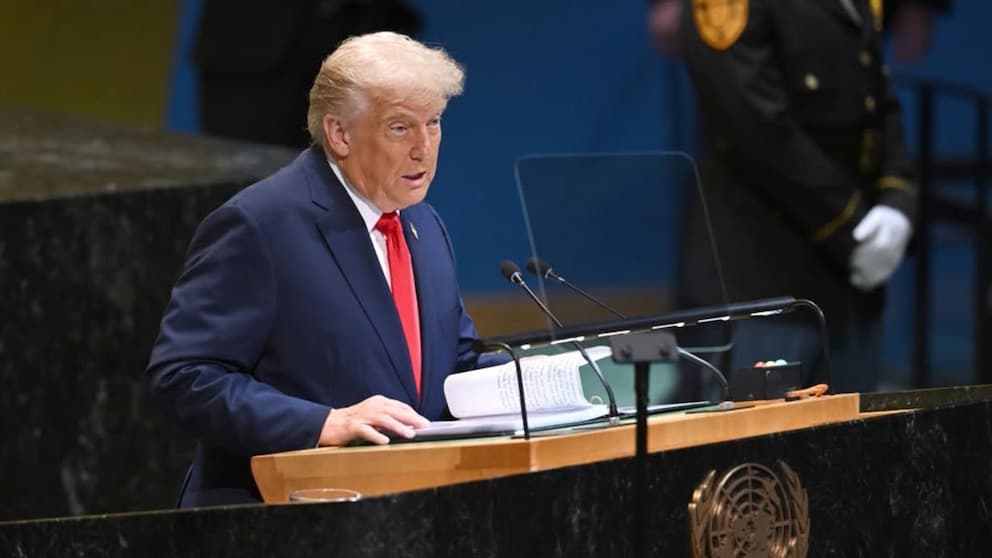
Walkouts during UN speech
Iranian and Cuban Delegations Walk Out During Trump Address at United Nations
Anonymous
Key Points
1
Trump referred to Iran’s government as a “terrorist regime” while discussing whether to “annihilate the Islamic Republic” or “drive them into hell.”
2
The United States granted entry visas to Iranian President Masoud Pezeshkian and Foreign Minister Abbas Araghchi for the U.N. meeting, while denying visas to Palestinian Authority President Mahmoud Abbas and his delegation.
3
Trump said Cuba was “failing like never before” and that it “will fall,” prompting the Cuban delegation’s departure from the hall.
4
The New York Post described Trump’s address as lasting 38 minutes, during which the Iran and Cuba walkouts occurred in separate sections of his speech.
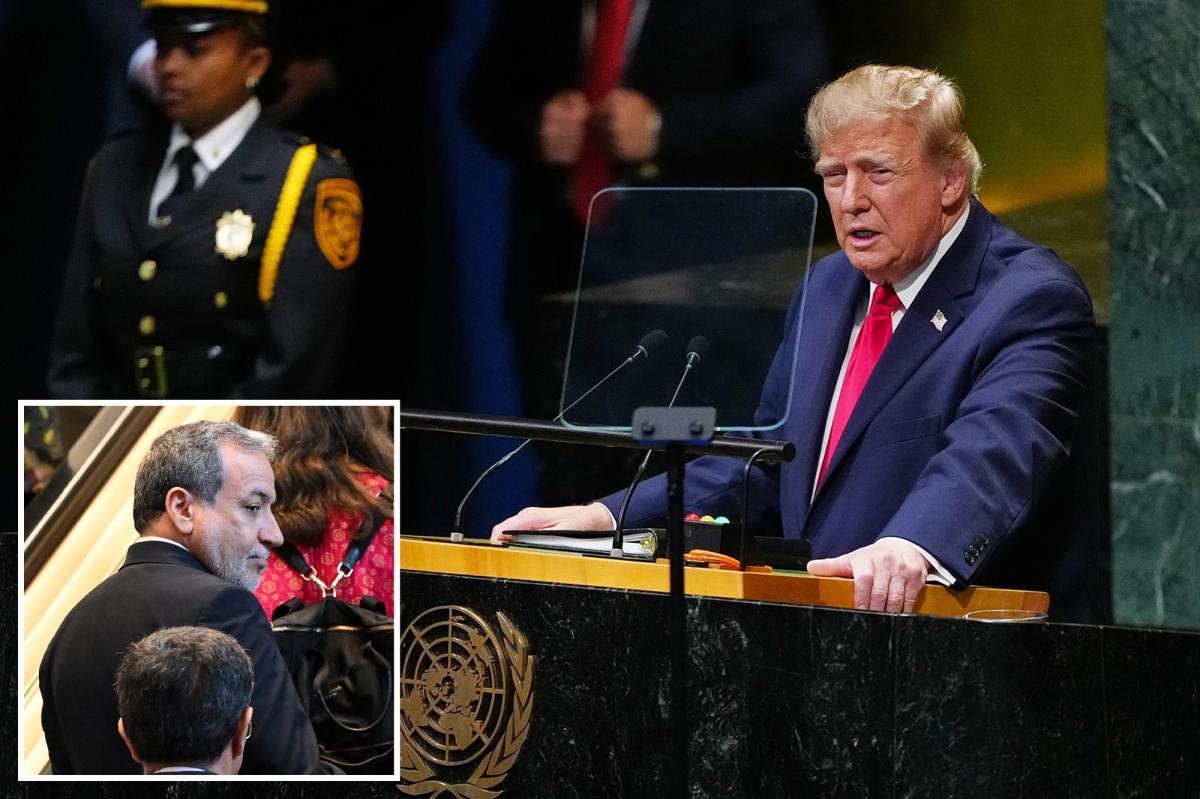
Iranian and Cuban delegations staged dramatic walkouts during President Trump's 38-minute address to the U.N. General Assembly on September 22, 2026, after he threatened to 'annihilate' Iran and called Cuba an 'absolutely failed state.' Freedom 96.9 reported Trump announced that U.S. and Iranian officials held a meeting shortly after issuing the threat. The walkouts underscored escalating tensions between the United States and both governments on the world stage.
Trump's Iran Threats During U.N. Speech
About 10 minutes into his address, Trump pivoted to six months of U.S. military strikes against Iran. He posed a stark choice: reach a post-election deal or face destruction. 'Will I annihilate the Islamic Republic and do it quickly?' he asked. 'Or do I drive them into hell with no chance of survival?' AJC reported that Trump announced the U.S. and Iran had met for three hours after he threatened to 'annihilate' Iran if a deal isn't reached to end the seven-month war. He called Iran's government a 'terrorist regime.' Mid-level Iranian delegates stood and walked out in protest.
Cuban Delegation Departs After Trump Criticism
Midway through his speech, Trump turned his attention to Cuba. He declared the island nation an 'absolutely failed state' and vowed it would soon 'fall.' He pledged that Secretary of State Marco Rubio would pursue fundamental change there. The entire Cuban delegation stood and exited the General Assembly Hall in response. Trump's remarks reflected his administration's hardline stance toward communist governments in the Caribbean region.
Iranian Leaders Skip Speech Despite U.S. Visas
A notable contrast emerged in visa decisions. The U.S. granted entry visas to Iranian President Masoud Pezeshkian and Foreign Minister Abbas Araghchi specifically for the U.N. meeting. Yet both chose not to attend Trump's address. Only one lower-level Iranian diplomat remained in the hall during the speech. Meanwhile, the State Department denied visas to Palestinian Authority President Mahmoud Abbas and his delegation, a decision that raised questions about the administration's selective diplomacy.
Walkouts Highlight Escalating U.N. Tensions
Walkouts at the U.N. General Assembly have become routine symbolic protests by nations facing hostile rhetoric. Trump's speech opened to awkward silences when he expected applause, SBS reported, noting the broader pattern of escalation. Public demonstrators gathered outside U.N. headquarters to protest the ongoing U.S.-Iran conflict. The departures by Iranian and Cuban delegations marked the clearest expressions of diplomatic outrage during the 38-minute speech, signaling that traditional diplomatic norms continue to fracture under heightened global tensions.
Sentiment
Mostly NegativeNEGATIVENEUTRALPOSITIVE
Publishers
159
Articles
494
Reach
653
A
AnonymousAuthor