Strong South Gippsland Tremor
Magnitude 4.8 Earthquake Strikes Victoria and Jolts Residents Across Melbourne
Anonymous
Key Points
1
Geophysicist Hadi Ghasemi of Geoscience Australia said the tremor was one of the strongest the South Gippsland region had experienced in the past two decades.
2
The quake occurred within the Australian tectonic plate, rather than at a plate boundary: stresses can build up along ancient faults and release suddenly, while Australia’s old, rigid crust can carry seismic waves over long distances.
3
One Melbourne resident told Geoscience Australia the shaking lasted about 10 seconds and made their house move.
4
Reports of shaking extended from Geelong and Torquay in the west to Traralgon in the east and Mansfield to the north.
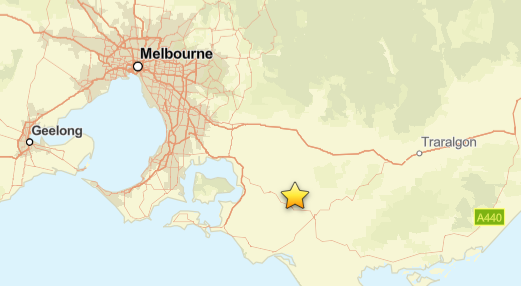
A magnitude 4.8 earthquake jolted Victoria's South Gippsland region early Saturday morning, October 3, shaking thousands of residents awake across Melbourne and southeastern Victoria. ABC News reported the quake struck near Leongatha at a shallow depth of 10 kilometres just after 2 a.m., with tremors felt from Geelong in the west to Traralgon in the east. Authorities reported no immediate injuries or significant damage.
A magnitude 3.1 aftershock rattled the same region shortly before 3 a.m. Geoscience Australia confirmed this was one of the strongest tremors South Gippsland has experienced in two decades, according to geophysicist Hadi Ghasemi. One Melbourne resident told authorities the shaking lasted about 10 seconds and made their house move noticeably.
Why South Gippsland Earthquakes Hit Hard
The earthquake struck within the Australian tectonic plate, not at a plate boundary where quakes typically occur. Geoscience Australia explained that stress builds up along ancient faults buried deep in Australia's old, rigid crust and then releases suddenly. Because the continental plate is so old and stiff, it carries seismic waves over extremely long distances—which is why people 135 kilometres away in Melbourne felt the shaking clearly.
Thousands Report Shaking Across Wide Area
More than 14,000 people reported feeling the tremor to seismic monitoring agencies, 7News reported. The shaking extended from Geelong and Torquay in the west to Traralgon in the east, and as far north as Mansfield. Residents described being jolted awake by the movement, with some noting their houses swayed visibly during the 10-second event.
Magnitude Estimates May Shift as Data Is Refined
Preliminary seismic data showed the quake at magnitude 4.8, though some agencies initially recorded it at 4.7. Cedar News and other monitoring services noted that initial estimates often vary slightly and may be revised as more data arrives from seismic stations. The quake's shallow 10-kilometre depth meant the energy released near the surface, amplifying shaking felt by residents across the region.
Emergency Services Ready for Reports
Victoria's State Emergency Service (SES) advised residents needing emergency assistance to contact the service directly. As of the latest update, no significant structural damage or injuries had been reported. Seismic experts said the region should expect more aftershocks in coming days, as is typical after a quake of this magnitude.
Sentiment
Mostly NegativeNEGATIVENEUTRALPOSITIVE
Publishers
11
Articles
21
Reach
32
A
AnonymousAuthor


