School Choice Regret
Nikole Hannah-Jones Says Brooklyn School Choice Experiment Left Her Daughter Behind
Anonymous
Key Points
1
Hannah-Jones enrolled Najya in PS 307 and later Urban Assembly Unison, a specialty middle school, beginning in 2015.
2
The essay describes Najya as 16 and says Hannah-Jones discovered, after the years in those schools, that her daughter lacked basic skills needed to keep pace in high school.
3
Hannah-Jones is identified as the journalist behind The New York Times’ 1619 Project, which Article 2 characterizes as a journalism and education project focused on slavery and racism in American history.
4
In the cited account, Hannah-Jones and her husband bought a $1.5 million brownstone in Brooklyn’s Bedford-Stuyvesant neighborhood in 2018, an example of the family’s financial ability to pursue other schooling options.
5
Corey DeAngelis, described as a research fellow at The Heritage Foundation, said: “Parents should put their children first. They should not sacrifice them to a failing government school system in the name of ideology.”
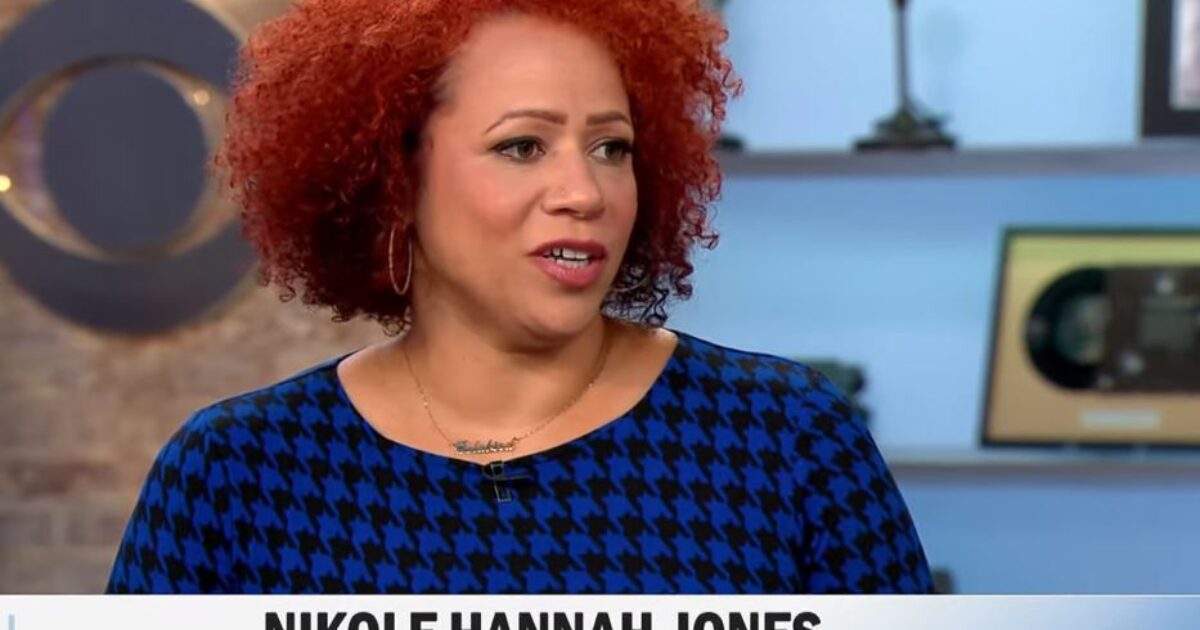
Nikole Hannah-Jones, the journalist behind The New York Times' 1619 Project, said in an essay that her decision to enroll her daughter in two struggling Brooklyn public schools backfired. Patriot Post reports that Hannah-Jones chose the schools despite having the financial resources to pursue more selective options, hoping to support educational equality. Her daughter Najya later fell academically behind and harbored deep resentment over the choice.
The family bought a $1.5 million brownstone in Brooklyn in 2018, making other schooling options clearly available. The Hill notes that Hannah-Jones discovered her daughter lacked basic skills needed to keep pace after entering a more rigorous high school. Najya questioned why her parents had prioritized other students' needs over her own education.
How the School Choice Unfolded
Hannah-Jones enrolled her daughter Najya in PS 307 in 2015, a predominantly Black public school in Brooklyn. Red State reports the essay also mentions Urban Assembly Unison, a specialty middle school, as part of Hannah-Jones' educational experiment. The schools served as Hannah-Jones' test of a commitment to educational equality rather than pursuing selective enrollment programs.
The years spent in these schools left Najya without essential academic foundations. Fox Business states that Hannah-Jones discovered her daughter's educational gaps only after she entered high school. The revelation prompted the essay titled "In Fighting for Every Black Child, Did I Betray My Own?" — a stark acknowledgment that ideology had collided with her own child's learning needs.
A Daughter's Anger Over Sacrificed Opportunities
Najya's resentment grew as she realized the cost of her parents' ideological stance. The Gateway Pundit reports the teenager questioned why her parents had made her a "sacrifice" to raise awareness about education and race in America. At 16, Najya saw peers who had attended better-resourced schools and felt the unfairness of the choice made on her behalf.
Hannah-Jones acknowledged in her essay that the decision contributed to "intense anger and resentment" from her daughter. The public admission reveals the tension between parental ideology and a child's immediate educational needs. Najya's experience suggests that noble intentions about systemic change cannot substitute for individual academic preparation.
School-Choice Advocates Seize on the Contradiction
Conservative critics have pointed to Hannah-Jones' choice as proof that progressive education policy fails in practice. Corey DeAngelis, a research fellow at The Heritage Foundation, said: "Parents should put their children first. They should not sacrifice them to a failing government school system in the name of ideology." Red State notes DeAngelis used the case to argue for expanding school-choice programs.
The irony cuts deep: Hannah-Jones had advocated for systemic change while possessing the means to opt out. Critics argue her confession validates arguments that market-based school choice protects families who cannot afford alternatives. The case has become a flashpoint in debates over whether ideological commitment should override individual family interests.
Sentiment
Mostly NegativeNEGATIVENEUTRALPOSITIVE
Publishers
19
Articles
8
Reach
27
Topics
A
AnonymousAuthor


