Ancient Odyssey Discovery
Researchers Identify Rare 1,700-Year-Old Homer Odyssey Fragment at Utrecht University
Anonymous
Key Points
1
Mark de Kreij said the fragment contains “a really fun passage,” despite his observation that there are “so many boring parts in the Odyssey.”
2
De Kreij immediately recognized the Greek verses, telling RTV Utrecht: “Everybody who learns Greek learns Homer.”
3
The discovery is part of a broader run of unexpected Homeric finds: fragments of the Iliad were reportedly discovered inside a Roman-era mummy in Egypt earlier the same year.
4
De Kreij’s full study of Utrecht University’s Greco-Roman Egyptian collection is scheduled for publication as a book titled “Hieratic, Demotic, Greek, and Coptic Texts in the Utrecht University Collection.”
5
The university publicized the find amid renewed popular interest in Homer’s epic, which the Dutch News article links to the box-office success of Christopher Nolan’s recent screen adaptation and increased sales of English and Dutch translations.
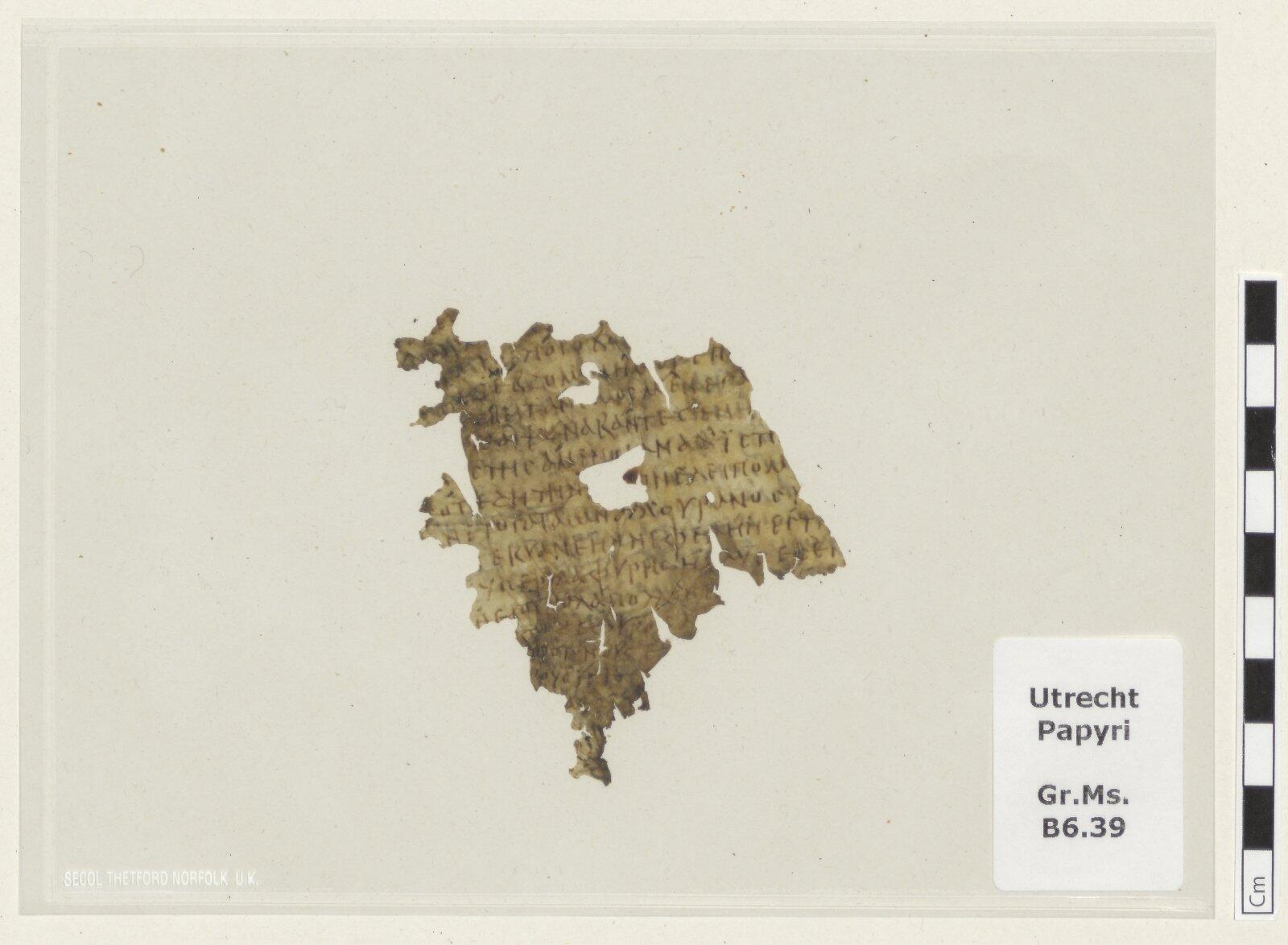
A 1,700-year-old scrap of Homer's Odyssey has surfaced in Utrecht University's library in the Netherlands. Greek scholar Mark de Kreij found the tiny parchment—just 6.6 by 7.7 centimeters—tucked among Egyptian and early Christian manuscripts All That's Interesting. The fragment contains verses from Book 12, describing how Odysseus' starving crew killed the sun god's sacred cattle, angering Zeus into destroying their ship CBS News.
The discovery adds to about 30 known comparable fragments from the same era All That's Interesting. Researchers believe the text came from a pocket-size codex made in Egypt's Faiyum region during the third or fourth century A.D. Economic Times. The find comes as Homer's work sees renewed attention, partly due to the box-office success of Christopher Nolan's film adaptation and rising sales of English and Dutch translations Economic Times.
How a Scholar Spotted a Hidden Ancient Text
Mark de Kreij was examining Utrecht University's collection of Egyptian and early Christian manuscripts when he recognized the Greek verses. According to RTV Utrecht via the Economic Times, de Kreij said "Everybody who learns Greek learns Homer." He immediately knew what he had found. The fragment came from Carl Schmidt's estate, a German scholar whose manuscripts were acquired by the university.
De Kreij called the passage "a really fun passage," despite noting that there are "so many boring parts in the Odyssey" All That's Interesting. The text's position in the middle of the book likely protected it from damage over 1,700 years. The discovery was made in 2024 but announced later, as researchers verified the fragment's authenticity and historical importance.
A Deadly Crew and Zeus's Wrath Unfold
The fragment contains one of the Odyssey's most dramatic moments. Odysseus and his men are starving after leaving the island of Helios, the sun god. In desperation, the crew kills and eats Helios's sacred cattle despite warnings. Zeus responds with fury CBS News. He destroys their ship with a lightning bolt, drowning everyone except Odysseus, who survives by clinging to driftwood.
This episode reflects themes throughout Homer's epic: hunger, divine punishment, and human weakness. The crew's choice seals their fate All That's Interesting. Only Odysseus lives to continue his long journey home, a journey that would take ten more years after Troy's fall. The passage shows why Homer's works endured for nearly 2,000 years after being written.
Part of a Broader Wave of Ancient Discoveries
The Odyssey fragment is not alone. Earlier the same year, researchers discovered fragments of the Iliad inside a Roman-era mummy in Egypt All That's Interesting. These finds show that Homer's epics circulated widely across the ancient Mediterranean world. Late Antiquity readers valued his stories enough to create pocket-size copies for traveling or personal study.
De Kreij plans to publish a comprehensive study of Utrecht University's Greco-Roman Egyptian collection as a book titled "Hieratic, Demotic, Greek, and Coptic Texts in the Utrecht University Collection" Economic Times. The project may uncover more hidden treasures. The Odyssey fragment reminds scholars that libraries and museum collections still hold surprises waiting for curious researchers.
Sentiment
Mostly NegativeNEGATIVENEUTRALPOSITIVE
Publishers
12
Articles
21
Reach
33
A
AnonymousAuthor


