Maersk to Pilot Rotor Sails Across Atlantic
Maersk to Pilot Rotor Sails Across Atlantic
Anonymous
Key Points
1
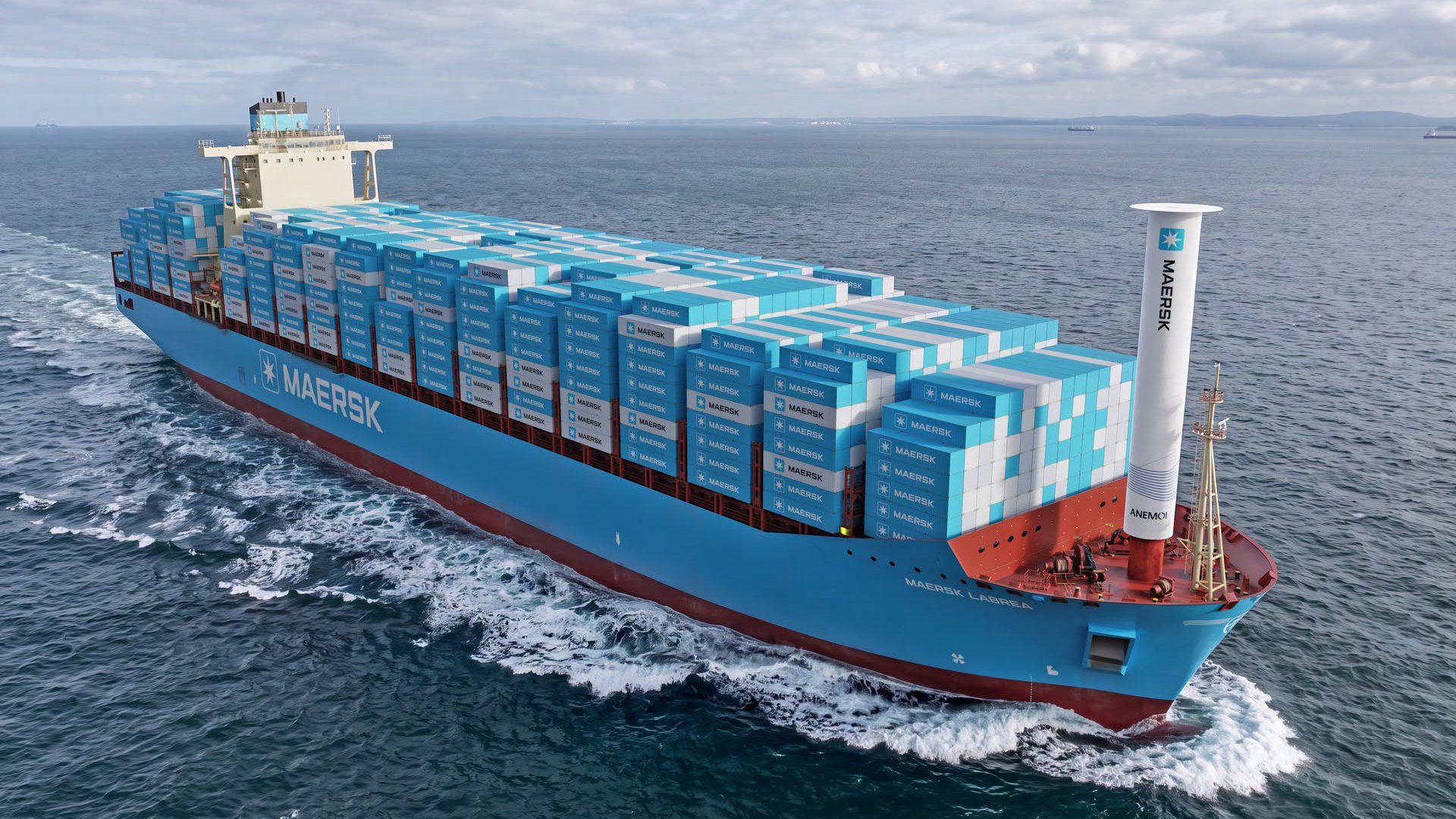
The rotor sail is a vertical cylindrical unit with a five-metre diameter and 35-metre height installed at the bow; it generates propulsion via the Magnus effect and is not a traditional fabric sail.
2
There are conflicting reports on the test vessel: some sources identify Maersk Labrea (a 100,000-tonner) while others reference a Maersk Lima-class 8,700 TEU vessel.
3
Anemoi has indicated its Yangtze River facility could scale to roughly 250 rotor sails produced per year.
4
The pilot is planned to run on North and South Atlantic routes during regular operations to assess real-world performance.
Maersk is installing a rotor sail on a container ship to test wind-assisted propulsion across the Atlantic. Cyprus Shipping News reported the 35-meter-tall cylindrical device, developed by UK-based Anemoi Marine Technologies, will cut fuel use and emissions by harnessing wind through the Magnus effect — the same physics that makes a spinning ball curve through the air.
The pilot begins mid-2027 on an 8,700 TEU Maersk Lima-class vessel, with trials on North and South Atlantic routes. The Register noted early estimates suggest fuel savings between 5% and 25% depending on the ship and route — potentially one ton of fuel saved per day in favorable conditions. Installation costs range from $600,000 to $1.2 million per unit.
How the Rotor Sail Works
Unlike traditional fabric sails, the rotor sail is a rotating vertical cylinder five meters wide and 35 meters tall, mounted at the bow. ESG News explained it generates thrust via the Magnus effect — when wind hits the spinning rotor, pressure differences push the ship forward. The engine remains the main power source; wind simply provides additional thrust when conditions allow.
Why Maersk is Making This Bet
Container shipping faces mounting pressure from stricter emissions rules and soaring fuel costs. Archynetys reported Maersk is using the rotor sail to offset rising energy expenses while meeting tougher environmental regulations. The technology offers a scalable solution: Anemoi's manufacturing facility can produce roughly 250 rotor sails per year if the pilot succeeds.
Real-World Testing Across Atlantic Routes
The 8,700 TEU vessel will operate normally on North and South Atlantic routes while engineers measure fuel savings and performance in actual sea conditions. Cyprus Shipping News confirmed mid-2027 installation marks the world's first rotor sail deployment on a container ship. Success could trigger fleet-wide adoption across Maersk's vessels.
From Pilot to Production
Installation costs of $600,000 to $1.2 million per unit need to yield quick payback through fuel savings. If the Atlantic trials deliver the promised 5% to 25% reduction, Maersk has already signaled readiness to expand adoption. Seeking Alpha noted this reflects broader industry momentum toward wind-assisted shipping as a near-term emissions solution.
Sentiment
Mostly PositiveNEGATIVENEUTRALPOSITIVE
Publishers
13
Articles
23
Reach
36
A
AnonymousAuthor


