Rewilding Great Indian Bustards
India begins rewilding captive-bred Great Indian Bustards at a Rajasthan national park.
Anonymous
Key Points
1
Of the 97 birds at the Sam and Ramdevra facilities, 40 originated from wild-laid eggs and 57 were bred in captivity. The programme maintains 86 for captive reproduction, while 11 have been earmarked for release.
2
The Ramdevra Rewilding Aviary was built by the Rajasthan Forest Department through the state construction corporation, with a sanctioned budget of Rs 9.25 crore. Its pillar-less design provides unobstructed flight space for birds to develop their flight muscles and adapt to natural conditions.
3
The programme has also had a “jumpstart” initiative in Gujarat, and the Union environment minister recently reviewed the soft-release and conservation facility at Naliya in Kutch.
4
The minister highlighted the bustard’s role in grassland conservation and land-degradation neutrality, as well as its importance as a stopover for migratory birds travelling along the Central Asian flyways.
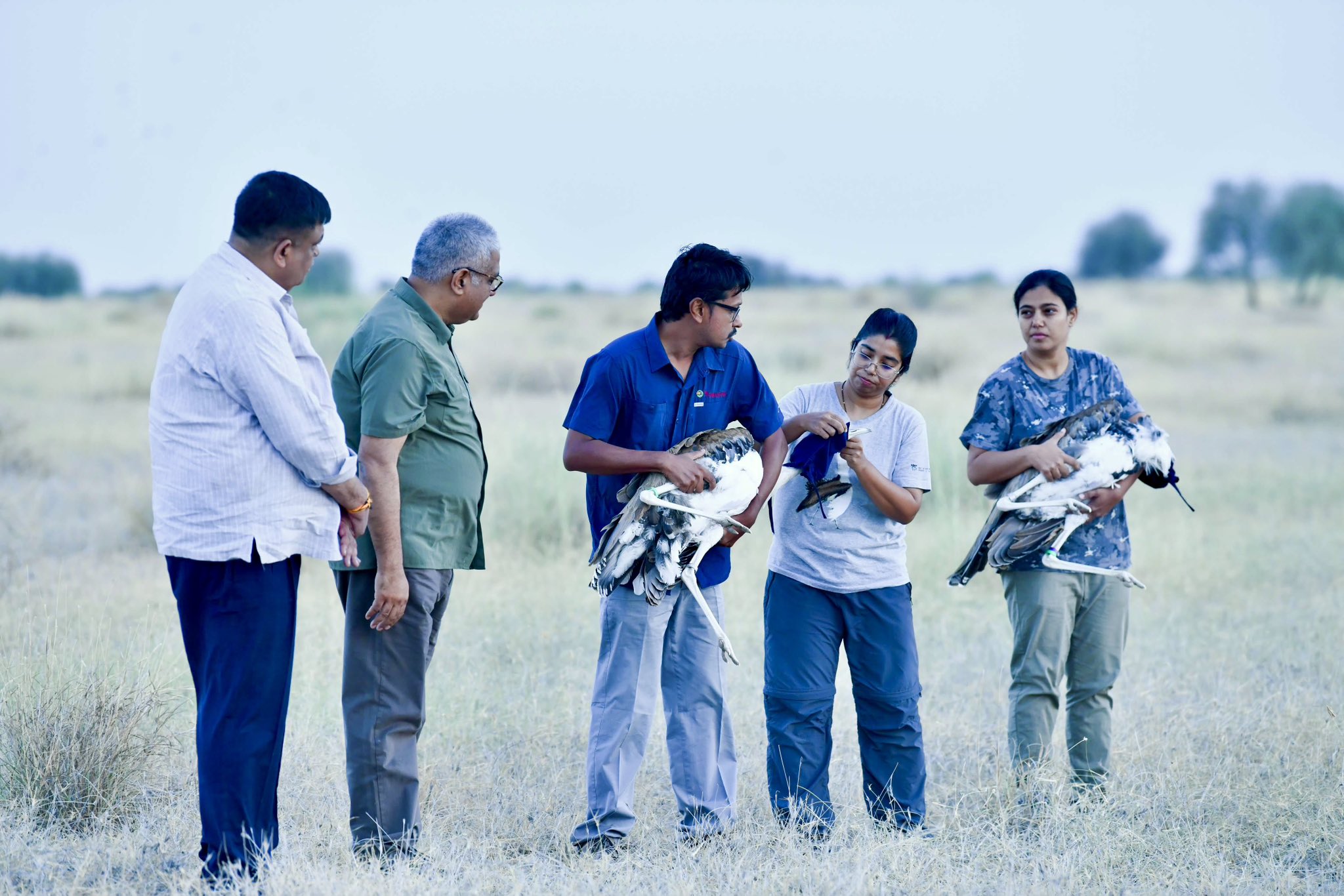
India has released two captive-bred Great Indian Bustards into the wild at Desert National Park in Jaisalmer, Rajasthan—a historic first in the effort to save this critically endangered species. Union Environment Minister Bhupender Yadav oversaw the release, marking a major shift from breeding birds in captivity to restoring them to their natural habitat.
The two male bustards were bred at facilities in Sam and Ramdevra in Rajasthan, where 97 birds are currently housed. This pilot release will test protocols for future rewilding efforts while the breeding program continues to expand, having produced 24 live chicks in 2025 and 29 in 2026.
A Pillar-Less Aviary Built for Flight Training
The Ramdevra Rewilding Aviary was built by the Rajasthan Forest Department with a budget of Rs 9.25 crore (about $1.1 million). Its unique pillar-less design gives birds open space to develop their flight muscles and adapt to natural conditions before full release into the wild.
Breeding Program Grows as Wild Population Declines
Of the 97 bustards at Sam and Ramdevra, 40 came from wild-laid eggs while 57 were bred entirely in captivity. The program keeps 86 birds for ongoing reproduction and has earmarked 11 for eventual release into the wild, according to Indian Masterminds.
The Great Indian Bustard is one of the world's rarest birds. The breeding centers represent India's bet that captive breeding can halt extinction while habitats recover. Success here could unlock pathways for releasing more birds in coming years.
Conservation Ripples Beyond One Species
The Union Environment Minister highlighted that Great Indian Bustards play a key role in grassland health and land conservation. The birds also serve as stopovers for migratory species traveling Central Asian flyways, meaning their survival benefits entire ecosystems.
A companion "jumpstart" initiative is underway in Gujarat, with a soft-release facility recently opened at Naliya in Kutch. These parallel efforts across states suggest India is building redundancy into the bustard recovery plan—hedging against failure at any single site.
Sentiment
Mostly PositiveNEGATIVENEUTRALPOSITIVE
Publishers
16
Articles
26
Reach
42
A
AnonymousAuthor


