Global Mining Expansion
Mining and Exploration Projects Advance Across Four Regions in Central Asia and North America
Anonymous
Key Points
1
Uzbekistan’s president instructed officials to resolve investors’ concerns within one month and ordered a comprehensive geological exploration program, including a reassessment of reserves at existing deposits.
2
Norterra identified three priority mineralized zones at the A26-KZ-1125 licence after screening approximately 82,000 square kilometres of historical geological data using VEDART RS® technology. The company aims to reduce geological uncertainty and upgrade the resource to the Indicated category under international reporting standards.
3
Mackay’s Phase 1 Nevada campaign comprises about 15,000 metres of shallow reverse-circulation drilling at Occidental South and 5,000 metres of deep diamond drilling at the Sutro Tunnel intersection. The work targets the Occidental-Brunswick Lode, a 5-kilometre mineralized structure.
4
At Mackay’s Comstock property, hole 26MGS007 returned 59.4 metres grading 1 gram per tonne gold and 9.45 grams per tonne silver, including 18.3 metres at 1.46 grams per tonne gold and 19.74 grams per tonne silver.
5
Aben Gold’s Justin drilling tested two distinct targets: five holes at the POW gold-tungsten zone and three at the Lost Ace high-grade gold target. Massive sulphides and ultraviolet indications of scheelite were observed in POW core, although the company cautioned that visual observations are not a substitute for laboratory assays.
Gold and tungsten exploration is accelerating across Central Asia and North America, with four major projects advancing in September 2026. Mining Hub reported that Uzbekistan committed $33 million to develop a gold-mining cluster in Karakalpakstan, where surveys revealed 4 tonnes of gold worth $563 million and created 320 jobs. Kazakhstan's Norterra Resources identified 3.1 tonnes of gold in inferred resources, Nevada's Mackay Gold hit thick ore intercepts in its first seven drill holes, and Canada's Aben Gold completed a 1,390.9-meter drilling program in the Yukon targeting gold and tungsten.
President Shavkat Mirziyoyev of Uzbekistan ordered officials to resolve investor concerns within one month, emphasizing that geological surveys covering only one-fifth of Karakalpakstan are insufficient as major foreign investors arrive. Cairns Post noted that exploration activity reflects a broader shift toward attracting world-class mining capital to Central Asia and reviving historic mining districts in North America that have sat dormant for decades.
Uzbekistan Builds Gold Mining Cluster With Chinese Capital
Uzbekistan plans to create a dedicated gold-mining and processing cluster in Karakalpakstan after geological surveys covered about 20 percent of the region. A Chinese investor committed $33 million to the Urusoy deposit, where teams identified 4 tonnes of gold across 200 hectares and created 320 jobs already. Yahoo Canada reported that President Mirziyoyev met regional leaders on September 19, 2026, to review progress and announced plans to generate 1,000 permanent jobs once the cluster reaches full operation.
The Uzbek leader instructed officials to address all investor grievances within 30 days and ordered a comprehensive geological exploration program reassessing reserves at existing deposits. Karakalpakstan reduced profit, land, and property taxes by 50 percent and lowered industrial electricity tariffs by 15 percent to attract high-quality investors. As the world's tenth largest gold producer, Uzbekistan has eased state monopolies under Mirziyoyev's reforms to draw foreign direct investment into underdeveloped regions.
Kazakhstan Screens 82,000 Square Kilometers Using Satellite Technology
Norterra Resources identified three priority mineralized zones at the A26-KZ-1125 license in Kazakhstan's Abay Region after analyzing 82,000 square kilometers of historical Soviet-era geological data using VEDART RS® satellite-guided technology. The company reported prospective gold resources totaling about 3.1 tonnes in the inferred P2 and P3 categories—roughly 1.5 tonnes in P2 and 1.6 tonnes in P3—but cautioned that further exploration is needed before upgrading estimates to the Indicated category under international reporting standards.
Norterra presented its findings at the MINEX Eurasia forum on September 18, 2026, highlighting a preliminary economic model projecting a 10-year net present value of $55.2 million. The West-Kalba metallogenic zone in the Abay Region is known for hosting gold and critical minerals. Norterra aims to reduce geological uncertainty through field exploration and targeted drilling before committing to capital-intensive development phases.
Mackay Gold Reports Thick Ore at Historic Nevada Comstock District
Mackay Gold and Silver reported thick, shallow gold-and-silver intercepts from the first seven holes of its 20,000-meter drilling campaign at the Comstock District in Nevada on September 15, 2026. Hole 26MGS007 returned 59.4 meters grading 1.00 gram per tonne gold and 9.45 grams per tonne silver, including 18.3 meters at 1.46 grams per tonne gold and 19.74 grams per tonne silver. Hole 26MGS005 returned 47.2 meters at 1.15 grams per tonne gold, while Hole 26MGS001 returned 48.8 meters at 0.97 grams per tonne gold.
CEO Darwin Green said the step-outs at Occidental South delivered "thick intersections at very good grades for oxide gold in Nevada," nearly doubling the mineralized strike footprint. In September 2026, Mackay acquired the Big Bonanza property for $6.3 million, consolidating the full 6-kilometer Comstock Lode and expanding total land holdings to 4,747 hectares. The Phase 1 campaign comprises 15,000 meters of shallow reverse-circulation drilling at Occidental South and 5,000 meters of deep diamond drilling near the historic Sutro Tunnel intersection, targeting the Occidental-Brunswick Lode, a 5-kilometer mineralized structure that produced over 8 million ounces of gold between 1859 and 1926.
Aben Gold Awaits Assay Results From Yukon Drilling Program
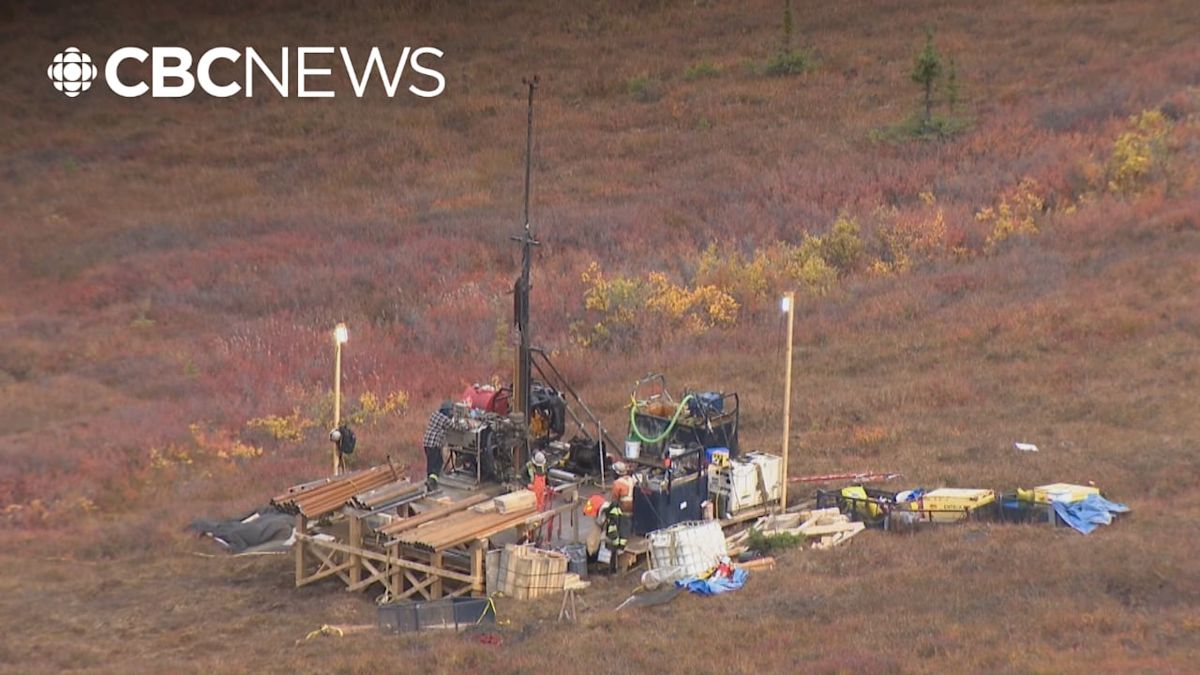
Aben Gold completed an expanded eight-hole, 1,390.9-meter drilling program at its Justin project in the Yukon, targeting two distinct gold-tungsten systems. Five holes tested the POW gold-tungsten zone, where core showed massive sulphides and ultraviolet indications of scheelite. Three holes tested the Lost Ace high-grade gold target. Laboratory assays are pending to assess mineral continuity and guide further exploration phases at both zones.
Aben Gold emphasized that visual observations—such as fluorescent scheelite detected under ultraviolet light—do not substitute for certified laboratory assays. The Justin project is located near the Tintina Gold Belt and targets intrusive-related gold-tungsten systems alongside high-grade shear zones. Once assay results return, Aben will assess grade continuity and determine the scope of follow-up drilling campaigns to establish resource estimates suitable for economic evaluation.
Sentiment
Mostly PositiveNEGATIVENEUTRALPOSITIVE
Publishers
42
Articles
94
Reach
136
A
AnonymousAuthor