Secret Middle East Military Talks
U.S., Israel and Arab States Hold Secret Military Talks on Iran Conflict
Anonymous
Key Points
1
The meeting was held at a secluded ski resort and was not officially announced by any of the participating governments, underscoring its sensitive and informal character.
2
The gathering reflects a broader security realignment that followed the 2020 Abraham Accords: Israel was subsequently transferred from U.S. European Command to CENTCOM, allowing it to cooperate militarily with Arab states under the same regional command structure, particularly on air and missile defense.
3
The United States, Israel and the United Arab Emirates have already cooperated during the war on both defensive and offensive operations; Israel has also deployed Iron Dome missile-defense systems in the UAE.
4
Before Iran obstructed the Strait of Hormuz, the waterway carried about one-fifth of the world’s energy supply, making the planned expansion of maritime traffic especially significant for global energy and shipping markets.
Senior military commanders from the United States, Israel, and seven Arab nations held a secret meeting in Germany to coordinate strategy in the Iran war. The private summit at a secluded ski resort brought together military chiefs from Saudi Arabia, the UAE, Bahrain, Kuwait, Qatar, Jordan, and Egypt—marking the first gathering of its kind since the U.S.-Israel campaign against Iran began Free Press Journal.
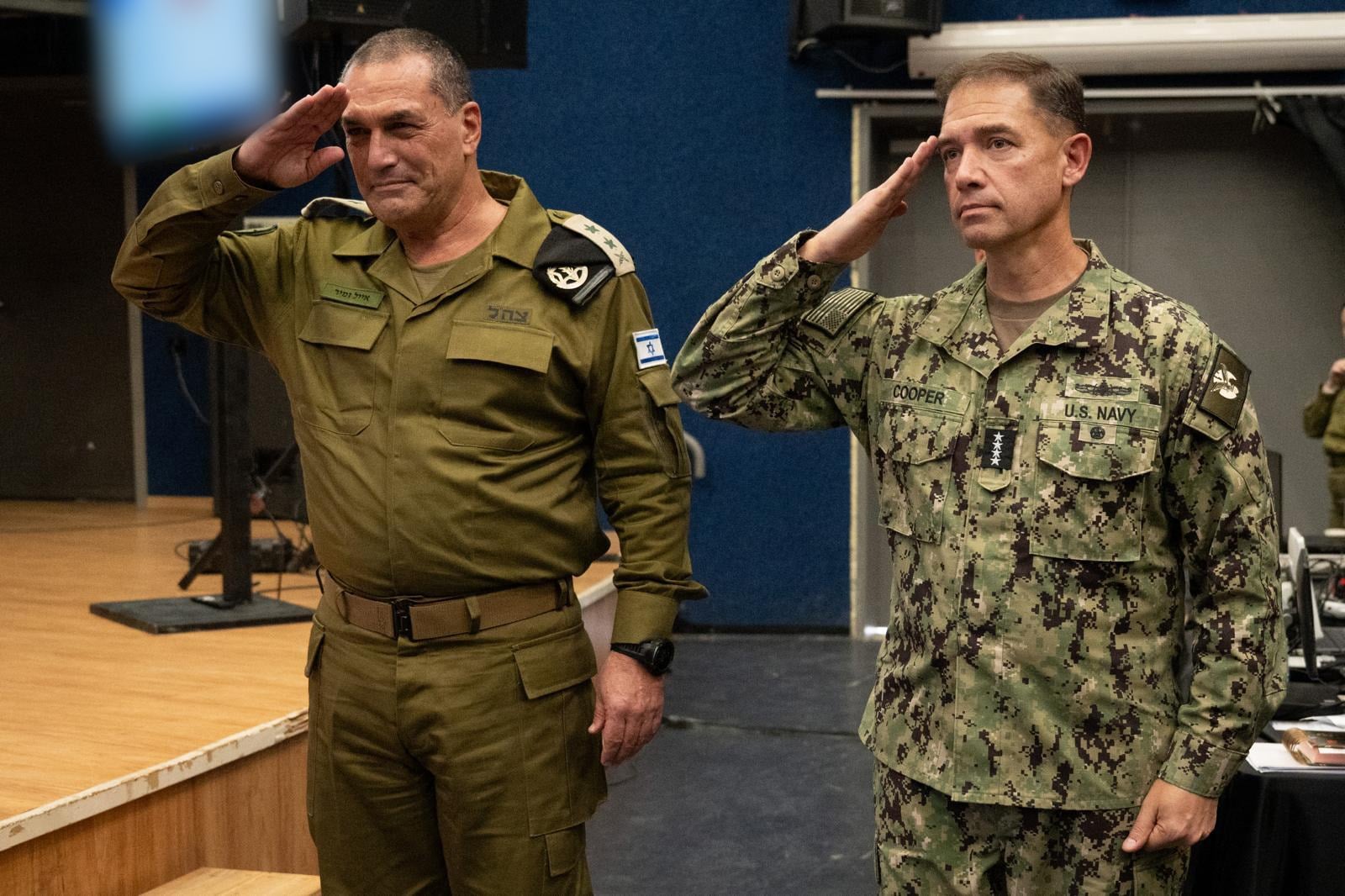
U.S. CENTCOM Commander Adm. Brad Cooper organized the conference and assured participants that American forces would stay in the region despite Iranian attacks on U.S. bases. Israeli military Chief of Staff Lt. Gen. Eyal Zamir briefed the group on operations across multiple fronts, while Cooper outlined plans to expand maritime traffic through the Strait of Hormuz Daily Hunt.
A Military Alliance Takes Shape in Secrecy
The meeting reflected a dramatic security realignment in the Middle East. Israel was moved from U.S. European Command to CENTCOM in 2021, enabling direct military cooperation with Arab states under the same command structure Free Press Journal. The Abraham Accords of 2020 had already forged diplomatic ties between Israel and several Gulf nations, but this summit showed those relationships had deepened into active military coordination.
Notably, countries without formal diplomatic relations with Israel—including Saudi Arabia and Qatar—sent senior commanders. The decision to hold the meeting informally and unannounced by any government underscored its sensitive nature and the political risks Arab states face in openly aligning with Israel Mid-Day.
Protecting Energy Shipping and the Red Sea
A central focus was reopening maritime routes through the Strait of Hormuz. Before Iran disrupted the waterway, it carried about one-fifth of the world's energy supply Dainik Jagran. Cooper presented specific plans to expand naval escorts and vessel traffic to stabilize global oil transit and prevent energy market shocks.
Israel and Saudi Arabia, with CENTCOM's assistance, are also coordinating defensive measures against Houthi advances near the Bab el-Mandeb Strait in the Red Sea. Israel is not expected to conduct offensive operations against Yemen, but will provide intelligence and air defense support to counter drone and missile attacks Awaz The Voice.
Shared Defense Systems and Operational Integration
The U.S., Israel, and the UAE have already coordinated both defensive and offensive operations during the Iran conflict. Israel has deployed Iron Dome air defense systems in the UAE to protect against Iranian missile and drone strikes Free Press Journal. These systems represent the most visible sign of growing military integration between Israel and Arab partners.
CENTCOM Spokesperson Capt. Tim Hawkins confirmed the gathering to media outlets, stating that commanders "discussed opportunities to deepen security cooperation in the Middle East." The shift from secretive coordination to public acknowledgment signals increasing confidence in the alliance Daily Hunt.
Sentiment
Mostly PositiveNEGATIVENEUTRALPOSITIVE
Publishers
25
Articles
31
Reach
56
Topics
A
AnonymousAuthor


