UN Speech Fallout
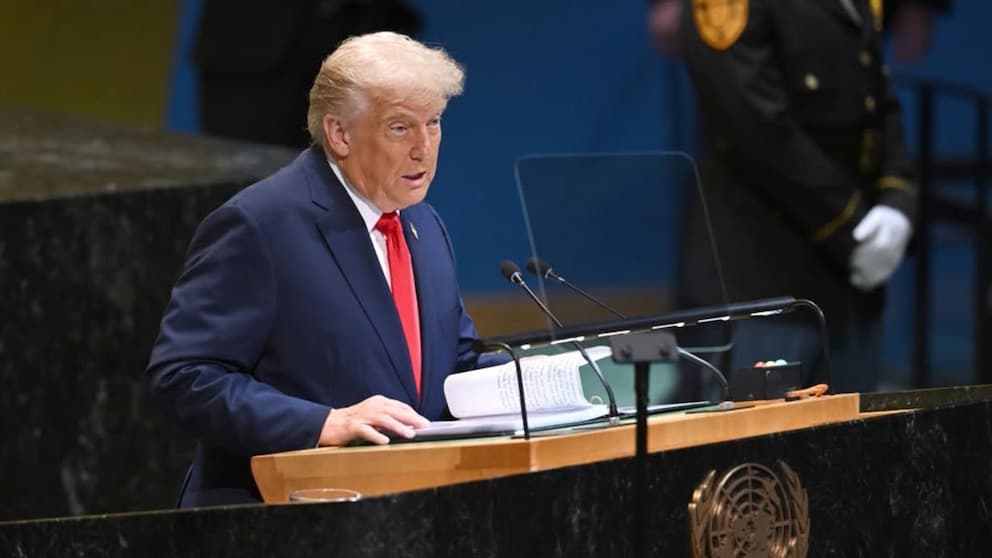
Trump Faces Silence and Walkouts During Combative Speech at the United Nations General Assembly
Anonymous
Key Points
1
The munitions shortfall includes advanced missile interceptors: U.S. and NATO officials cited low Patriot inventories in Europe, and defense experts said replenishing Tomahawk, Patriot and THAAD stocks could take years. A CSIS report warned depleted inventories could leave a window of vulnerability in a potential Western Pacific conflict.
2
A new poll found Trump’s approval rating at a record low. As fuel prices rose, one Republican lawmaker urged him to “stop the bleeding” by banning diesel exports before the midterms.
3
The planned Trump-Xi summit agenda also includes trade, tariffs and Taiwan, with formal bilateral talks followed by a White House state dinner. Tim Cook, Jeff Bezos, Sam Altman, Elon Musk and Jensen Huang were among the executives slated to attend.
President Trump's combative speech at the United Nations General Assembly on September 22 drew muted responses and walkouts from foreign delegations. Associated Press fact-checkers contradicted his claims about abundant U.S. military stockpiles, finding the nation faces serious shortages of advanced missiles. Iranian and Cuban representatives walked out during his attacks on their governments, while most other delegates sat in silence.
Trump's remarks came amid mounting domestic pressure over fuel costs tied to the seven-month Iran conflict and stalled peace efforts in Ukraine. His approval rating has hit a record low. Trump also signaled that artificial intelligence—which he called "superintelligence"—will dominate an upcoming summit with Chinese leader Xi Jinping, where tech executives including Elon Musk and Tim Cook are expected to attend.
The Munitions Gap Nobody Wants to Admit
Trump told the UN that American military stockpiles are robust and well-stocked. But AP fact-checkers found the opposite is true. The U.S. has depleted supplies of Patriot missile interceptors, Tomahawk cruise missiles, and THAAD air-defense systems. NATO officials cited critically low Patriot inventories across Europe. Defense experts warn that restocking these weapons could take several years.
A CSIS report warned that depleted inventories create a dangerous window of vulnerability. If conflict erupted in the Western Pacific, the U.S. and its allies would lack sufficient air-defense missiles to respond. This shortage directly contradicts Trump's confident assertions about American military readiness at the global stage.
Domestic Pressure Mounts Over Fuel and Inflation
Trump faces political headwinds at home. Recent polling shows his approval rating at a record low, driven by soaring fuel prices tied to the Iran conflict. A Republican lawmaker urged him to "stop the bleeding" by banning diesel exports before midterm elections approach. Fuel costs remain a top concern for American voters and threaten consumer spending power.
The seven-month war with Iran has constricted global oil markets and spiked prices at the pump. Trump's efforts to end the Ukraine conflict have stalled completely, adding to frustration among allies and voters. Energy exports remain a potential lever the White House could use to manage prices domestically—but doing so risks straining European allies who depend on U.S. refined products.
Trump Rejects Global AI Rules Ahead of Xi Summit
Trump declared that the U.S. "totally rejects any attempt to construct a globalist scheme to control artificial intelligence." He insisted that domestic oversight—specifically the Justice Department—is sufficient. White House OSTP Director Michael Kratsios echoed this stance at the UN Security Council, saying "a prosperous future will not be secured by a global regulator."
The strategy marks a sharp break from international AI safety frameworks. Trump's emphasis on "superintelligence" and domestic-only governance sets the stage for his upcoming summit with Xi Jinping. Tech executives including Tim Cook, Jeff Bezos, Sam Altman, Elon Musk, and Jensen Huang are slated to attend a White House state dinner. Trade, tariffs, Taiwan, and technological dominance will dominate formal bilateral talks.
Sentiment
Mostly NegativeNEGATIVENEUTRALPOSITIVE
Publishers
39
Articles
68
Reach
107
A
AnonymousAuthor