Empowering Media for Gender Equity
Ghana Trains Women Journalists to Drive Implementation of the Affirmative Action Act
Anonymous
Key Points
1
The legislation is formally identified as Ghana’s Affirmative Action (Gender Equity) Act, 2024, Act 1121, and the workshop was designed to strengthen journalists’ ability to report on gender-equity issues accurately, fairly and sensitively.
2
Minister Agnes Naa Momo Lartey linked Ghana’s gender-equity agenda to President John Dramani Mahama’s upcoming tenure as African Union chairperson, saying it presents an opportunity to advance women’s leadership across the continent.
3
African Women Leaders Network Chair Charity Binka said the media must take the Act beyond legal documents and into local-language broadcasts, morning shows, community radio and community information centres so ordinary citizens can understand it.
4
The workshop included a presentation on the Act by Vera Karikari Bediako, head of the Ministry’s Gender Equity Committee Secretariat, and a panel titled “Beyond the headlines,” featuring journalists and gender advocate Selikem Acolatse Apaloo.
5
Lartey told participants that their role was central to the Ministry’s work, saying: “You have taken on a responsibility which is at the heart of everything we do, which is at the centre of everything we do.”
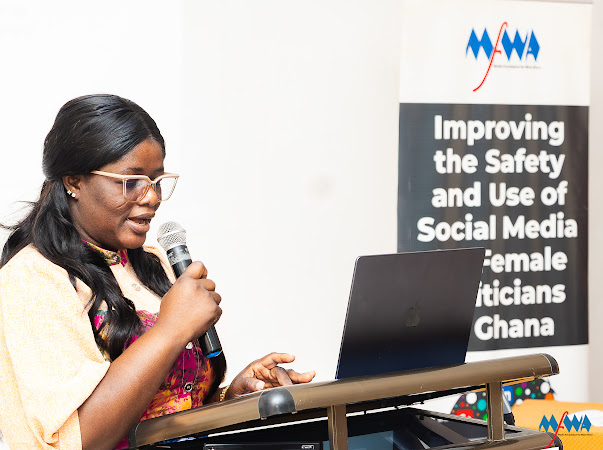
Ghana's Ministry of Gender, Children and Social Protection held a training workshop for women journalists to turn the newly passed Affirmative Action (Gender Equity) Act, 2024, into real progress for women in leadership. Ministry of Gender Minister Agnes Naa Momo Lartey told participants the focus must shift from fighting for the law to making sure it actually works. She stressed that gender equity is a national development issue that needs support from men and other stakeholders across the country.
Women hold only about 4 percent of local government positions in Ghana, showing how far the country still needs to go. The workshop trained journalists to report on gender issues accurately and fairly, educate the public about the new law, monitor whether institutions follow it, and hold authorities accountable. African Women Leaders Network Chair Charity Binka said the media must spread knowledge of the law through radio shows, local languages, and community centers so ordinary people understand what it means for them.
A Law Moves From Paper to Practice
Ghana's Affirmative Action (Gender Equity) Act, 2024, known formally as Act 1121, is designed to boost women's representation across government and leadership roles. Ministry of Gender Vera Karikari Bediako, who heads the Ministry's Gender Equity Committee Secretariat, presented details about the law to workshop participants. The law represents years of advocacy but now faces the harder test: actually changing how institutions operate and how many women reach leadership positions in the country.
Minister Lartey told journalists their role is central to the Ministry's work and to Ghana's future. She linked the gender-equity push to President John Dramani Mahama's upcoming role as African Union chairperson, saying it gives Ghana a chance to lead women's progress across the entire continent. The timing matters because election cycles approach, and officials want the law embedded in institutions before then.
Women Journalists as Watchdogs for Change
The workshop gave women journalists a clear mission: monitor compliance with the new law, investigate where gaps remain, and hold authorities responsible when they fall short. African Women Leaders Network Chair Charity Binka called on journalists to challenge old stereotypes that keep women out of leadership. She said the media must move beyond headlines and feature women as experts and leaders, not just as supporting characters in stories about men.
African Women Leaders Network Binka stressed that the law must reach ordinary citizens, not just lawmakers. Radio shows, morning broadcasts, community radio stations, and local-language content are key tools to make the law real and understandable. Journalists attended a panel titled "Beyond the Headlines" featuring media professionals and gender advocate Selikem Acolatse Apaloo, who discussed how to report on gender equity in compelling, accessible ways.
Closing a Massive Representation Gap
Ghana's low numbers show why action is urgent. Women make up just 4 percent of local government leadership, a gap that affects policy decisions affecting all citizens. The Affirmative Action Act targets this imbalance by requiring institutions to take deliberate steps to hire and promote women into leadership roles. Without enforcement and public understanding, the law remains words on paper rather than change on the ground.
The Ministry's push to train journalists reflects a key insight: legal rights mean little if people do not know they exist or if nobody enforces them. By equipping women journalists with knowledge about the law, the Ministry aims to create accountability networks that keep pressure on institutions to comply. Ministry of Gender said journalists have "taken on a responsibility which is at the heart of everything we do" in advancing gender equity across Ghana.
Sentiment
Mostly NegativeNEGATIVENEUTRALPOSITIVE
Publishers
16
Articles
3
Reach
19
A
AnonymousAuthor


