New East African Refinery
Kenya and Aliko Dangote Advance Plans for a $17 Billion Lamu Refinery
Anonymous
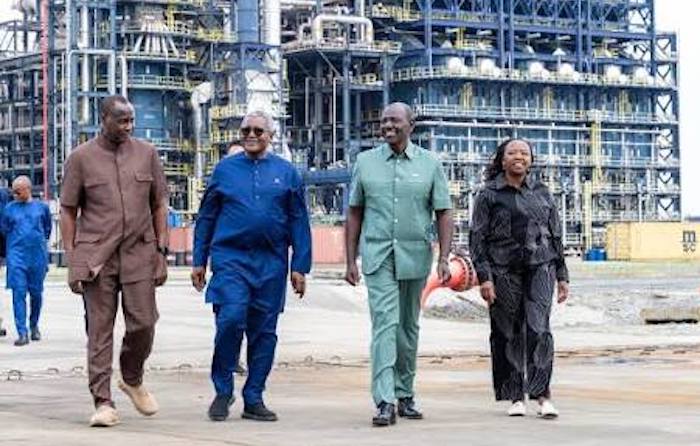
Kenya is advancing plans for a proposed $17 billion East Africa Refinery in Lamu, with President William Ruto discussing financing and implementation with Nigerian industrialist Aliko Dangote and Africa Finance Corporation CEO Samaila Zubairu during the United Nations General Assembly in New York. The 700,000-barrel-per-day facility is scheduled to break ground on September 30, 2026, and the government says it could create more than 60,000 jobs, reduce reliance on imported petroleum products and establish East Africa as a regional energy and industrial hub. Financing is expected to draw on internal funds, bond issuance, an initial public offering and equity participation by regional governments, though analysts have questioned whether Dangote’s broader energy commitments could complicate fundraising. Ruto is presenting the refinery to international investors as part of Kenya’s broader effort to attract private and institutional capital for infrastructure and industrial development. Local leaders have also called for Lamu residents to receive priority access to jobs and other economic opportunities linked to the project.
Key Points
1
The proposed financing structure would offer regional governments a combined 30% equity stake, with Kenya reportedly offered a 10% share valued at about $500 million and countries including Uganda, South Sudan, Rwanda and Tanzania eligible to participate.
2
Industry analysts have warned that Dangote’s ability to raise capital could be constrained by the group’s plans to pursue roughly $40 billion in energy projects between 2025 and 2030.
3
Lamu community leaders have called for at least 70% of jobs created by the refinery to be reserved for local residents, arguing that the host county should receive direct benefits from the investment.
4
Ruto’s discussions with Dangote also covered a proposed crude-oil pipeline, linking the refinery project to plans to develop Kenya’s oil resources, including deposits in Turkana.
5
The refinery is part of a broader shift in Kenya’s development-financing strategy away from heavy reliance on public borrowing and toward private capital, institutional investors and partnerships; Ruto is promoting this approach through an “Africa-financing-Africa” agenda at the UN General Assembly.
Sentiment
Mostly PositiveNEGATIVENEUTRALPOSITIVE
Publishers
32
Articles
24
Reach
56
A
AnonymousAuthor


