Tesla Cybercab Safety Audit
Federal Regulators Launch Safety Investigation Into Tesla's New Steering-Wheel-Free Cybercab
Anonymous
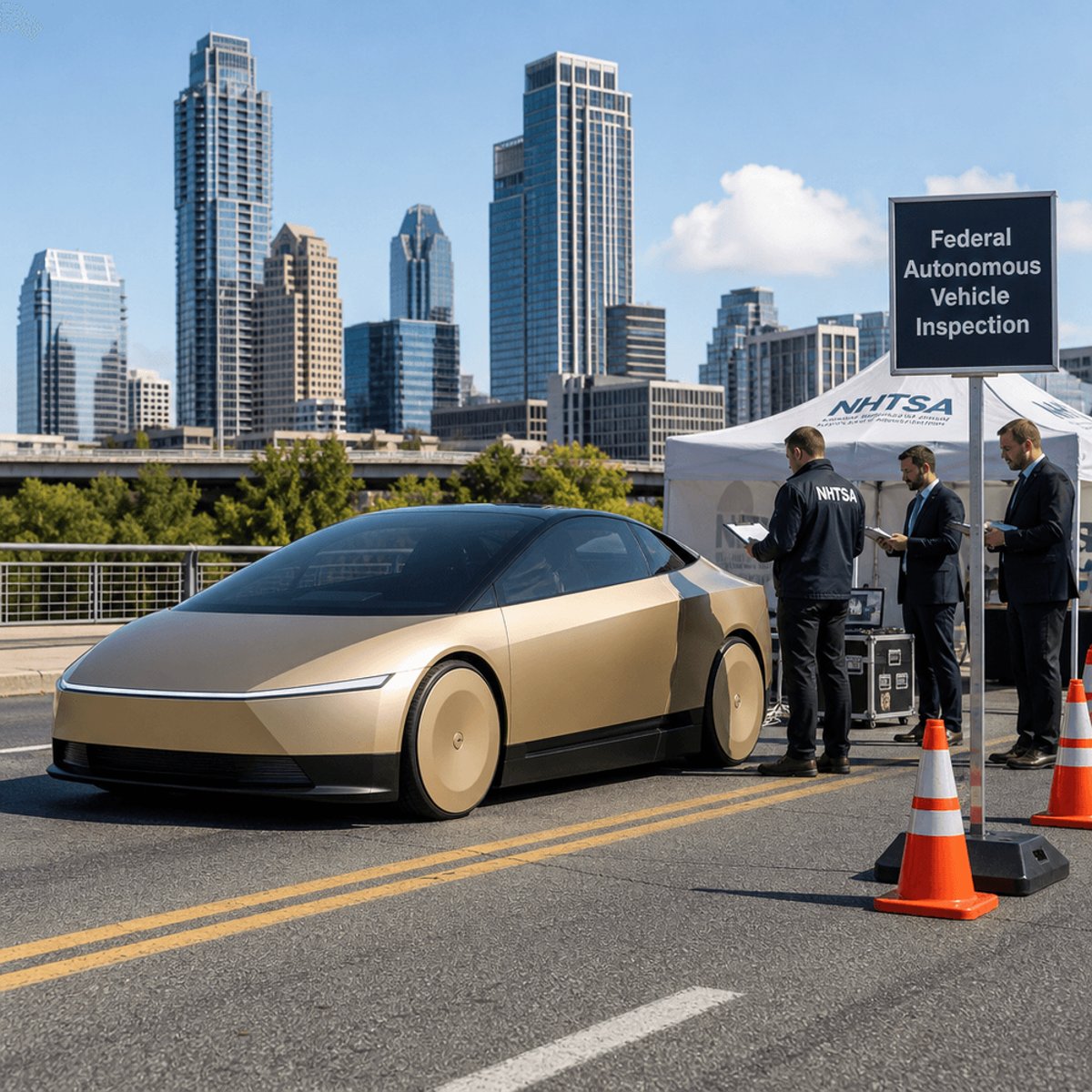
Tesla's Cybercab launch has triggered a federal safety investigation. The National Highway Traffic Safety Administration (NHTSA) opened an audit query into whether Tesla properly certified the vehicle, according to multiple news outlets. The Cybercab lacks a steering wheel, gas pedal, and mirrors—features standard on most cars.
Tesla self-certified roughly 1,000 Cybercabs as safe and legal. The company plans to gradually roll out the vehicles for commercial use. Regulators now need to verify that Tesla followed the right process and that the vehicle actually meets federal safety standards.
A Vehicle Unlike Any Other on the Road
The Cybercab is radically different from traditional cars. It has no steering wheel for human drivers to control. It has no gas or brake pedals. It has no side mirrors. Reports indicate the launch was kept secret and closed to reporters, with CEO Elon Musk notably absent from the event.
NHTSA Questions Tesla's Self-Certification Process
The NHTSA audit will examine Tesla's technical data and the methods used to certify the vehicle. Federal regulators suspect Tesla may have assumed that certain safety rules don't apply to the Cybercab. This assumption could be wrong. The audit covers all 1,000 Cybercabs already on the road.
What Self-Certification Means and Why It Matters
In the U.S., car makers can self-certify that their vehicles meet federal safety standards. They don't need NHTSA approval first. Tesla used this power to declare the Cybercab safe. But regulators can audit the work after the fact. If Tesla cut corners, the company could face penalties.
The Road Ahead for Tesla's Driverless Ambitions
Tesla plans to expand the Cybercab deployment over time. But the federal audit could slow or block these plans. If regulators find safety problems, Tesla may need to fix the vehicles or recall them. The company's strategy of launching first and getting audited later is now under serious scrutiny.
Sentiment
NeutralNEGATIVENEUTRALPOSITIVE
Publishers
14
Articles
14
Reach
14
A
AnonymousAuthor


