Institutions Over Conferences
Global Officials Urge Stronger Climate Institutions to Move Beyond Conference Statements
Anonymous
Key Points
1
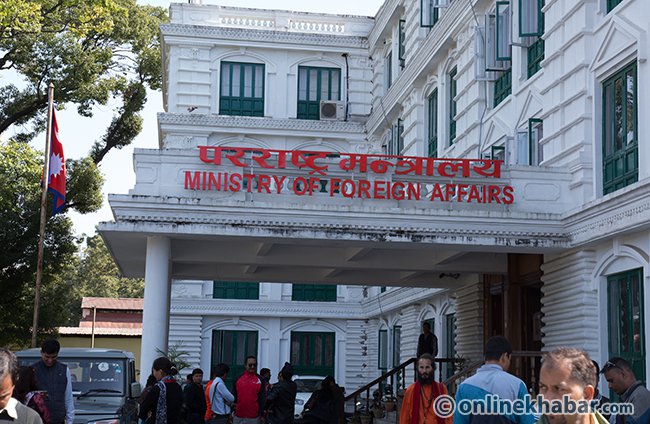
Nepal’s Foreign Minister Shishir Khanal said the Ministry of Foreign Affairs has not been sufficiently involved in climate diplomacy, despite its central responsibility for international relations; climate issues have largely remained under the Environment Ministry.
2
Khanal said Nepal needs to decide what institutional structure it requires and which international forums are best suited for presenting its position, warning that climate issues often arise and fade during international conferences.
3
Gujarat’s district climate plans cover practical changes including replacing LPG with PNG, shifting from diesel generators to electric alternatives and promoting climate-friendly practices in agriculture, animal husbandry and fisheries; the state also launched a climate action tracker and decarbonisation pathways for 20 districts.
4
Ghana’s subnational climate-governance initiative has engaged about 55 metropolitan, municipal and district assemblies and five Regional Coordinating Councils across the country’s five northern regions, with local climate units intended to help assemblies identify and pursue climate-finance opportunities.
5
The European insurance proposal is driven by a substantial coverage shortfall: only €4.5 billion of the €11 billion in losses from the 2024 Valencia floods was insured, while €13 billion of the €51 billion in 2021 Ahr Valley flood losses was covered; EU regulators have discussed a disaster fund ranging from €10 billion to €65 billion.
Officials across Nepal, Gujarat, and Ghana are pushing climate action beyond conference speeches into permanent institutions and local implementation. Nepal News reported that Foreign Minister Shishir Khanal said climate diplomacy requires coordination among foreign affairs, environmental policy, and scientific research — not just participation in UN forums and COP summits. Gujarat and Ghana are taking similar steps, establishing district-level climate plans and local governance units to embed climate action into everyday government work.
The shift reflects a hard lesson from recent disasters. Financial Times documented that only €4.5 billion of €11 billion in losses from 2024 Valencia floods was insured, while just €13 billion of €51 billion from 2021 Ahr Valley floods had coverage. European regulators are now discussing catastrophe insurance pools ranging from €10 billion to €65 billion to close the gap. Meanwhile, Nepal's Foreign Ministry established an Environment Diplomacy Branch in September to institutionalize climate coordination across agencies.
Nepal Integrates Foreign Ministry Into Climate Diplomacy
Nepal's Foreign Ministry has created a dedicated Environment Diplomacy Branch to break down silos between international negotiations and domestic climate work. The Annapurna Express reported the branch was officially established in September 2026. Foreign Minister Shishir Khanal argued that climate issues "often arise and fade" during international conferences without long-term institutional backing. He called for Nepal to decide which international forums best suit its climate position rather than treating all UN events the same.
The new structure aims to align foreign affairs, environmental policy, and scientific research. Ratopati quoted Khanal saying "we will not achieve the long-term results we desire simply by representing and addressing the UN... we must build long-term institutions." The change signals recognition that climate diplomacy has been trapped in the Environment Ministry, disconnected from broader foreign policy strategy.
Gujarat Embeds Climate Action Into District Governance
Gujarat is turning climate targets into concrete district-level operations. The Times of India reported that Climate Change Minister Arjun Modhwadia launched action plans for 20 districts in September 2026. The plans cover practical infrastructure shifts: replacing LPG with PNG, swapping diesel generators for electric alternatives, and promoting climate-friendly practices in agriculture, animal husbandry, and fisheries.
The state also launched a climate action tracker and decarbonization pathways mapped for each of the 20 districts. The Times of India noted that Modhwadia declared climate action must become a "mass movement" and "way of life" rather than staying confined to government files. At the State Climate Awards, officials stressed translating net-zero concepts into simple language and local micro-models that citizens can understand and adopt.
Ghana Builds Local Climate Finance Networks Across Five Regions
Ghana is establishing dedicated local climate units to help district assemblies access international climate finance. The subnational governance initiative has engaged about 55 metropolitan, municipal, and district assemblies plus five Regional Coordinating Councils across Ghana's five northern regions. Local climate units are designed to identify and pursue climate-finance opportunities that were previously inaccessible to smaller jurisdictions.
EU Proposes Massive Insurance Pool to Cover Climate Disaster Gaps
Europe's insurance shortfall is staggering. Financial Times reported that only €4.5 billion of the €11 billion in losses from October 2024 Valencia floods was insured — a 41% coverage gap. In Germany's 2021 Ahr Valley floods, only €13 billion of €51 billion in damage was covered, leaving a 75% gap. These gaps are driving regulatory action.
Financial Times documented that the European Insurance and Occupational Pensions Authority and European Stability Mechanism issued a joint discussion paper in April 2026 proposing a catastrophe insurance pool worth €10 billion to €65 billion. The mechanism would use the EU's credit rating to issue cheap debt and reinsure member states against extreme weather. Some critics, however, argue the plan expands Brussels bureaucracy and risks subsidizing high-risk real estate development.
Sentiment
Mostly NegativeNEGATIVENEUTRALPOSITIVE
Publishers
30
Articles
15
Reach
45
A
AnonymousAuthor


