Voter Roll Review Ordered
Delhi court orders fresh review in Sonia Gandhi voter-roll inclusion case.
Anonymous
Key Points
1
The complaint was filed by Advocate Vikas Tripathi, vice-president of the Central Delhi Court Bar Association at the Rouse Avenue courts, who sought registration of an FIR over the alleged electoral-roll irregularity.
2
The allegations included the claimed use of forged documents to have Sonia Gandhi’s name added to the 1980 electoral rolls, according to the report on the court’s proceedings.
3
Justice Vishal Gogne said the magistrate had not examined the significance of the alleged sequence in which Gandhi’s name was included, deleted and included again in electoral rolls for 1980, 1982 and 1983.
4
The court held that allegations involving the possible tampering or fraudulent inclusion of a voter or non-citizen in electoral rolls warranted a reasoned determination of whether offenses such as forgery or cheating were made out.
5
In a pointed observation, Judge Gogne said that “law is ordained as the first love for any judicial order” and that an order must not “flirt with the facts.”
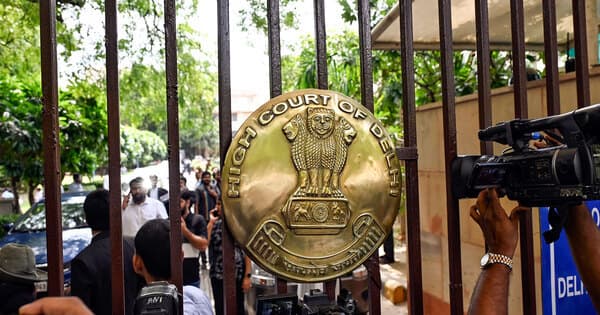
A Delhi court has ordered a magistrate to reconsider allegations that Congress leader Sonia Gandhi's name appeared on electoral rolls before she acquired Indian citizenship in 1983. Mid-Day reported that Special Judge Vishal Gogne overturned the magistrate's earlier refusal to investigate, calling the decision legally flawed and lacking proper reasoning. The judge said the magistrate failed to follow required procedures, including obtaining a police report and hearing investigators.
Advocate Vikas Tripathi filed the complaint in 2025, claiming Sonia Gandhi's name was added to the 1980 electoral roll using forged documents—three years before she became an Indian citizen on April 30, 1983. The Hans India noted that the case highlights a sequence where Gandhi's name was included, deleted, and re-included across electoral rolls for 1980, 1982, and 1983. The matter returns to court on September 29, though this ruling does not prove the allegations are true.
Judge Faults Magistrate for Skipping Legal Steps
Special Judge Vishal Gogne highlighted procedural failures in the lower court's order. Global Kashmir reported that the magistrate never obtained a status report from police, never heard from the investigating officer, and never properly examined whether the allegations disclosed a crime. The judge said such oversights violated the Bharatiya Nagarik Suraksha Sanhita, the law requiring magistrates to follow specific steps before rejecting criminal complaints.
Gogne stressed that courts must issue "reasoned" orders addressing the facts at hand. Organiser quoted the judge saying "law is ordained as the first love for any judicial order" and that courts must not "flirt with the facts." The original magistrate's order was too brief and ignored key questions: Had Gandhi's name been added through fraud? Did the deletion and re-addition suggest wrongdoing?
The Timeline of Electoral Roll Shifts
According to the complaint, Sonia Gandhi's electoral status changed three times in four years. She appeared on the 1980 New Delhi parliamentary constituency voter list while still holding Italian citizenship. India's News documented that her name was then deleted from the 1982 roll, only to reappear on January 1, 1983—just four months before she became a citizen on April 30, 1983.
Judge Gogne found this pattern legally significant. The judge noted the magistrate had failed to examine "the significance of the alleged sequence" in which Gandhi's name moved on and off the rolls. The complaint alleges forged documents were used to add her name despite her non-citizen status. This raises criminal questions about forgery and cheating that the magistrate should have investigated.
Gandhi Calls Allegations Politically Motivated
In her court response filed in February 2026, Sonia Gandhi rejected all charges as "wholly misconceived, frivolous, and politically motivated." Mid-Day reported that she argued the complaint relied on "speculative assumptions, media reports, and imaginary applications" rather than solid evidence. She emphasized that the complainant submitted only "photocopies of photocopies"—not original voter registration documents.
Gandhi's defense team stressed that no primary evidence supports the forgery claims and that the 40-year-old allegations appear timed to damage her politically. Yet the court's ruling does not address whether the allegations are true. Judge Gogne explicitly stated that the revisional court does not assume the magistrate's investigative role or confirm that any crime occurred.
What Happens Next in Court
The magistrate must now hold a fresh hearing and follow proper procedures. The judge directed the court to seek a detailed police status report, hear the investigating officer's views, and issue a "speaking order" that explains the reasoning. Global Kashmir noted the magistrate must then decide: Should an FIR be registered, or should the complaint be dismissed? This decision will determine whether a criminal investigation into the allegations can proceed.
The next hearing is set for September 29, 2026. While the judge's order reinstates the complaint's chance for investigation, it makes no judgment on its merits. Legal experts emphasize that the ruling is purely procedural—the court is saying the magistrate failed to follow the law properly, not that Sonia Gandhi is guilty of any crime.
Sentiment
Mostly NegativeNEGATIVENEUTRALPOSITIVE
Publishers
35
Articles
24
Reach
59
Topics
A
AnonymousAuthor