Persistent Electron Density Waves
Researchers Find Persistent Electron Pairs Beyond Superconductivity in Uranium Ditelluride
Anonymous
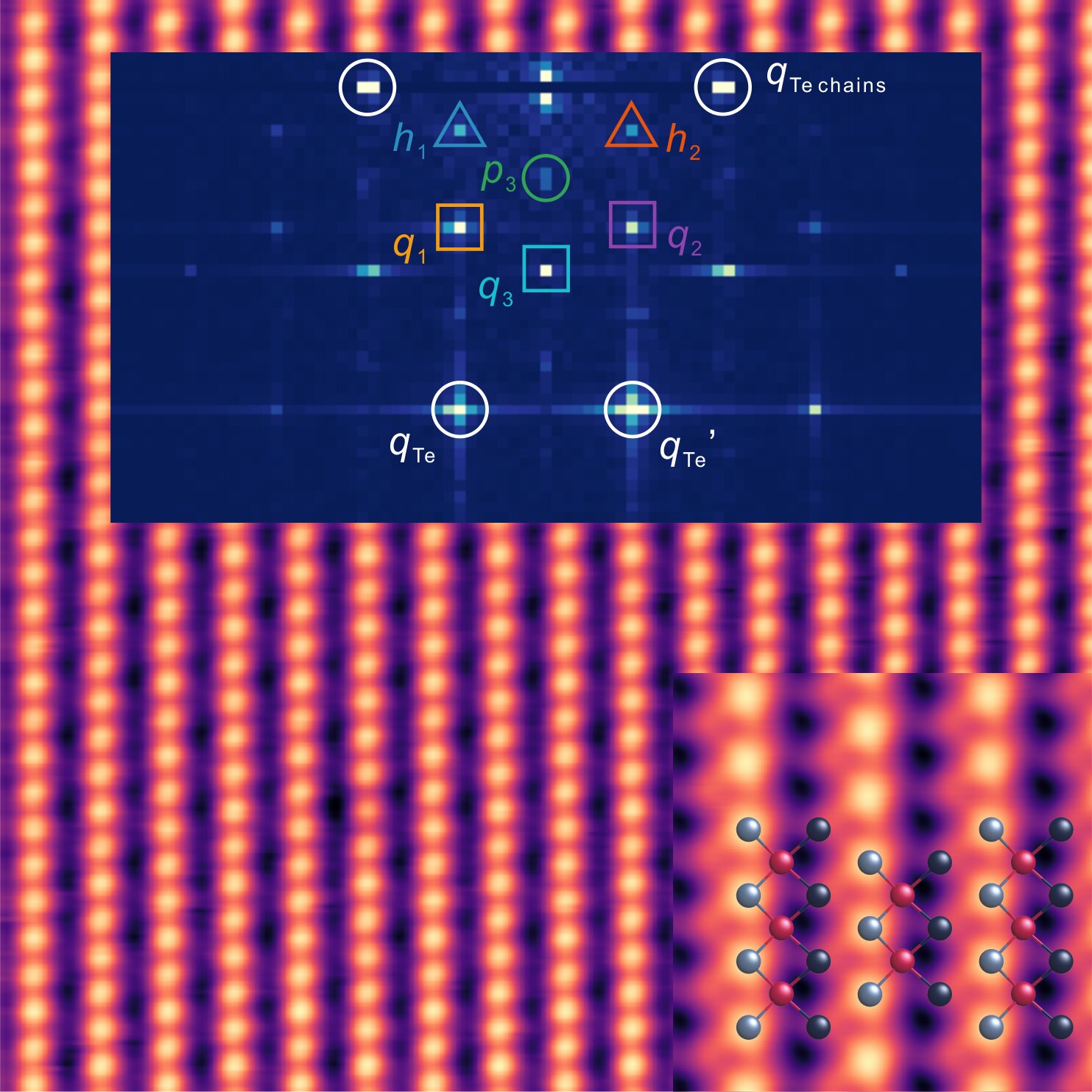
Researchers at the University of Illinois Urbana-Champaign report direct evidence that uranium ditelluride hosts pair density waves (PDWs), patterns in the density of Cooper pairs. The patterns persist above the temperature at which the material’s superconducting phase disappears, supporting a long-standing prediction that paired electrons can remain organized even without superconductivity’s zero-resistance state. Using higher-quality samples, the team observed spectral signatures that responded to temperature and magnetic fields as expected for PDWs. The finding could help scientists understand unconventional superconductors and the distinct electronic states they can support.
Key Points
1
The researchers said PDWs are difficult to identify because, in experiments, they can resemble conventional superconductivity in some ways and charge density waves in others, complicating efforts to confirm the state in real materials.
2
Before this result, PDWs had been observed alongside superconductivity in other metals; the uranium ditelluride findings provide evidence that they can also persist after superconductivity disappears.
3
Project co-lead Eduardo Fradkin likened the lingering PDW to the Cheshire Cat’s grin: “They are the vestige that remains once the phase itself has disappeared.”
4
The research was reported in the Proceedings of the National Academy of Sciences (PNAS).
Sentiment
Mostly NegativeNEGATIVENEUTRALPOSITIVE
Publishers
5
Articles
2
Reach
7
A
AnonymousAuthor


