Unlocking Quantum Electron States
Physicists Use 3D Light Fields to Unlock Previously Inaccessible Electron States
Anonymous
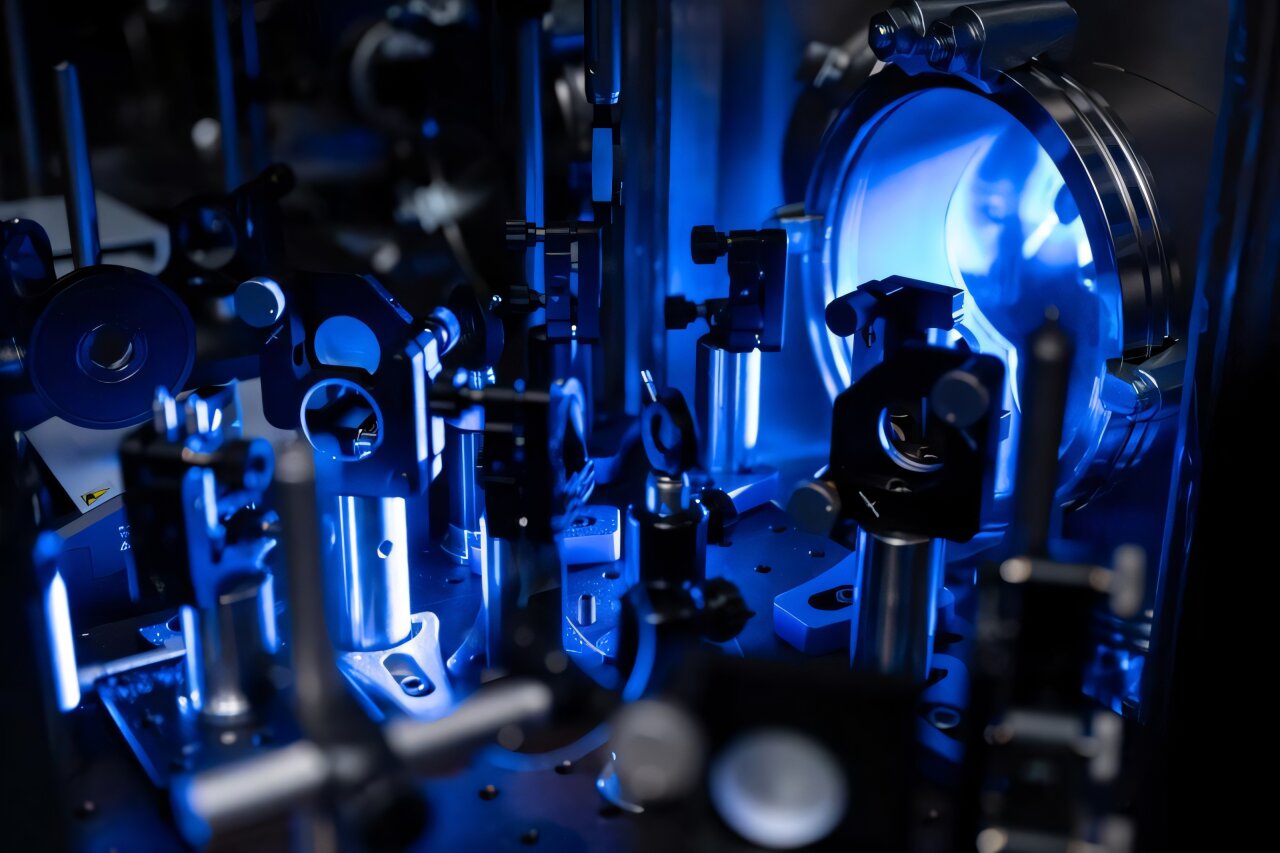
Physicists at the University of Oldenburg created controllable three-dimensional light fields by intersecting two ultrashort laser pulses of different colors. Unlike conventional laser fields, which generally oscillate within a plane, the new fields oscillate in all three spatial directions and allowed the researchers to excite and observe previously inaccessible electron quantum states in potassium atoms. The technique could help scientists investigate fast light–matter interactions and, eventually, distinguish mirror-image molecules.
Key Points
1
The pulses were about 20 femtoseconds long and centered at different wavelengths: 929 nanometers for the redder pulse and 720 nanometers for the bluer one.
2
The researchers sent the pulses toward a shared point at a 45-degree angle; changing their polarization allowed them to control the resulting 3D light field’s shape.
3
The team used a stroboscopic approach, observing electron-state changes at short intervals to capture successive stages of their evolution like frames in a movie.
4
Matthias Wollenhaupt said the method expands the experimental optics toolkit with “a new class of three-dimensional light fields.”
Sentiment
Mostly PositiveNEGATIVENEUTRALPOSITIVE
Publishers
8
Articles
7
Reach
15
Topics
A
AnonymousAuthor


