Automakers battle for military vehicle deal
Ford joins GM, BC Customs in bid for U.S. Army's next tactical truck
Anonymous
Key Points
1
GM is targeting a contract value exceeding $1 billion to produce about 10,000 Infantry Squad Vehicles for the Army if funding is approved.
2
Oshkosh, a major U.S. military vehicle maker, could be affected by future tactical-vehicle procurement decisions as the Army advances its program.
3
Ford CEO Jim Farley says Ford is in discussions with the Pentagon on multiple defense initiatives beyond vehicles, including military vehicles, semiconductor production, and critical mineral supply chains.
4
The Defense Department has publicly urged domestic automakers to scale up production capabilities for military equipment, signaling a broader push to strengthen the defense industrial base.
5
All three contenders—Ford, GM, and BC Customs—are slated to develop vehicles for Army testing next year as part of an effort to field about 600 trucks.
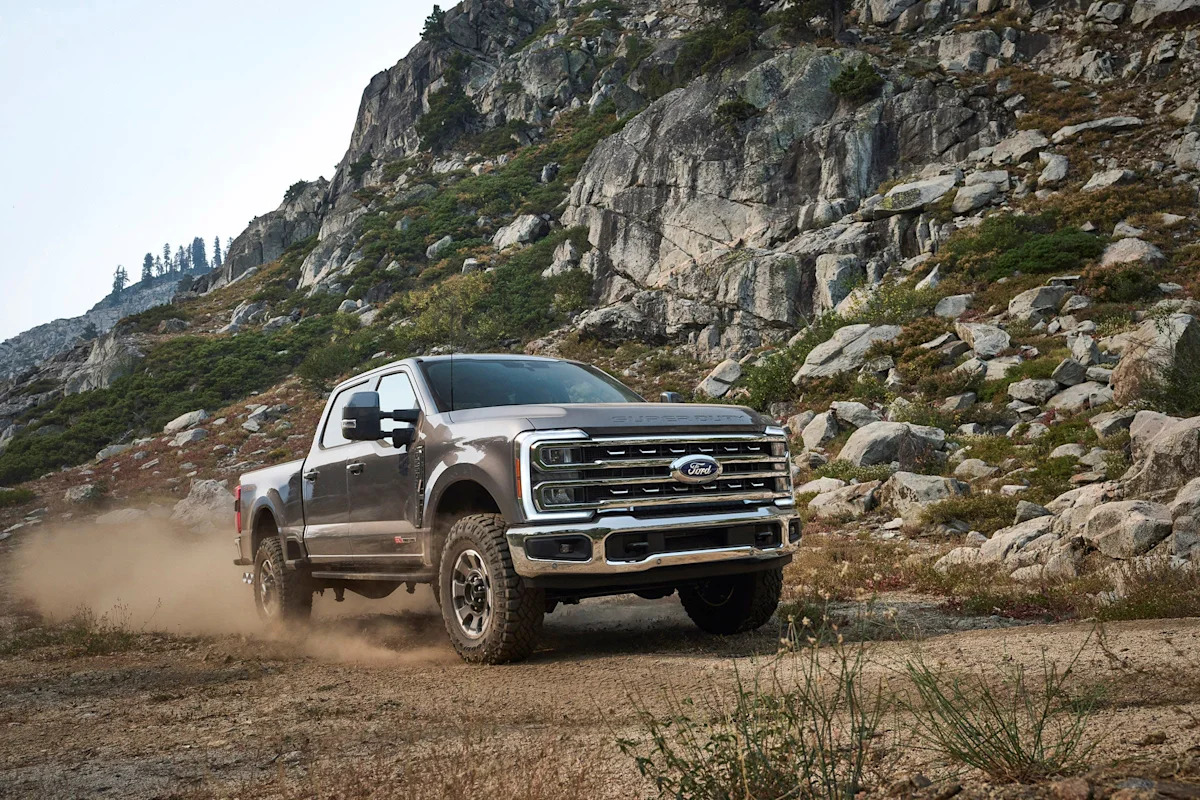
Ford Motor Co. has entered the race to build the U.S. Army's next tactical truck, securing a contract to develop three prototypes based on its F-Series Super Duty pickup, according to Fox Business. The move makes Ford the second major automaker — alongside General Motors — competing for what could be the company's biggest military vehicle opportunity since the Cold War.
All three contenders — Ford, GM, and BC Customs — will build prototype vehicles for Army testing next year, Yahoo Finance reported. The Army program aims to field roughly 600 trucks designed for troop transport and to power advanced battlefield technology.
Ford Bets F-Series Super Duty Can Win Army Deal
Ford's pitch centers on speed and cost. The company argues that adapting its commercial Super Duty trucks — already proven for rugged civilian work — can deliver military-grade capabilities faster and cheaper than building from scratch. Ford Pro's existing service network and parts supply chain back up that case, according to AOL News.
Ford CEO Jim Farley says the company is talking to the Pentagon about more than just trucks. Farley cited discussions covering military vehicles, semiconductor production, and critical mineral supply chains. If Ford wins the full contract, Yahoo Finance noted it would mark the automaker's largest military deal since the 1950s.
GM and BC Customs Already Deep in the Fight
GM is not waiting around. The automaker is already field-testing its ISV-Heavy prototype, a vehicle derived from the Chevrolet Silverado, according to Detroit News. GM is targeting a contract worth more than $1 billion if the Army approves funding to eventually buy about 10,000 Infantry Squad Vehicles.
BC Customs, a smaller player, also received a prototype contract — a sign that the Pentagon is casting a wide net. The inclusion of three competitors signals a serious push to find the best design, not just the most familiar name. Established defense truck maker Oshkosh could feel pressure depending on how the Army's broader procurement plans develop.
Pentagon Pushes Automakers to Arm Up Faster
The truck competition fits into a bigger Pentagon strategy. The Defense Department has publicly called on domestic automakers to scale up production for military needs, Newsmax reported. Officials want to rebuild equipment stocks depleted by ongoing global conflicts and to strengthen the U.S. defense industrial base under the Trump administration.
The Army's approach — using commercial truck platforms instead of fully custom designs — reflects urgency. Off-the-shelf technology can reach soldiers faster. Ford executives have emphasized that point, framing their Super Duty platform as a ready-now solution for government needs, according to Fox Business.
What Comes Next for the $1 Billion Truck Race
Prototype testing begins next year. After that, the Army will evaluate results and decide which design moves forward toward full production. The initial buy of about 600 trucks is the first step, but GM's pursuit of a 10,000-vehicle order shows how large the eventual prize could grow, according to AOL News.
For Ford, the stakes are high but the timing is right. The company has both the platform and the political moment working in its favor. Whether the F-Series Super Duty can outperform GM's Silverado-based rival — and win over Army testers — will become clear after vehicles hit the testing grounds next year.
Sentiment
Mostly PositiveNEGATIVENEUTRALPOSITIVE
Publishers
11
Articles
16
Reach
27
A
AnonymousAuthor


