Ancient European Discoveries
Archaeologists Unearth Roman Ruins and Medieval Workshops Across Several European Sites
Anonymous
Key Points
1
At Govan Old, the shale ring may have been intended to imitate jet, a rare and expensive material associated with high-status jewelry. The site’s Christian origins also predate Iona: radiocarbon dating places two early Christian burials beneath the later church between CE 435 and 601.
2
The Caerleon excavation is taking place as part of construction of a new full-size sports hall, upgraded changing facilities and modern teaching spaces at Caerleon Comprehensive School. Heneb, the Trust for Welsh Archaeology, is conducting a full excavation and recording the material uncovered.
3
The Sasamón kitchen was built with adobe walls on stone plinths and compacted-clay floors laid over pebbles, reflecting economical domestic construction. Archaeologist José Manuel Costa said the room offers a corrective to idealized images of Roman cities dominated by mosaics and painted walls.
4
The Ligornetto building measured roughly eight meters wide and at least 11 meters long, with six rooms and a portico about three meters wide facing a local road. Archaeologists also found evidence of occupation at the site from the Iron Age through the early Middle Ages, indicating nearly a millennium of continuous use.
Archaeologists across Europe have uncovered a treasure trove of ordinary life from ancient and medieval times. From a shale finger ring in Scotland to a kitchen in Spain, the finds reveal craft production and daily work rather than grand monuments. Archaeology Magazine reports that an early medieval jewelry workshop was discovered at Govan Old in Glasgow, while Greek Reporter documented a 2,000-year-old Roman settlement unearthed in Switzerland.
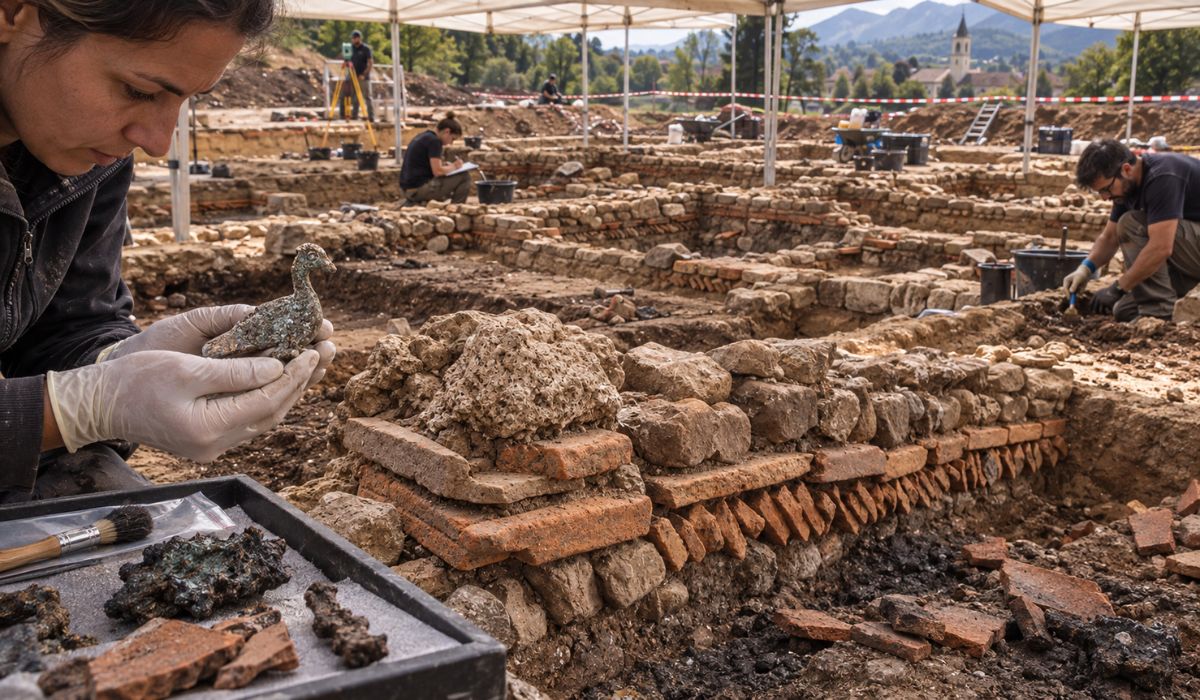
These excavations span four countries and show how people actually lived and worked centuries ago. A Roman kitchen in Spain reveals how families cooked. A Swiss roadside settlement bustled with metalworkers for nearly 1,000 years. A Welsh school construction site uncovered a Roman road seven meters wide. Together, they paint a detailed picture of everyday Europe.
Medieval Jewelry Maker's Tools Found in Scotland
At Govan Old in Glasgow, an unfinished shale finger ring suggests the site supported jewelry making for elite communities around 1,500 years ago. Archaeology Magazine reports the ring may have imitated jet, a rare and expensive material used in high-status jewelry. Radiocarbon dating places two early Christian burials beneath the later church between CE 435 and 601, making Govan Old's Christian origins earlier than nearby Iona.
Roman Fortification Emerges Under Welsh School
Construction at Caerleon Comprehensive School in Wales revealed ancient military infrastructure buried underground. Magzter reports archaeologists discovered a suspected parade-ground wall and a road about seven meters wide—clear evidence of Roman occupation. The Trust for Welsh Archaeology is conducting a full excavation while the school builds a new sports hall and upgraded changing facilities.
Spanish Kitchen Shows Ordinary Romans at Work
In Sasamón, northern Spain, excavations revealed a late first-century B.C. or early first-century A.D. kitchen with an oven, ash, and food-preparation artifacts. The room had adobe walls on stone plinths and compacted-clay floors laid over pebbles. Archaeologist José Manuel Costa noted the kitchen offers a corrective to idealized images of Roman cities dominated by mosaics and painted walls. This was how average people actually cooked and lived.
Swiss Settlement Thrived for Nearly 1,000 Years
In Ligornetto, Switzerland, a roadside Roman settlement produced goods and crafts from at least the late Iron Age through the early Middle Ages. Greek Reporter reports the main building measured roughly eight meters wide and at least 11 meters long with six rooms and a portico. Click Petroleo e Gas notes archaeologists found second- and third-century iron- and bronze-working areas, agricultural space, and a small bronze peacock brooch linked to the goddess Juno. The site shows nearly 1,000 years of continuous occupation and use.
Sentiment
Mostly NegativeNEGATIVENEUTRALPOSITIVE
Publishers
10
Articles
3
Reach
13
A
AnonymousAuthor


