Roman Roads Bypassed Rome
New Digital Atlas Reveals Ancient Roman Road Network Bypassed Rome
Anonymous
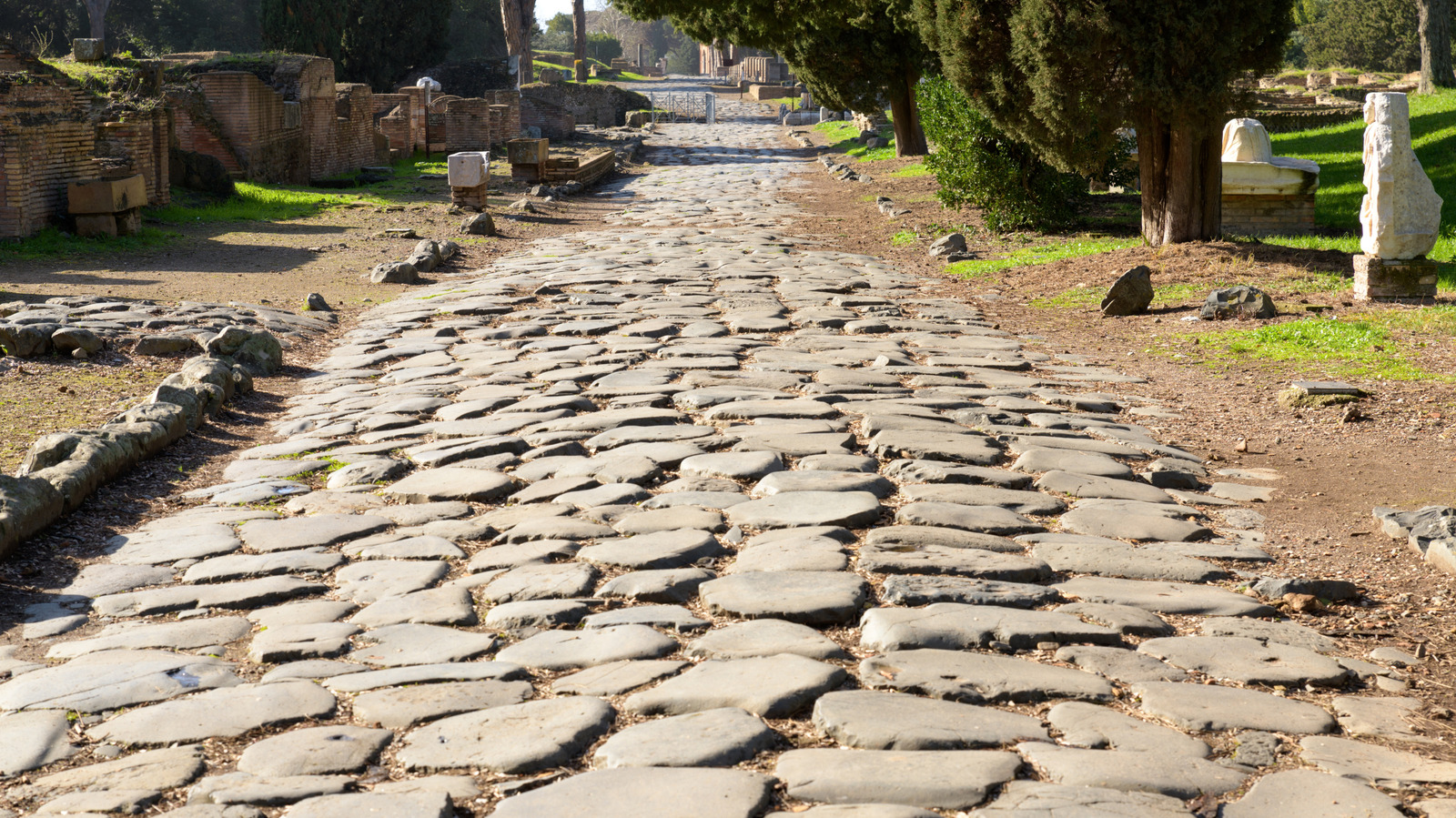
A new analysis of the Roman Empire’s road network challenges the saying that “all roads lead to Rome,” finding that the most central overland route bypassed Rome and ran from North Africa through modern-day Turkey and Constantinople before heading toward Milan. Rome remained the empire’s political and economic center, but its position on the Italian peninsula made it better connected by Mediterranean shipping than by land routes. Researchers used the Itiner-e digital atlas, historical records, archaeological reports, satellite imagery and earlier datasets to reconstruct nearly 300,000 kilometers of roads linking Europe, North Africa and the Middle East. The network supported military deployments, trade, administration and communication across the empire, while its routes were shaped by mountains, rivers and other terrain rather than being uniformly straight. Constantinople’s prominence reflected its strategic position between Europe and Asia and the eastward shift of imperial power, though the reconstruction remains uncertain because only about 2.7% of road locations are known with precision.
Key Points
1
In 20 BC, Emperor Augustus placed the Milliarium Aureum, or Golden Milestone, in the Roman Forum. The monument symbolically marked the point from which distances to the empire’s provinces were measured.
2
Constantinople’s importance was reinforced in AD 324, when Emperor Constantine I moved the imperial capital there from Rome for strategic and economic reasons; the city had previously been known as Byzantium.
3
The road atlas estimates that about 90% of the routes were mapped, while 7% remain hypothetical; only 2.7% of road locations could be established with certainty, underscoring the limits of the reconstruction.
4
Roman road construction varied by region and could involve crushed stone, lime-based binding materials and stone slabs, rather than following a single standardized building method.
5
The phrase “all roads lead to Rome” did not originate in antiquity, but emerged later, meaning the saying itself should not be treated as a direct Roman description of the empire’s road network.
Sentiment
Mostly NegativeNEGATIVENEUTRALPOSITIVE
Publishers
5
Articles
10
Reach
15
Topics
A
AnonymousAuthor


