Kursk Plant Drone Strike
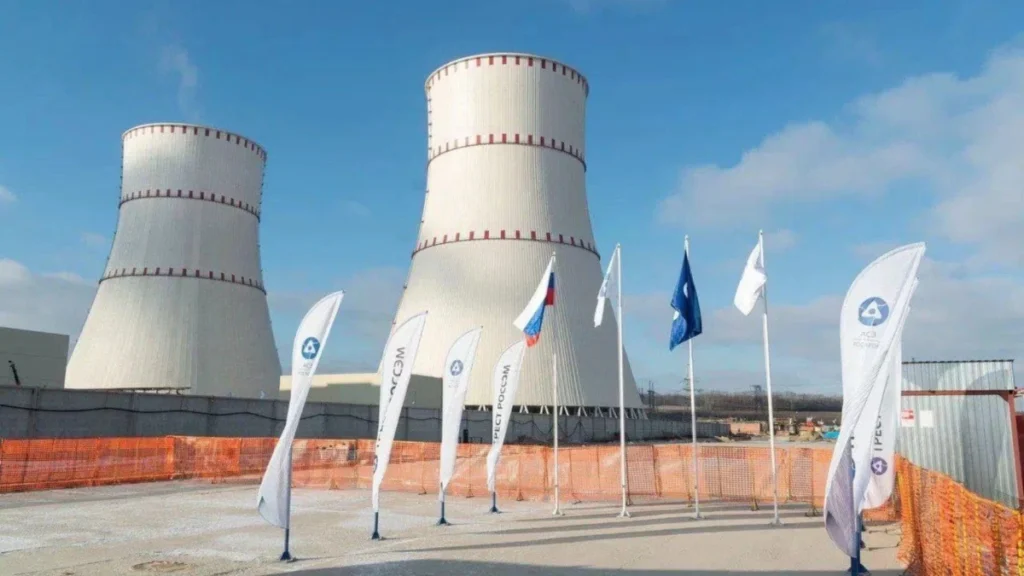
IAEA Reports Drone Strike on Cooling Tower at Kursk Nuclear Complex
Anonymous
Key Points
1
The under-construction Kursk-II complex is intended to replace the existing plant’s Soviet-era RBMK reactors, the same reactor design used at Chernobyl. Its new units are designed as VVER-TOI pressurized-water reactors.
2
Russian authorities said air defenses intercepted 12 unmanned aerial vehicles in the Kurchatov area during the period surrounding the July strike, suggesting the drone that hit the cooling tower evaded the defensive system.
3
The cooling tower is part of the plant’s heat-removal system and is physically separate from the reactor itself, providing context for why the reported damage did not immediately affect reactor operations.
4
The Kursk area has faced repeated military activity: Ukrainian forces launched a surprise incursion into the region in 2024 and occupied parts of it for several months, while Russian media later reported that air defenses shot down a Ukrainian combat drone near the plant in August 2025.
5
Kursk-II Unit 1 reportedly entered commercial operation in May 2026, while the struck Unit 2 remained under construction and had not yet become operational.
A drone struck the cooling tower at Russia's Kursk nuclear power plant near the Ukrainian border, the International Atomic Energy Agency reported. IAEA said there was no fire, no change to the reactor's operating status, and no immediate radiological danger. IAEA Director General Rafael Grossi called attacks on nuclear facilities "unacceptable" and urged maximum military restraint to prevent a nuclear disaster.
The incident marks another dangerous moment in the Russia-Ukraine conflict, which has repeatedly brought military action close to critical infrastructure. Ukraine has launched multiple operations in Russia's Kursk region since 2024, while Moscow has maintained air defenses around the plant. The cooling tower, part of the heat-removal system, is physically separate from the reactor itself, explaining why damage did not immediately affect operations.
Cooling Tower Hit But Reactor Unharmed
The drone struck the cooling tower—a structure that removes heat from the reactor but sits apart from the core. IAEA confirmed no damage to the reactor unit itself and no change in its operational status. Russian authorities had previously stated that air defenses intercepted 12 unmanned aerial vehicles in the Kurchatov area, suggesting this particular drone evaded the defensive system.
Two Reactor Designs at the Kursk Complex
The Kursk nuclear complex houses two different reactor systems. The older facility operates Soviet-era RBMK reactors—the same design that failed catastrophically at Chernobyl in 1986. Free Press Journal reported that Kursk-II, the newer under-construction complex, was designed with safer VVER-TOI pressurized-water reactors instead.
Unit 1 at Kursk-II entered commercial operation in May 2026. Unit 2, which appears to be the target of the July drone strike, remained under construction and was not yet operational. This detail matters: a non-operational reactor poses significantly less risk than a running one.
Escalating Military Risk Near Nuclear Sites
The Kursk region has become a flashpoint throughout the conflict. Ukrainian forces launched a surprise incursion into Kursk in 2024 and occupied parts of it for several months. Russian media later reported that air defenses shot down a Ukrainian combat drone near the plant in August 2025, showing this is not a one-time event.
IAEA Director General Grossi has repeatedly warned that military activity near nuclear facilities poses catastrophic risks. A direct hit on an active reactor core or spent-fuel pool could release massive amounts of radiation across multiple countries. The cooling tower damage, while contained, underscores how close modern warfare has brought the world to a potential radiological disaster.
IAEA Calls for Military Restraint
The IAEA has made clear that intentional or accidental strikes on nuclear plants must stop. IAEA urged both Russia and Ukraine to exercise "maximum military restraint" in areas near nuclear infrastructure. Grossi said the organization is in direct contact with Russian authorities to monitor conditions and prevent further escalation.
Sentiment
Mostly NegativeNEGATIVENEUTRALPOSITIVE
Publishers
25
Articles
75
Reach
100
A
AnonymousAuthor


