Black Holes Trigger Star Birth
Active Supermassive Black Holes May Actually Promote Star Formation Instead Of Suppressing It
Anonymous
Key Points
1
The observed star-forming rings and arcs span roughly 2,600 to 19,600 light-years, or about 0.8 to 6 kiloparsecs, from the galaxies’ centers.
2
The shock fronts consistently appeared perpendicular to the AGN’s radiation cones and outflows. The researchers said the pattern is broadly consistent with jets interacting with the interstellar medium, although winds may produce the shocks in weaker AGNs.
3
Lead author Peixin Zhu emphasized that the observations revealed both sides of the black-hole process: “Once we resolved them, we could see that they not only accrete things, but they also eject things,” adding that “the injection and accretion are linked with each other.”
4
The result could require revisions to galaxy-formation simulations, which have generally modeled AGN feedback as heating or expelling molecular gas and thereby shutting down star formation; the study’s authors instead describe a feedback cycle in which black-hole activity can reshape its surroundings and potentially help create stellar nurseries.
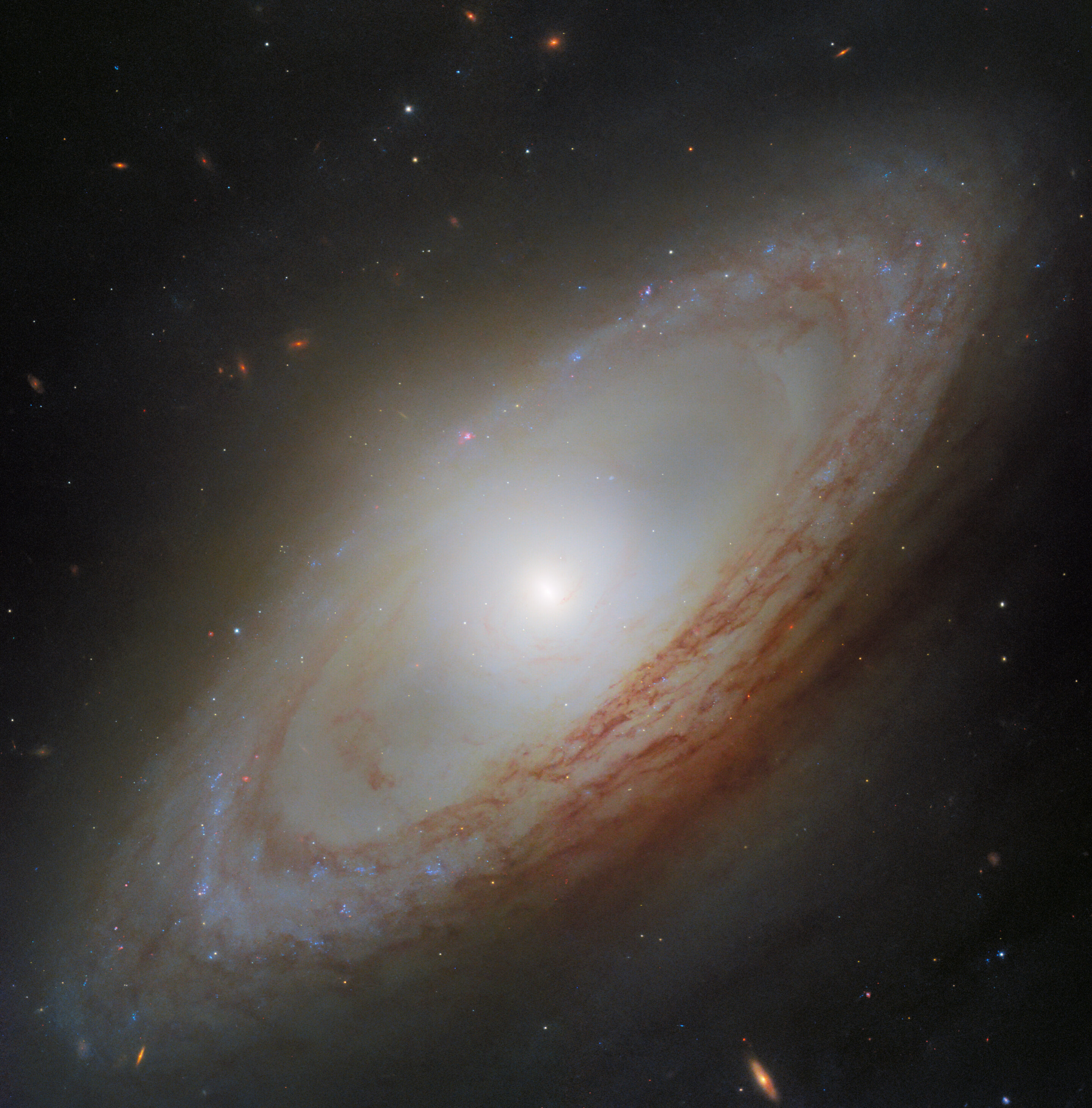
Supermassive black holes have long been thought to snuff out star formation by blasting away gas with radiation and violent outflows. But a new study of nine nearby galaxies flips that script: active black holes may actually spark stellar birth European Southern Observatory. Using the Very Large Telescope and Chandra X-ray Observatory, researchers spotted star-forming rings and shock waves linked to black-hole activity, suggesting that outflows compress surrounding gas instead of just destroying it.
A Counterintuitive Pattern Around Black Holes
The research team observed nine active galaxies and found something surprising: star-forming rings and arcs scattered 2,600 to 19,600 light-years from each galaxy's center European Southern Observatory. The shock fronts appeared perpendicular to the black holes' radiation cones and outflows. Lead researcher Peixin Zhu noted the dual nature: "Once we resolved them, we could see that they not only accrete things, but they also eject things," he said European Southern Observatory.
How Black-Hole Outflows Reshape Surrounding Gas
The conventional model of black-hole feedback predicts that radiation and outflows heat or blow away gas, killing star formation. But the nine galaxies tell a different story European Southern Observatory. Shock waves from black-hole jets appear to compress nearby gas rather than simply disperse it. This compression may trigger gravitational collapse and spark new stars, turning black holes into unlikely stellar architects.
What This Means for Galaxy-Formation Models
Current computer simulations of galaxy evolution treat black-hole feedback as a star-killing process European Southern Observatory. These models assume heated or expelled gas cannot form stars. The new findings suggest a more complex feedback loop: black-hole activity reshapes its surroundings and may actually promote stellar birth. Researchers used three-dimensional diagnostic tools to separate radiation, star formation, and shocks, confirming the pattern across the sample European Southern Observatory.
Why This Study Still Needs Validation
The study examined only nine galaxies, a limited sample that prevents firm generalizations European Southern Observatory. Different types of active nuclei may produce different effects: jets in powerful black holes may compress gas and spark stars, while winds in weaker ones might work differently. Researchers call for follow-up observations to test whether this star-promoting feedback cycle holds across a broader range of galaxies and black-hole types European Southern Observatory.
Sentiment
Mostly NegativeNEGATIVENEUTRALPOSITIVE
Publishers
17
Articles
2
Reach
19
A
AnonymousAuthor


