Rare Eyeless Cavefish Discovery
University of Alabama Scientists Discover New Eyeless Cavefish, Potentially Among World's Rarest Species
Anonymous
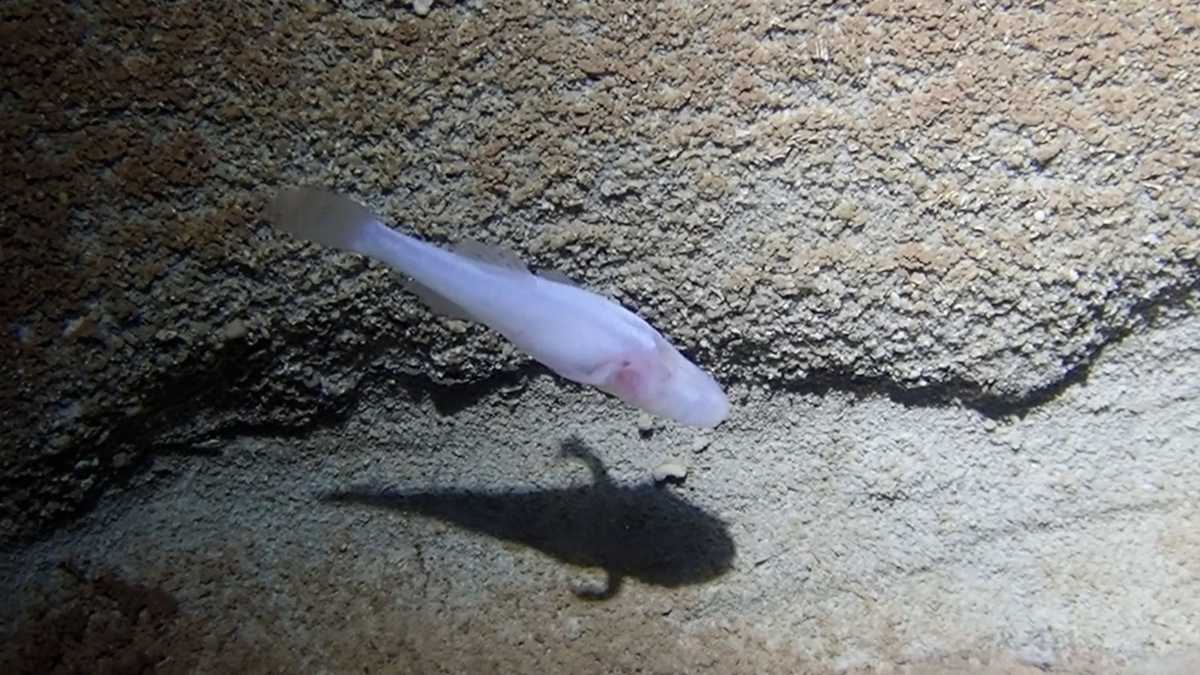
Scientists at the University of Alabama have discovered a new species of cavefish so rare it may be one of the rarest fish on Earth, according to KMBC. The creature is eyeless, has no pigment, sports a hunchback, and carries spiny rays — a look that inspired its name: Demogorgonichthys arcanus, named after the monster from the Netflix hit "Stranger Things."
The fish was found in a cave system and appears to live in just one small area, making its population extremely limited. Researchers say its discovery hints that other unknown species may still be hiding in well-studied cave systems around the world.
A Hunchbacked, Eyeless Fish Unlike Any Other
Demogorgonichthys arcanus looks like nothing else in the cavefish family. It is completely blind and has no skin pigment — both common traits in cave-dwelling fish. But its hunchback body, spiny rays, and uniquely shaped snout set it apart from every other known cavefish species, WCVB reported.
Scientists know little about how the fish reproduces. They believe it is an opportunistic eater — meaning it will eat whatever prey fits inside its mouth. Cave environments offer few food sources, so this flexibility is key to survival.
Named After the Monster From "Stranger Things"
The species name Demogorgonichthys arcanus was chosen deliberately. "Demogorgon" comes from the terrifying creature in the Netflix series "Stranger Things," while "arcanus" is Latin for "secret" or "hidden." The name reflects both the fish's eerie appearance and the mystery of its cave habitat, according to KCRA.
The study was led by Matthew Niemiller, an associate professor of biological sciences at the University of Alabama, alongside co-author Jonathan Armbruster. Their findings were published in a formal scientific study on the new species.
Discovery Suggests More Hidden Species May Exist
Finding this species in a cave system that scientists have already studied closely is a big deal. Researchers say it shows that even well-explored areas may still hold unknown creatures. More undiscovered species could be hiding in caves across the region, MyNBC5 reported.
The demon cavefish is believed to live in only one location, making its total population very small. That limited range puts it at serious risk. Scientists say conservation efforts may be needed before the species can even be fully studied.
Sentiment
NeutralNEGATIVENEUTRALPOSITIVE
Publishers
8
Articles
8
Reach
8
A
AnonymousAuthor


