Tucson School Closures
Tucson Unified School District Considers Closing Ten Schools Amid Declining Enrollment
Anonymous
Key Points
1
The meetings will provide child care for children ages 3 to 12, along with food and translation services, to make participation more accessible to families.
2
TUSD hired Denver-based consultant Bill de la Cruz’s firm for $75,000 to facilitate the community meetings, assist with school-consolidation work and develop messaging for Tucson residents.
3
The 31-member reconfiguration committee includes Tucson political figures, union leaders, business representatives and parents; members were invited to attend the listening sessions but were not required to do so.
4
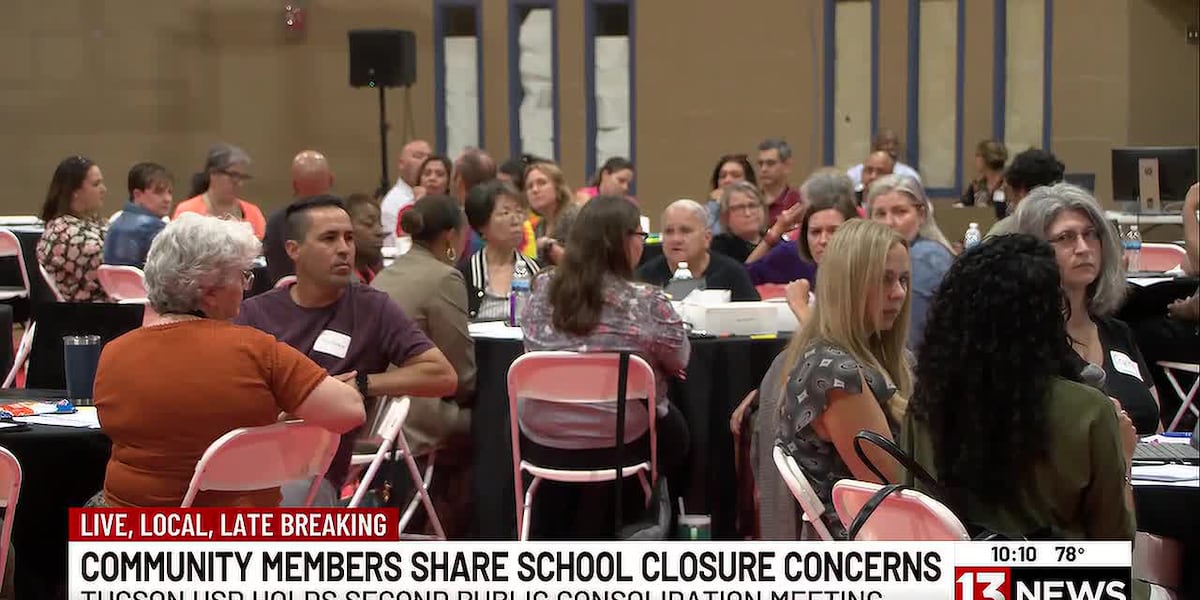
The three sessions are scheduled for Sept. 21 at Sahuaro High School, Sept. 23 at Cholla High School and Sept. 26 at Tucson High School; the final session was moved to Tucson High, had reached its 200-person capacity and did not yet have a livestream planned.
5
Community members will first hear a district presentation on realignment data and then work in facilitated small-group sessions whose feedback will be sent to TUSD administrators and the reconfiguration committee.
Tucson Unified School District is considering closing or consolidating as many as 10 of its 88 schools due to sharp enrollment drops. Arizona Daily Star reports the district has over 26,000 empty seats. Superintendent Gabriel Trujillo said closures will help redirect money from maintaining underfilled buildings toward stronger staffing, academic programs, and facility upgrades at remaining schools. The district is gathering community input through three public listening sessions scheduled for late September.
The move reflects a national trend. NCW Life reports that declining birth rates and competition from charter schools and private scholarships are forcing school districts across the country to close or merge campuses. TUSD hired Denver-based consultant Bill de la Cruz's firm for $75,000 to run the community meetings and help shape the consolidation plan, which the school board could vote on as soon as December 2026.
Three Listening Sessions to Gather Parent and Teacher Feedback
TUSD is hosting three public meetings where parents, teachers, and community members can weigh in on which services and school features should be kept. Sessions are set for September 21 at Sahuaro High School, September 23 at Cholla High School, and September 26 at Tucson High School. The first session at Sahuaro reached its 300-person capacity immediately, signaling strong community interest in the issue.
The district is removing barriers to attendance by providing child care for ages 3 to 12, free food, and translation services at all three meetings. Participants will hear a district presentation on enrollment data, then join small-group discussions led by trained facilitators. Feedback from these sessions will be shared with TUSD administrators and a 31-member reconfiguration committee composed of local elected officials, union leaders, business representatives, and parents.
A District Struggling With Empty Classrooms and Budget Strain
TUSD spans 230 square miles and operates the largest public school system in Southern Arizona. Yet 26,000 empty seats drain resources as the district pays to maintain buildings that are far below capacity. Rising enrollment in Arizona's charter schools and the state's expanded voucher program—which gives families cash to attend private schools—have accelerated the exodus from traditional public education over the past five years.
Without consolidation, KUNC reports that declining enrollment is creating financial and operational stress for school systems nationwide. By merging underfilled campuses, TUSD believes it can close the budget gap while improving quality at surviving schools. The district's superintendent emphasized that closures will span two years rather than happening all at once, reducing disruption to students and families.
Community Concerns Over Class Sizes and Walkable Schools
Parents and teachers worry that consolidations will lead to larger class sizes and longer bus rides for students. Families also fear losing specialized academic programs and extracurricular activities that smaller schools often provide. Evanston Roundtable reports that some Illinois communities are raising similar concerns, noting that closing walkable neighborhood schools forces families to drive children farther.
Governing board member Jennifer Eckstrom voted against the initial meeting rollout, expressing frustration with lack of transparency. Arizona Daily Star quotes her saying, 'No one has any idea what this meeting is about... If we are going to be transparent, then we need to be transparent.' She and others wanted more details released to families before public sessions began, rather than deciding school-by-school closures behind closed doors.
State Voucher Expansion Driving Enrollment Losses
Arizona's Empowerment Scholarship Accounts program allows families to take state education money and enroll in private schools. Advocates like Save Our Schools Arizona argue that this voucher expansion starves traditional public schools of funding and forces closures on local communities. They say TUSD's crisis is not a local problem but a result of state-level policy choices that favor private school choice over public education.
School choice supporters counter that enrollment declines show families prefer alternatives to traditional public schools. They view the closures as a market signal that TUSD must improve quality to compete. The district's final consolidation plan goes to the school board for a vote in December 2026, with closures expected to begin in the 2027–2028 school year.
Sentiment
Mostly NegativeNEGATIVENEUTRALPOSITIVE
Publishers
30
Articles
17
Reach
47
A
AnonymousAuthor


