T. Rex Warm-Blooded Metabolism
New UCLA Study Reveals T. Rex Maintained a Human-Like Body Temperature
Anonymous
Key Points
1
The estimated 36.3°C body temperature had an uncertainty of approximately plus or minus 2.5°C, placing the result within a measurable range rather than representing an exact reading.
2
The samples came from two animals: two teeth from Thomas, a well-preserved young-adult T. rex held by the Natural History Museum of Los Angeles County, and a partial isolated tooth from a second T. rex; all were found at the same site in Carter County, Montana.
3
Researchers used a low-speed rotary drill with a tungsten-carbide tip to remove the enamel powder, limiting damage to the fossils; the UCLA team’s improved technique reduced the amount of material required by roughly 90 percent compared with its earlier method.
4
Lead researcher Robert Eagle said, “No one’s been able to make a temperature measurement like this before,” highlighting that the study provides a direct temperature estimate rather than an inference based only on anatomy, growth or locomotion.
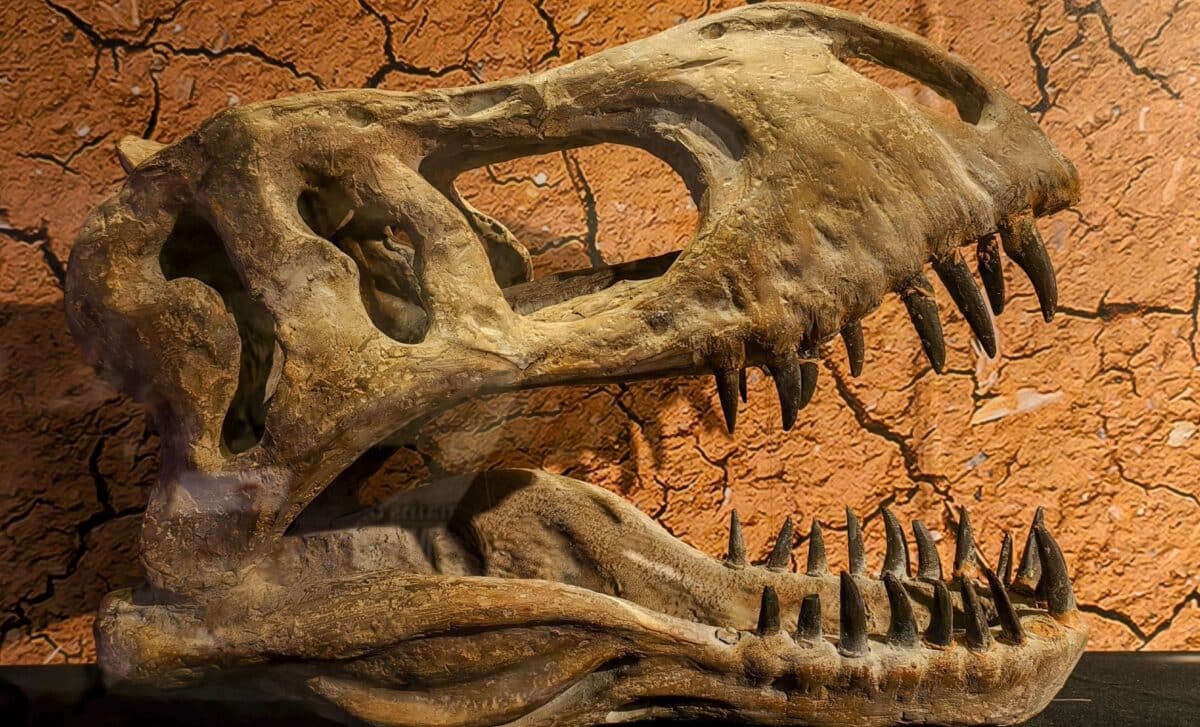
Tyrannosaurus rex maintained a body temperature of approximately 36.3°C (97.3°F), nearly identical to modern humans, according to a UCLA study published this week. Researchers analyzed chemical patterns in tooth enamel from three fossils found in Montana, making this the first direct temperature measurement of an extinct dinosaur. The findings suggest T. rex was warm-blooded and metabolically active, not a cold-blooded reptile.
The discovery came from an innovative technique using clumped-isotope analysis, which reads the carbon and oxygen signatures locked in fossilized teeth. Because enamel forms at an animal's internal body temperature, these chemical fingerprints reveal what T. rex's physiology was like 66 million years ago. The result places the giant predator closer to modern elephants and mammals than to modern reptiles.
How Scientists Measured a 66-Million-Year-Old Dinosaur's Temperature
The UCLA team extracted just 5 milligrams of enamel powder from each tooth using a low-speed rotary drill with a tungsten-carbide tip. This minimal-damage approach was crucial: the improved technique required 90 percent less material than earlier methods. Lead researcher Robert Eagle stated, "No one's been able to make a temperature measurement like this before."
The three teeth came from two different T. rex individuals found at the same Montana site in Carter County. Two teeth belonged to Thomas, a well-preserved young-adult specimen held by the Natural History Museum of Los Angeles County. The third was an isolated partial tooth from another animal, providing a cross-check on the results.
T. Rex Was Warm-Blooded, Not a Cold-Blooded Reptile
The 36.3°C reading had a margin of error of plus or minus 2.5°C, but it still reveals a stunning truth: T. rex operated like a mammal, not a lizard. Teeth from crocodilians living in the same ecosystem showed substantially cooler temperatures, underscoring the vast physiological gap between the giant predator and modern cold-blooded reptiles. This internal heat production would have powered T. rex's active hunting lifestyle.
A warm metabolism explains how T. rex thrived in environments that grew cooler than the tropics and survived in less hospitable climates. Modern elephants, which also maintain high body temperatures, offer a useful comparison. The dinosaur's sustained metabolic heat likely supported the intense muscle activity and predatory behavior needed to dominate its world.
Direct Proof Replaces Decades of Guesswork
For decades, paleontologists estimated dinosaur body temperatures based on anatomy, growth rates, and locomotion patterns—all indirect clues. This UCLA study provides the first chemical evidence from the animals themselves. The clumped-isotope method reads nature's own thermometer, trapped in mineral crystals for millions of years.
The breakthrough opens new doors for studying extinct species. Researchers can now apply the same technique to other fossils with preserved enamel or bone, mapping how dinosaur metabolism changed across species and time. T. rex's human-like warmth transforms how scientists view the giant predator—not as a sluggish reptile, but as an energetic, heat-generating beast built for dominance.
Sentiment
Mostly NegativeNEGATIVENEUTRALPOSITIVE
Publishers
14
Articles
14
Reach
28
A
AnonymousAuthor


