BRICS Summit Push
Xi Jinping Presses for Greater BRICS Cooperation and Expanded Global South Role at Summit
Anonymous
Trending on XBRICS leaders summit in Delhi and push for non-dollar trade
Key Points
1
The New Development Bank, established in 2014 by Xi Jinping and other BRICS leaders, was created to provide financing for infrastructure and sustainable-development projects in emerging markets and developing countries.
2
China’s Global Development Initiative has mobilized more than $23 billion over five years, supported more than 1,800 livelihood projects and sponsored professional training for more than 200,000 people, according to Xinhua.
3
The Shanghai Cooperation Organisation and BRICS have issued joint statements on international crises; Xinhua cited an SCO statement expressing grave concern over developments in the Middle East and strikes on Iran in March.
4
The 18th BRICS Summit is scheduled for Sept. 12-13 at the Bharat Mandapam Convention Centre in New Delhi, with Russian President Vladimir Putin and Iranian President Masoud Pezeshkian among the other leaders expected to attend.
5
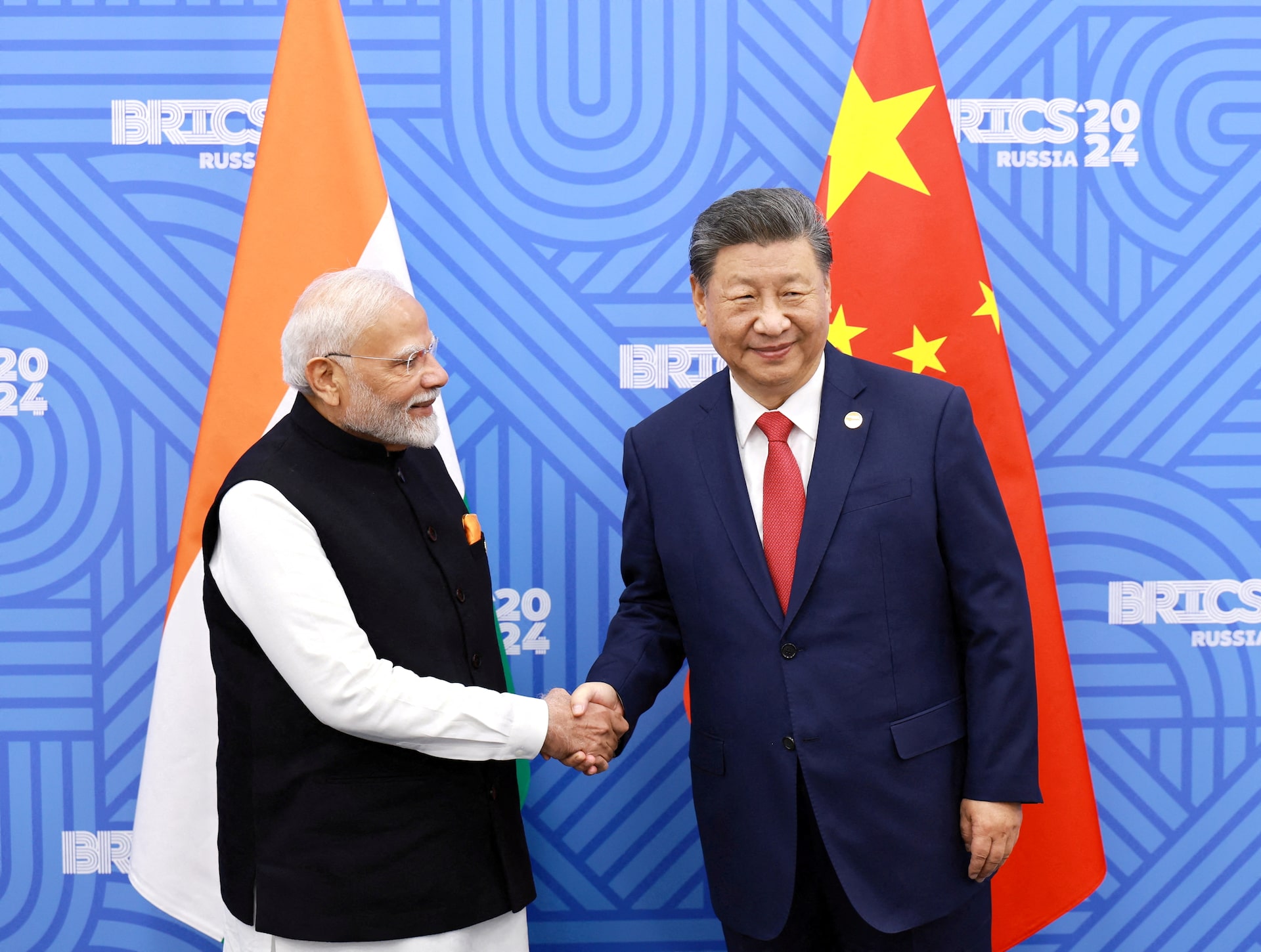
The Modi-Xi meeting is especially sensitive because the 2020 Galwan Valley clash killed 20 Indian soldiers and four Chinese soldiers; it will also mark Xi’s first visit to India since that confrontation.
President Xi Jinping is heading to New Delhi for the 18th BRICS Summit on September 12-13, where he plans to push for deeper cooperation among emerging economies and a stronger voice for the Global South in world affairs. Xinhua reports that Xi will present proposals covering trade, investment, artificial intelligence, green energy, and development initiatives — marking his first visit to India since the deadly 2020 border clash.
China has backed India's leadership of BRICS and framed the grouping as a platform for nations to challenge Western-dominated global institutions. The New Development Bank, launched in 2014, has already financed infrastructure projects across emerging markets. Global Times notes that Xi's bilateral meeting with Prime Minister Narendra Modi carries special weight given the Galwan Valley confrontation that killed 20 Indian and four Chinese soldiers.
China Pushes Multipolar World Order at BRICS
Beijing is championing what it calls a multipolar global economic order, with Xinhua emphasizing cooperation among Global South nations to reduce reliance on Western institutions. Xi will propose deeper political coordination, expanded financing mechanisms, and joint initiatives on energy and digital innovation. Chinese officials say BRICS must strengthen its collective influence in global governance and reject what they view as unfair trade and financial systems.
The grouping includes Russia, India, Brazil, and South Africa alongside China. Global Times reports that the summit will chart a course for high-quality development, with focus on lifting emerging economies and supporting infrastructure across the developing world.
Development Bank and China's Global Finance Strategy
The New Development Bank, established by BRICS leaders in 2014, provides loans for infrastructure and sustainable projects in emerging markets — an alternative to Western-led institutions like the World Bank. Xinhua states that China's Global Development Initiative has mobilized $23 billion over five years, supported 1,800 livelihood projects, and trained more than 200,000 people across developing regions.
These financing mechanisms aim to accelerate poverty reduction and modernization in the Global South without the conditions often attached to Western loans. Beijing frames them as part of building a fairer international economic system.
Modi-Xi Meeting Tests India-China Relations
Xi's visit marks his first trip to India since the June 2020 Galwan Valley clash, where border tensions killed 20 Indian soldiers and four Chinese troops. Global Times emphasizes that the bilateral meeting between Xi and Prime Minister Narendra Modi will be closely watched for signs of warming ties. Both nations have signaled willingness to improve relations, though the border dispute remains unresolved.
The Modi-Xi meeting will take place during the summit, giving the two leaders a chance to discuss bilateral issues alongside BRICS coordination. Success here could reshape India-China relations and strengthen BRICS unity going forward.
BRICS Joint Stance on Middle East and Global Crises
Xinhua reports that BRICS and the Shanghai Cooperation Organisation have issued joint statements on international crises, including grave concern over developments in the Middle East. In March, the SCO expressed alarm over airstrikes on Iran — showing how BRICS is coordinating messaging on geopolitical flashpoints.
This coordination signals that BRICS is evolving beyond a trade and development bloc into a political force on global security issues. Russian President Vladimir Putin and Iranian President Masoud Pezeshkian are among leaders expected to attend, reinforcing alignment on multipolar alternatives to Western-led solutions.
Sentiment
Mostly PositiveNEGATIVENEUTRALPOSITIVE
Publishers
66
Articles
221
Reach
287
A
AnonymousAuthor


