BRICS Summit Declaration
BRICS Leaders Agree on Joint Declaration Condemning Unilateral Military Action at Summit
Anonymous
Trending on XBRICS leaders summit in Delhi and push for non-dollar trade
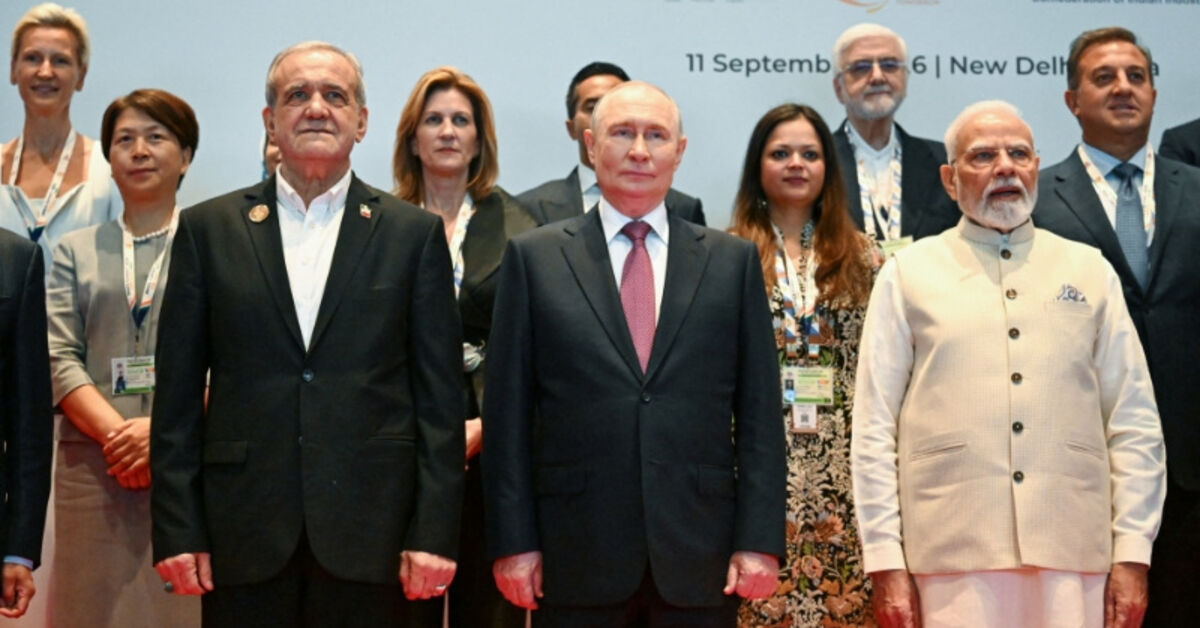
Key Points
1
The 2026 summit is the 18th BRICS summit and is being held under India’s theme, “Building for Resilience, Innovation, Cooperation and Sustainability.”
2
India began its fourth BRICS chairship on January 1, after previously leading the grouping in 2012, 2016 and 2021; 2026 also marks 20 years since BRICS was established.
3
BRICS has expanded its outreach beyond its 11 members through a partner-country group that includes Belarus, Bolivia, Cuba, Kazakhstan, Malaysia, Nigeria, Thailand, Uganda, Uzbekistan and Vietnam.
4
Earlier disagreements over Iran-UAE tensions had prevented joint statements at some ministerial-level meetings, underscoring the challenge facing negotiators trying to secure consensus at the summit.
5
The BRICS grouping comprises 11 countries in the Times of India’s account, including Saudi Arabia, while the other reports list a 10-country membership without Saudi Arabia, indicating a discrepancy in how the bloc’s membership is being reported.
BRICS nations have agreed on a joint declaration condemning unilateral military action, avoiding specific country names to preserve consensus among 11 member states. Mezha News reports the declaration will be formally approved at the New Delhi summit, where negotiators resolved deep disagreements over Iran-UAE tensions and the West Asia conflict.
The carefully worded statement also criticizes unilateral sanctions, which BRICS argues violate international law and threaten global food and health security. Economic Times noted that intensive negotiations were required to bridge divisions, reflecting the bloc's struggle to maintain unity across its expanding membership.Economic Times
Why BRICS Avoids Naming Specific Countries
By condemning war without naming countries, BRICS preserves unanimity among members with opposing interests. Iran and the UAE have clashed over the Gulf conflict, yet both sit at the table. Al-Monitor reports this diplomatic choice reflects a hard trade-off: broad agreement on principles, but less power to assign blame or change immediate behavior.
Previous disagreements over Iran-UAE tensions blocked joint statements at lower-level meetings. Sherpas—senior government negotiators—worked for weeks to find language acceptable to all sides without identifying specific nations or conflicts.
Unilateral Sanctions: A Rallying Cry for BRICS
The declaration targets unilateral sanctions—penalties imposed outside UN Security Council approval. BRICS frames these as tools that undermine state sovereignty and damage trade, development, food access, and healthcare. Ratopati reported the declaration positions sanctions as violations of international law that harm poor nations most.
This language supports BRICS's broader effort to reshape global power. Member states argue that Western-led sanctions bypass multilateral processes and enable dominant powers to punish rivals without consensus. The declaration links sanctions opposition to food and health security, framing the issue as protecting vulnerable populations.
BRICS Expansion Tests Unity and Scope
BRICS now includes 11 members—up from five at its 2001 founding—plus ten partner countries spanning Belarus, Bolivia, Cuba, Kazakhstan, Malaysia, Nigeria, Thailand, Uganda, Uzbekistan, and Vietnam. This fourth expansion under India's 2026 chairship increases economic weight and diplomatic reach. But it also deepens divisions. More members mean more conflicting security interests.
Dungo Chronicle noted the expansion aims to boost the bloc's global clout, yet coordination becomes harder with each new voice. Iran and the UAE tensions show this strain. A larger BRICS can less easily pin down positions on regional wars, forcing negotiators toward vague language that all can accept.
India Steers BRICS Into Its Third Decade
India assumed its fourth BRICS chairship on January 1, 2026, after leading the bloc in 2012, 2016, and 2021. This summit marks 20 years since BRICS's founding. The theme—"Building for Resilience, Innovation, Cooperation and Sustainability"—signals India's focus on economic development and shared problem-solving beyond geopolitical conflict.
The Delhi Declaration's approval would show BRICS can forge consensus despite internal rifts. Success here matters: the bloc must demonstrate it can act as a counterweight to Western-led institutions while accommodating members with rival interests in regional conflicts.
Sentiment
Mostly NegativeNEGATIVENEUTRALPOSITIVE
Publishers
162
Articles
396
Reach
558
Topics
A
AnonymousAuthor


