V4 Endorses India UN Bid
Visegrad Group Nations Back India for Permanent UN Security Council Seat
Anonymous
Key Points
1
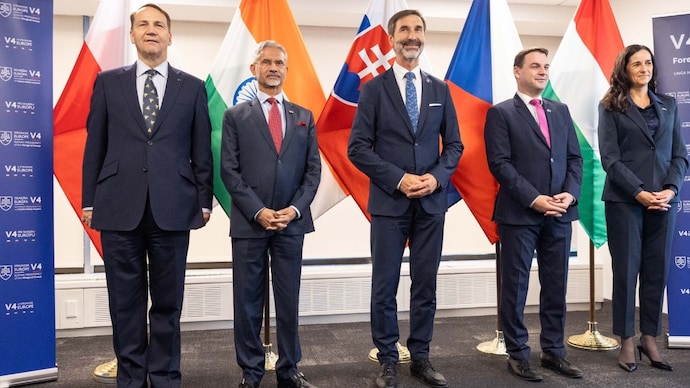
The meeting was the first ministerial-level engagement between India and the four-member Visegrad Group in the new V4+India format, described by S. Jaishankar as “a new historic occasion.”
2
The ministers also discussed major international crises, including the war in Ukraine and developments in the Gulf, alongside their plans for bilateral and regional cooperation.
3
India formally launched its campaign in July for a non-permanent Security Council term in 2028–29, even as it continues pursuing the longer-term goal of permanent membership and broader Council reform.
4
Jaishankar said India and the V4 countries have a strong history of defence cooperation and want to “refresh and take forward” that relationship.
5
The Visegrad Group was formed in 1991 as a platform for political, economic and security cooperation among the Czech Republic, Hungary, Poland and Slovakia.
Four Central European nations—Hungary, Poland, Slovakia, and the Czech Republic—backed India's bid for a permanent seat on the United Nations Security Council during their first foreign ministers' meeting in New York. Slovak Foreign Ministry stated India, as a leading Global South power and Indo-Pacific superpower, "must be at the table" as a permanent member. The endorsement adds crucial European support to earlier backing from the US, Russia, France, and the UK.
India and the Visegrad Group (V4) also agreed to deepen ties in defence, trade, technology, and space. They will hold annual foreign minister meetings and launch a business forum. The historic partnership marks the first ministerial-level V4–India engagement, described by External Affairs Minister S. Jaishankar as "a new historic occasion."
Why India Wants a Permanent Security Council Seat
India is the world's most populous nation and fifth-largest economy. It has served eight non-permanent Security Council terms, most recently in 2021–2022. Jaishankar said the 1945 UN structure no longer reflects 21st-century realities. India argues the Council must include emerging powers from the Global South to remain relevant.
India's Push for the 2028–2029 Non-Permanent Seat
In July 2026, India formally launched its campaign for a non-permanent Security Council seat for 2028–2029. This dual strategy allows India to pursue immediate non-permanent membership while advancing its longer-term goal of permanent status. The move gives New Delhi options if Charter reform stalls.
The Massive Hurdles to Permanent Membership
Any expansion of permanent Security Council seats requires a two-thirds UN General Assembly vote (129 of 193 nations) and approval by all five current permanent members—the US, Russia, China, France, and the UK. China has not explicitly endorsed India's bid. Many nations oppose adding permanent seats at all, fearing it will weaken the Council further.
Even with US, Russia, France, and UK support, India cannot succeed without China's consent. Analysts note that while political endorsements carry symbolic weight, they cannot unilaterally create a permanent seat. The "Uniting for Consensus" movement actively opposes expanding permanent membership, blocking reform efforts for decades.
What India and V4 Will Do Together
The two sides committed to annual foreign minister meetings and a joint business forum. They will cooperate on defence manufacturing, technology, space exploration, and resilient supply chains. Jaishankar emphasized India and the V4 have a "very strong history in defence" and want to "refresh and take forward that cooperation."
Sentiment
Mostly PositiveNEGATIVENEUTRALPOSITIVE
Publishers
47
Articles
59
Reach
106
A
AnonymousAuthor


