Global Rhino Conservation Update
World Rhino Day Spotlights Conservation Progress Amid Ongoing Poaching and Habitat Threats
Anonymous
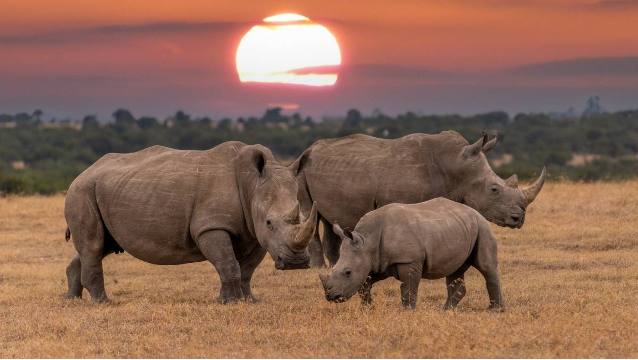
Key Points
1
Rhinos play an important ecological role beyond their conservation value: their dung disperses seeds, grazing encourages plant regrowth, and wallows provide mud habitats used by other wildlife.
2
The International Rhino Foundation estimates that only about 50 Javan rhinos remain, while the Sumatran rhino population is estimated at just 34 to 47 animals, all in Indonesia. Camera traps have nevertheless documented new Javan rhino calves, indicating that the species continues to reproduce in the wild.
3
Kanpur Zoo has developed a multi-generation rhino population from a single pair introduced in the 1970s, and animals born there have been transferred to zoos across India and to Japan. In early 2025, the zoo moved a 15-month-old female calf, Gauri, to Vantara Zoo in Gujarat.
4
India’s RhODIS program has collected 1,340 rhino DNA samples. Officials say the genetic database will support wildlife-crime investigations while also helping establish parentage, measure genetic diversity and reduce inbreeding risks in isolated populations.
5
South Africa’s regional figures show sharply contrasting outcomes: Kruger National Park’s poaching losses climbed from 88 rhinos in 2024 to 175 in 2025, while KwaZulu-Natal’s fell from 232 to 97. Project Rhino director Carlien Roodt said the decline in national killings should not be taken as evidence that the crisis is over.
The world's five rhino species face an uncertain future. Only about 26,700 animals remain in the wild, threatened by poaching, habitat loss, and false beliefs about medicinal horn Forbes. World Rhino Day—marked on September 22—spotlights both the scale of the crisis and surprising pockets of recovery across Africa and Asia The Hindu.
While some regions report progress, the overall trend is grim. The global white rhino population dropped from 17,464 in 2023 to 15,752 in 2024 The Bulrushes. Two of the five species—Javan and Sumatran rhinos—teeter on the edge of extinction, with only 50 and 34 to 47 animals left respectively Forbes. Yet black rhinos and greater one-horned rhinos are staging comebacks, proof that intensive protection can work.
India Emerges as Rhino Conservation Leader
India now hosts more than 75% of the world's greater one-horned rhinos—over 3,323 animals concentrated in Assam, West Bengal, and Uttar Pradesh Greater Kashmir. The country's efforts underscore how focused conservation works. Assam's Manas National Park is home to over 50 rhinos after years of reintroduction and protection Mid-Day.
India is layering protection with cutting-edge tools. The RhODIS DNA program has collected 1,340 genetic samples, creating a database that tracks wildlife crime, establishes parentage, and prevents inbreeding in isolated herds Greater Kashmir. Kanpur Zoo has bred a thriving multi-generation population from a single pair introduced in the 1970s. In early 2025, the zoo moved a 15-month-old female calf named Gauri to Vantara Zoo in Gujarat, expanding the genetic network Greater Kashmir.
South Africa's Split Picture: National Gains Hide Local Surge in Poaching
South Africa, home to the world's largest rhino population, reported 352 poaching deaths in 2025—down 16% from 420 in 2024 The Bulrushes. Prime Minister Modi praised such advances Greater Kashmir. But the numbers mask a dangerous shift. Kruger National Park's poaching nearly doubled, jumping from 88 deaths in 2024 to 175 in 2025 The Bulrushes.
Project Rhino director Carlien Roodt warned against false confidence. "While the reduction in national poaching figures is encouraging, we cannot afford to interpret this as a sign that the crisis is over," she said The Bulrushes. Poachers shift tactics when one region tightens security. KwaZulu-Natal dropped from 232 deaths to 97, suggesting criminals simply moved south to Kruger The Bulrushes.
Kenya's Growth and the Last Northern White Rhinos
Kenya's overall rhino population climbed 8.5%, growing from 2,102 in 2024 to 2,282 in 2025. The gains reflect intensive ranger patrols, drone surveillance, and habitat management. Yet Kenya also holds the world's most tragic conservation challenge: the northern white rhino The Hindu.
Only two northern white rhinos survive anywhere—both infertile females named Najin and Fatu, kept under 24-hour armed guard in a Kenya sanctuary. The species is functionally extinct in the wild. Scientists are pursuing advanced reproductive techniques, including artificial insemination, to attempt recovery Forbes. Meanwhile, camera traps document new births in the wild for critically endangered Javan and Sumatran rhinos, offering slim hope that these species might yet persist Forbes.
Why Rhinos Matter Beyond Their Own Survival
Rhinos are ecological engineers, not just icons. Their dung disperses seeds across vast distances, regenerating forests. Their grazing prevents vegetation overgrowth and triggers plant regrowth that feeds entire animal communities. Their wallows—mud baths—create water habitats used by dozens of smaller species Forbes. Losing rhinos means losing these ecosystem functions.
Conservationists deploy layered defense: armed rangers, tracking dogs, aircraft, drones, cameras, and intelligence networks hunting poaching syndicates. Black rhinos and greater one-horned rhinos have more than doubled in recent decades, proof the model works Forbes. But Javan rhinos, with fewer than 50 left, and Sumatran rhinos face extinction within decades without severe intervention Forbes.
Sentiment
Mostly NegativeNEGATIVENEUTRALPOSITIVE
Publishers
40
Articles
38
Reach
78
Topics
A
AnonymousAuthor


