Rare Sea Turtle Nesting
Rare Sea Turtle Nesting Events Recorded in California and Malaysia
Anonymous
Key Points
1
The olive ridley is the smallest sea turtle species; adults can weigh up to 100 pounds, measure roughly 2.5 to 3 feet, and live an estimated 30 to 50 years.
2
Olive ridleys are protected under the U.S. Endangered Species Act and are generally found in tropical Pacific, Indian and Atlantic waters; major Pacific nesting populations are concentrated in Mexico, Nicaragua, Costa Rica and Panama.
3
Malaysia’s Fisheries Department said the leatherback’s repeated landings were consistent with the species’ normal nesting behavior, as females may return to shore several times during a single nesting season.
4
The Malaysian leatherback was estimated to be about 2.15 meters long—substantially larger than the department’s usual encounters, which are generally just over one meter—and officials described its size as significant.
5
Malaysia’s conservation effort includes cooperation among the Fisheries Department, Aquawalk Sdn Bhd, Angsana Teluk Bahang and Universiti Malaysia Terengganu, including the establishment of a Marine Education Centre to promote awareness of endangered marine species.
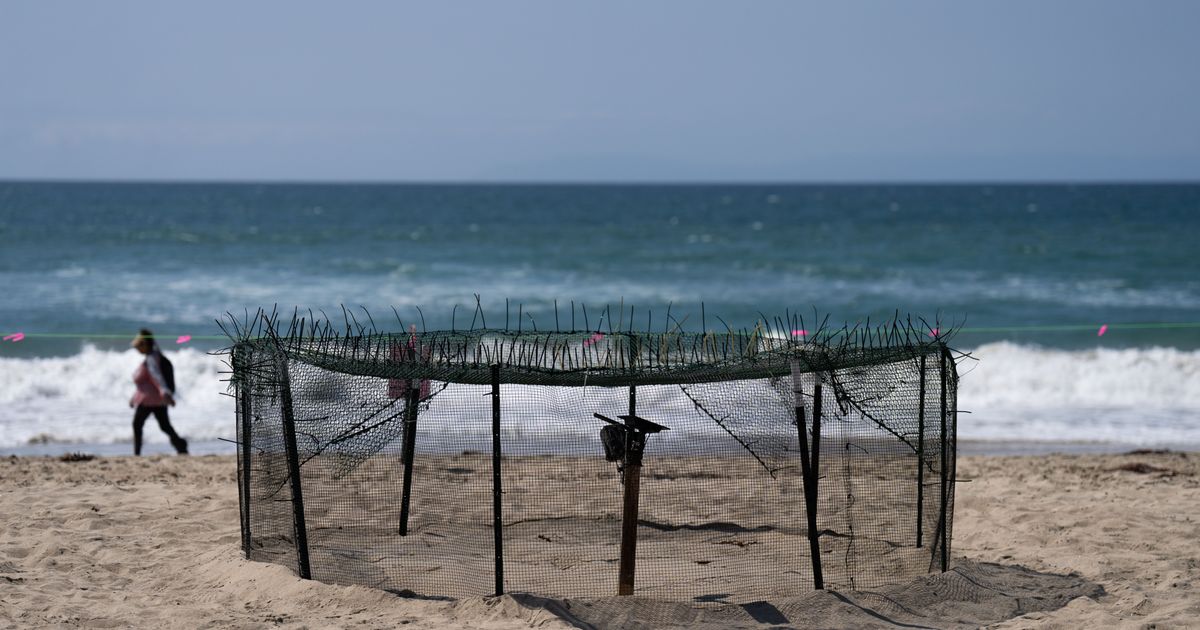
An olive ridley sea turtle laid eggs near Seal Beach in Orange County, California, marking the first recorded natural nesting by any sea turtle species on the U.S. West Coast, according to NOAA. A second sighting near Huntington Beach three days later may involve the same turtle, but officials have not confirmed the connection.
Meanwhile, a leatherback turtle believed to be the same individual made three separate nesting landings along Malaysia's Terengganu coast this month, laying 195 eggs across three beaches. Fisheries officials moved all eggs to a controlled incubation facility, where they are expected to hatch in roughly 50 to 70 days.
A Tiny Turtle Crosses an Ocean
The olive ridley is the smallest sea turtle species, with adults weighing up to 100 pounds and measuring roughly 2.5 to 3 feet long. These turtles live an estimated 30 to 50 years and are normally found in tropical Pacific, Indian and Atlantic waters. Major Pacific nesting populations are concentrated in Mexico, Nicaragua, Costa Rica and Panama.
The California nesting represents an extraordinary voyage — the turtle traveled thousands of miles from its typical habitat. How it ended up on the West Coast remains unknown, but the journey highlights the remarkable navigational abilities of these endangered reptiles.
Malaysia's Rare Giant Leatherback Nests Three Times
The leatherback turtle in Malaysia measured about 2.15 meters long, substantially larger than the department's usual encounters, which are generally just over one meter. Officials described this size as significant and consistent with the species' normal nesting behavior.
Females may return to shore several times during a single nesting season, which explains the three separate landings at Pasir Putih, Rantau Abang and Kuala Abang beaches. The 195 eggs laid across all three sites represent a remarkable conservation opportunity for the endangered species.
Agencies Protect Both Nesting Sites for Two Months
In California, authorities will monitor the protected sites for approximately 45 to 60 days until eggs hatch. In Malaysia, the incubation timeline matches that of California, with hatchlings expected to emerge in 50 to 70 days.
Both regions are urging the public to avoid disturbing nesting areas and conservation personnel. Malaysia's conservation effort includes cooperation among the Fisheries Department, Aquawalk Sdn Bhd, Angsana Teluk Bahang and Universiti Malaysia Terengganu, including the establishment of a Marine Education Centre to promote awareness of endangered marine species.
Protected Under U.S. Law, Endangered Worldwide
Olive ridleys are protected under the U.S. Endangered Species Act. The California nesting offers a rare chance to study why this turtle traveled so far from its typical tropical range and what environmental factors might be shifting sea turtle distribution patterns.
Both the California and Malaysia nestings represent critical moments for species recovery. Every hatchling that survives increases the population of these turtles, which face threats from fishing nets, ocean pollution and climate change affecting beach conditions worldwide.
Sentiment
Mostly NegativeNEGATIVENEUTRALPOSITIVE
Publishers
29
Articles
178
Reach
207
Topics
A
AnonymousAuthor