Canine Speech Consonant Tracking
New Study Finds Dogs Track Speech Consonants Much Like Humans
Anonymous
Key Points
1
The researchers used dogs’ naturally varying early-life experiences to investigate whether the age at which a dog enters a speech-rich human home might affect speech processing; exposure during the first 12 to 14 weeks can vary with adoption age and early rearing conditions.
2
The study’s authors described this as the first evidence that consonant bias can emerge in the brain of a nonhuman species; the related report notes that the trait had not been recorded in primates either.
3
Researchers selected companion dogs in part because, despite typically having limited vocabularies, they are regularly exposed to human speech and can use statistical patterns to extract words from continuous speech.
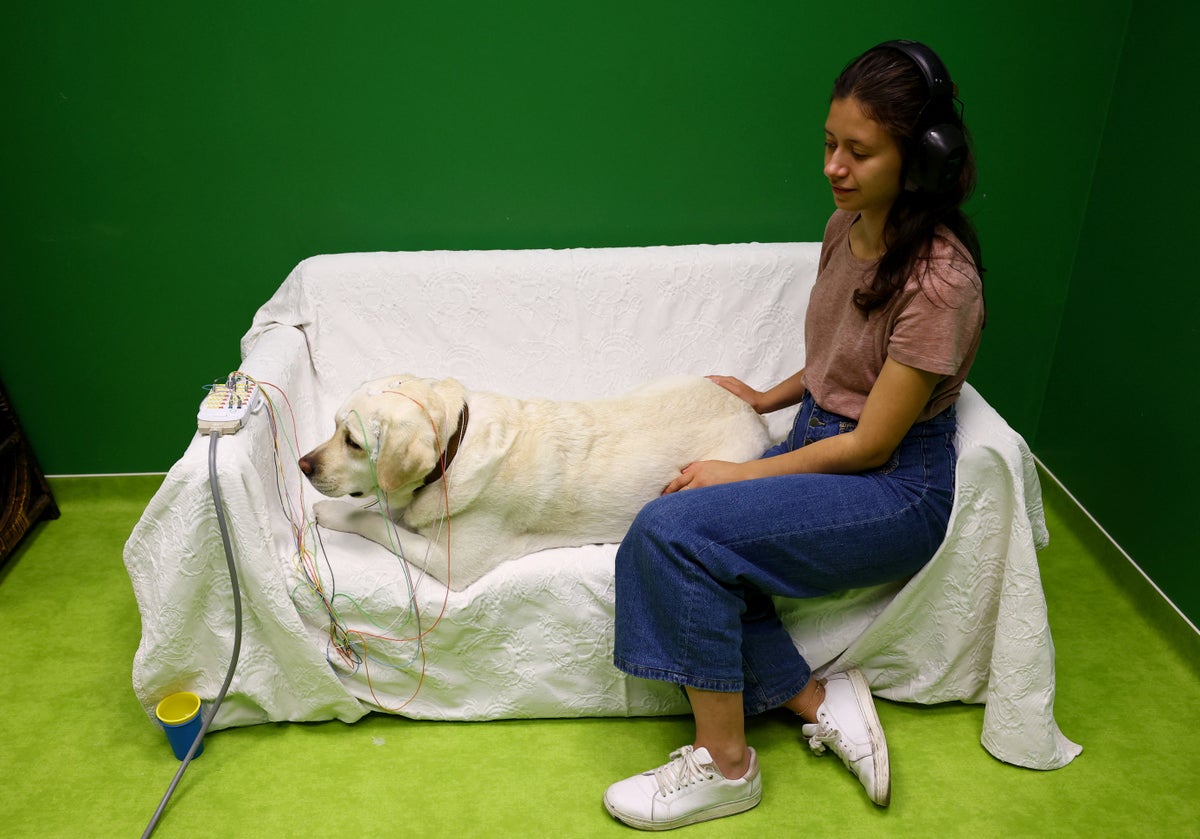
Dogs and humans share a surprising trait: both use consonants to pick out words from continuous speech. Science published a study comparing brain responses from 20 dogs and 20 people, finding similar patterns in how they track consonant-structured words. The discovery marks the first time scientists have observed this consonant bias in a nonhuman species, suggesting that regular exposure to human speech tunes the brain to language patterns—without requiring true language understanding.
Researchers from Hungary's Loránd Eötvös University led the investigation, selecting companion dogs because they hear human speech daily and can extract words from ongoing conversation using statistical patterns. The Daily Beast reports the finding challenges previous assumptions about how nonhuman brains process language, opening new questions about what shared neural traits might exist across species.
When Dogs Enter a Speech-Rich Home Matters
Researchers used dogs' varied early-life experiences to test whether timing shapes speech processing ability. El País explains that exposure during the first 12 to 14 weeks—which varies based on adoption age and early rearing conditions—may influence how a dog's brain learns to track speech patterns. This window mirrors the critical period for language development in human infants.
A Consonant Bias Never Seen Outside Humans Before
The consonant preference has never been recorded in any primate species, making this dog study unprecedented in neuroscience. Archynetys reports the finding is generating significant scientific coverage, with researchers describing it as the first documented evidence that this trait emerges in a nonhuman brain. Dogs appear to process the hard stops and starts of consonant sounds the same way humans do—a key strategy for recognizing word boundaries in speech.
How Dogs Decode Human Speech Like Babies Do
Yahoo News and The Independent both report that dogs use the same technique babies employ to learn language: breaking apart continuous sound into recognizable chunks. Although dogs typically understand only a small number of words, their brains apply statistical learning—the same mechanism infants use when absorbing their first language. This shows that speech-processing shortcuts may be universal across species with regular exposure to human voices.
Sentiment
Mostly PositiveNEGATIVENEUTRALPOSITIVE
Publishers
15
Articles
34
Reach
49
Topics
A
AnonymousAuthor


