Two Brain Origins Found
Stanford Study Reveals Human Brain Develops From Two Separate Cell Origins
Anonymous
Key Points
1
The researchers traced the developmental split to gastrulation, the early embryonic stage when the body begins taking shape. In mouse embryos, Otx2-expressing cells formed the forebrain and midbrain, while Gbx2-expressing cells formed the hindbrain; the two populations did not overlap.
2
The distinct developmental pattern was found not only in mice but also in macaque monkeys, chickens and zebrafish. A comparable difference in gene activity was detected in acorn worm embryos, whose lineage diverged from vertebrates more than 550 million years ago, suggesting the split may be even older than the study’s 500-million-year estimate.
3
The team also examined chromatin—the packaging of DNA that helps determine which genes are accessible—and found distinct chromatin states between the cell populations destined to form the front and back of the brain.
4
Using the molecular signals identified in the developmental process, the researchers directed human stem cells to produce a subset of hindbrain motor neurons, rather than merely generating hindbrain cells in general.
5
The study was led by graduate students Carolyn Dundes and Rayyan Jokhai as co-first authors, with Kyle Loh serving as senior author; the findings were published in Nature Neuroscience on Sept. 18.
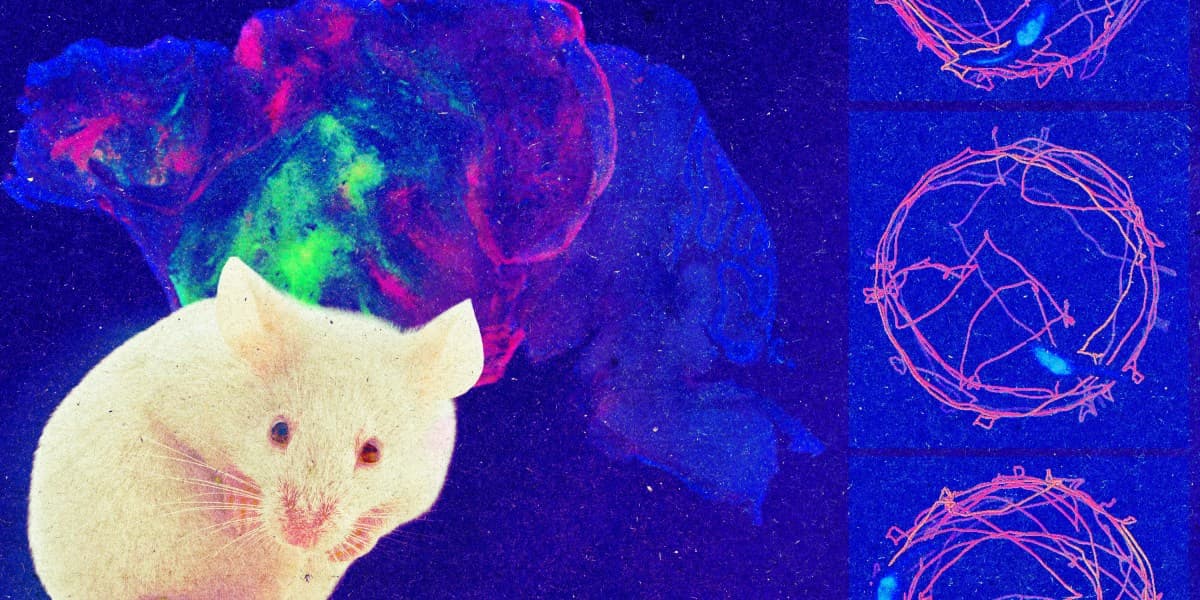
Scientists at Stanford University have upended a core principle of neurobiology: the brain does not develop from a single progenitor cell, but from two distinct cell populations that split early in embryonic development Stanford Medicine. The forebrain and midbrain — which control language, consciousness and reasoning — arise from cells expressing the gene Otx2, while the hindbrain — responsible for breathing, heartbeat and swallowing — develops from cells expressing Gbx2. These two populations never overlap, EurekAlert reports, suggesting the split may have occurred more than 500 million years ago.
Two Brain Populations With Separate Paths
During gastrulation—the earliest embryonic stage when the body begins taking shape—two distinct cell populations diverge EurekAlert. Researchers led by graduate students Carolyn Dundes and Rayyan Jokhai traced this split in mouse embryos and found that Otx2-expressing cells and Gbx2-expressing cells follow completely different developmental routes. The team also discovered that chromatin—the DNA packaging that controls gene access—exists in different states between the two populations, reinforcing their separation at a molecular level.
This pattern is not unique to mice NY Post found. Researchers detected the same developmental divide in macaque monkeys, chickens and zebrafish. Even more striking, they observed comparable gene activity differences in acorn worm embryos, whose lineage split from vertebrates more than 550 million years ago. The ancient conservation suggests the two-brain model may be far older than the 500-million-year estimate.
Unlocking Hindbrain Development Signals
By identifying the molecular signals guiding hindbrain development, Stanford's team achieved a significant lab breakthrough Stanford Medicine. They directed human stem cells to produce hindbrain motor neurons—not just generic hindbrain cells, but a specific subset with clinical potential. This precision matters for disease modeling and could accelerate research into conditions like spinal muscular atrophy and ALS, both caused by motor neuron damage.
The researchers cautioned that their analysis cannot entirely rule out a brief common-progenitor stage early in development EurekAlert. However, the absence of any observable overlap between Otx2 and Gbx2 cell populations suggests such a stage, if it existed, was extremely short-lived and difficult to detect with current methods.
Implications for Neurological Disease Research
This discovery reframes how scientists understand brain disease and development NY Post notes. If the front and back brain evolved as separate organs over hundreds of millions of years, then disorders affecting one region may require distinct therapeutic approaches. The team's ability to generate hindbrain motor neurons in the lab opens new doors for testing drugs and understanding why specific motor neuron populations degenerate in ALS and related diseases.
Sentiment
Mostly NegativeNEGATIVENEUTRALPOSITIVE
Publishers
17
Articles
25
Reach
42
A
AnonymousAuthor