Youngest Known Exoplanet Discovered
Astronomers identify the youngest known planet still forming within its stellar disk.
Anonymous
Key Points
1
The study concludes that Elias 2-24 b could have formed through core accretion at a distance of roughly 50 astronomical units from its star in only about 1 million years, supporting the idea that giant planets can carve disk gaps very early in a system’s history.
2
Because the young planet generates strong pressure bumps in the outer disk, dust accumulates in bright rims around those structures, offering an explanation for some of the prominent features seen in protoplanetary disks.
3
The research was published in The Astrophysical Journal Letters and is based on a study led by Andrea Bernardi, a doctoral candidate at Chile’s Universidad Diego Portales.
4
Researchers say future observations with next-generation adaptive-optics instruments and space-based facilities will be needed to directly detect smaller planets or planets closer to their host stars in similarly young systems.
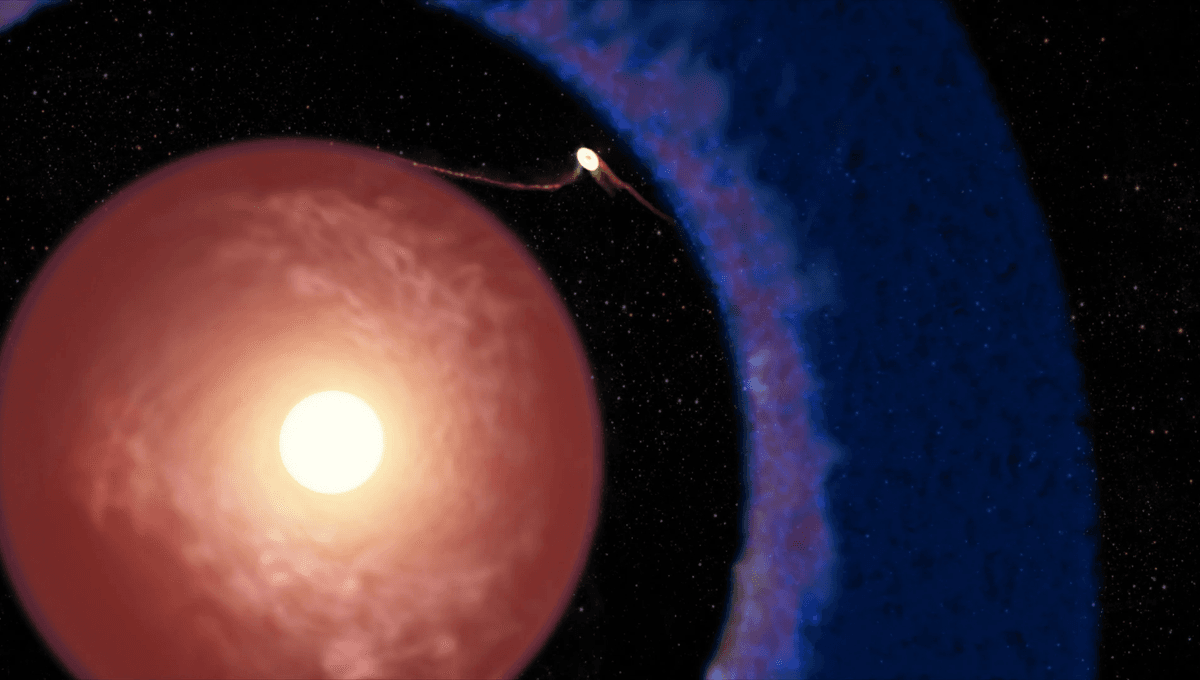
Astronomers have discovered Elias 2-24 b, a Jupiter-sized exoplanet less than 1 million years old, making it the youngest known planet ever found IFLScience. The world orbits a star 450 light-years away and still sits inside the dusty disk of gas and rock where it formed News18. Researchers spotted it using archival data from the W.M. Keck Observatory, which uses a special tool to block out the star's bright glare and reveal faint planets nearby SSBCrack.
A Planet Born in Just 1 Million Years
The discovery challenges how scientists think planets form IFLScience. Existing models already struggle to explain planets older than 5 million years. Elias 2-24 b formed through a process called core accretion, sitting roughly 50 astronomical units from its star — about as far from its sun as Pluto sits from ours IFLScience. This shows giant planets can carve gaps in their birth disks far faster than scientists previously believed.
How Dust Reveals Hidden Newborn Worlds
The young planet creates pressure bumps in the outer disk that make dust pile up around them IFLScience. These dust rims glow brightly and can be spotted by telescopes. The discovery explains why astronomers see prominent bright features in many protoplanetary disks — the swirling clouds of material around young stars where planets are being born IFLScience. This connection between young planets and dust patterns offers a new way to hunt for hidden worlds.
A Window Into Our Solar System's Infancy
This find offers a rare glimpse of what Earth's solar system may have looked like when it was brand new News18. Scientists think our own planetary system went through similar stages billions of years ago. Studying Elias 2-24 b helps researchers understand how Jupiter-sized planets form so quickly and reshape the disks around their host stars News18. It's like having a time machine to see planetary birth up close.
The Study and Future Discoveries Ahead
Andrea Bernardi, a doctoral candidate at Chile's Universidad Diego Portales, led the research, which was published in The Astrophysical Journal Letters IFLScience. The team used old archived data rather than new observations, showing how valuable historical records remain. Researchers say stronger adaptive-optics tools and space telescopes will be needed to spot even smaller or closer planets in young systems like this one IFLScience.
Sentiment
Mostly NegativeNEGATIVENEUTRALPOSITIVE
Publishers
26
Articles
23
Reach
49
A
AnonymousAuthor


