New Lunar Crater Discovery
NASA Orbiter Discovers the Moon’s Largest Newly Formed Impact Crater
Anonymous
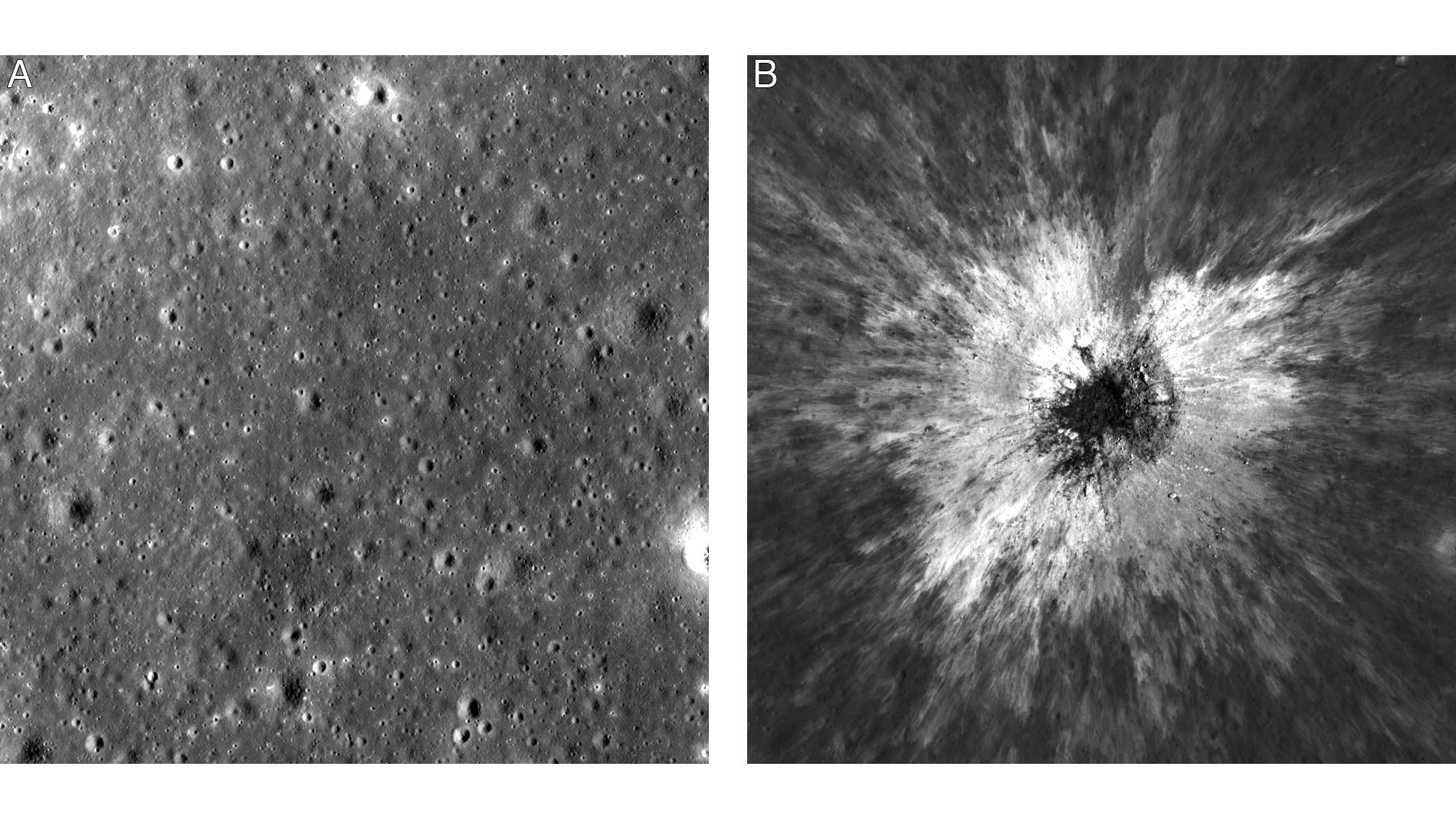
NASA’s Lunar Reconnaissance Orbiter has identified McGetchin crater, the largest known recent impact crater in the solar system. The crater measures about 728 feet (222 meters) across and 141 feet (43 meters) deep, and formed on the Moon between April 11 and May 22, 2024, when an asteroid or comet fragment struck the surface. The impact was not detected in real time; LRO images were identified in the spacecraft’s data in 2025 and later confirmed through higher-resolution observations. Scientists estimate an event of this scale occurs only about once every 130 years, making it a rare opportunity to study fresh impact effects, including an ejecta field extending more than 60 miles and an unusually broad cold region. The crater is named after lunar scientist Thomas McGetchin, and its discovery underscores the value of long-term lunar monitoring as NASA plans expanded scientific and human activity on the Moon.
Key Points
1
The crater was discovered by Robert Wagner during a routine data-quality check, when he noticed an unusually bright spot surrounded by a dark halo in a composite lunar map and began comparing before-and-after images.
2
McGetchin crater is about three times larger than the previous record-holder for a newly formed crater, which was also identified by the Lunar Reconnaissance Orbiter roughly a decade ago.
3
The impact’s ejecta traveled more than 66 miles (100 kilometers), and scientists found that dust and rocky material were thrown outward at a higher angle than expected, offering a test of impact-cratering models.
4
The crater formed near the boundary between the Moon’s rugged, heavily cratered highlands and a broad, flat lunar mare, giving researchers an opportunity to compare how different surface terrains respond to a major impact.
5
LRO has been orbiting the Moon for more than 17 years; during that time, its science team has identified at least 1,000 new impact craters and documented roughly 100,000 additional surface changes caused by impacts and ejecta.
Sentiment
Mostly NegativeNEGATIVENEUTRALPOSITIVE
Publishers
24
Articles
188
Reach
212
A
AnonymousAuthor


