Regional Strikes Condemned
Regional Leaders Condemn Houthi Strikes on Saudi Arabia and Global Shipping Lanes
Anonymous
Key Points
1
India said the Houthi issue was discussed by External Affairs Minister S. Jaishankar and Saudi Foreign Minister Prince Faisal bin Farhan Al Saud on the sidelines of the BRICS Summit.
2
Kuwait identified the reported missile and drone attacks as targeting the Saudi cities of Khamis Mushait, Abha and Taif, and described them as violations of Saudi sovereignty and international and international humanitarian law.
3
India’s foreign ministry said the conflict had not disrupted the country’s energy supplies, even as fighting in Yemen intensified around areas held by the Saudi-backed government, including the oil- and gas-rich Marib province and Taiz.
4
Pakistan’s prime minister praised Saudi Arabia’s restraint and its support for Iraqi government efforts to prevent Iraqi territory from being used to launch attacks on Saudi Arabia and neighboring countries.
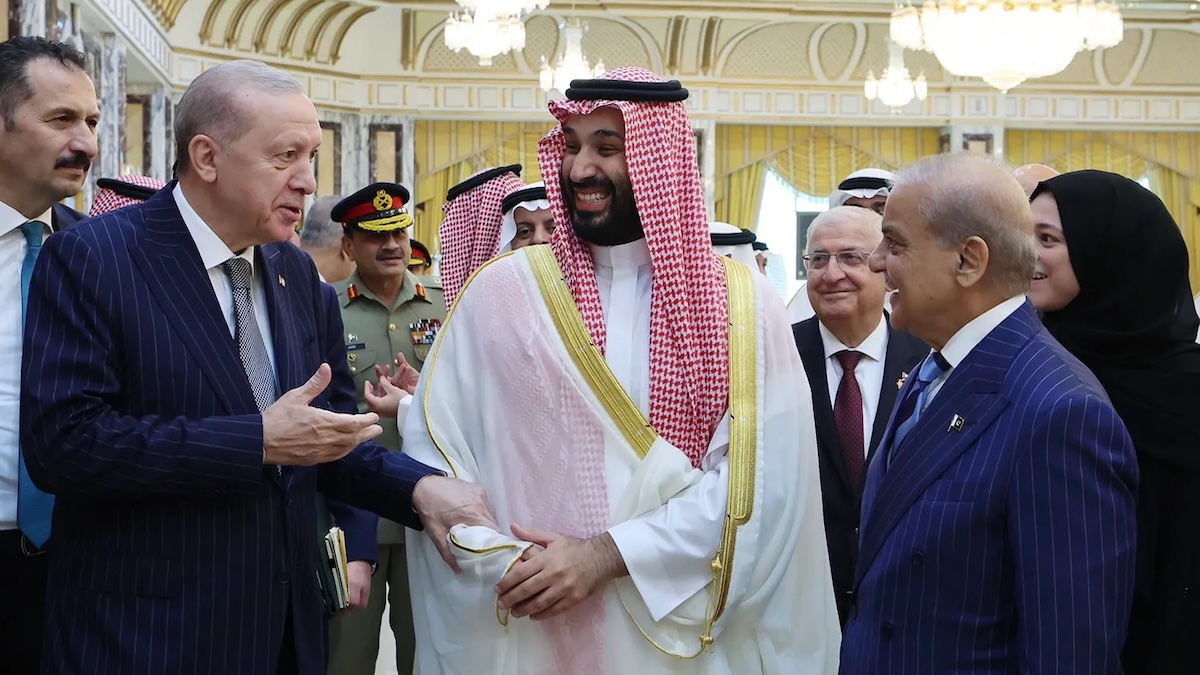
Multiple regional leaders condemned Houthi missile and drone strikes on Saudi Arabia, warning that the escalating attacks threaten regional stability and critical global shipping routes. India, Kuwait, Egypt, Qatar, and the Muslim World League all denounced the strikes, which injured more than 73 people and temporarily disrupted an oil refinery in Jazan. Pakistan's Prime Minister Shehbaz Sharif reaffirmed solidarity with Saudi Arabia and discussed diplomatic efforts to reduce tensions with Crown Prince Mohammed bin Salman.
The attacks targeted Saudi cities including Khamis Mushait, Abha, and Taif, and struck at oil infrastructure. Qatar warned that disruptions to shipping through the Bab-el-Mandeb or Strait of Hormuz could have catastrophic global consequences, given their importance to world trade and energy supplies worth approximately $1 trillion in annual goods transit.
India Raises Alarm Over Freedom of Navigation
India's External Affairs Ministry condemned the Houthi attacks as threats to regional stability and freedom of navigation through the Bab-el-Mandeb strait. India's spokesperson Randhir Jaiswal stated: "Such attacks undermine regional stability and threaten freedom of navigation through the Bab-el-Mandeb. These are obviously unacceptable to us." India's External Affairs Minister S. Jaishankar discussed the issue with Saudi Foreign Minister Prince Faisal bin Farhan Al Saud on the sidelines of the BRICS Summit in New Delhi on September 13.
Kuwait and Egypt Condemn Attacks on Civilian Areas
Kuwait identified the strikes as targeting the Saudi cities of Khamis Mushait, Abha, and Taif, describing them as violations of Saudi sovereignty and international humanitarian law. The attacks with missiles and drones injured civilians and damaged homes and vehicles across the region. Egypt also condemned the strikes, joining regional calls for accountability and de-escalation of the conflict.
Pakistan Pledges Support and Calls for Restraint
Pakistan's Prime Minister Shehbaz Sharif reaffirmed Islamabad's full solidarity with Saudi Arabia and condemned attacks on its sovereignty and oil infrastructure. Sharif praised Saudi Arabia's restraint and discussed diplomatic efforts to reduce regional escalation. Pakistan also supported Iraqi government efforts to prevent Iraqi territory from being used as a launch point for attacks on Saudi Arabia and neighboring countries.
Global Trade Threatened by Shipping Route Disruptions
Qatar warned that disruptions to the Bab-el-Mandeb or Strait of Hormuz could have catastrophic global consequences for international trade and energy supplies. Approximately $1 trillion in annual goods transit through the Red Sea corridor, making these routes critical to global commerce. India's Ministry of External Affairs assured that despite the escalating tensions, India's domestic crude oil imports and energy supplies remain unaffected so far.
Sentiment
Mostly NegativeNEGATIVENEUTRALPOSITIVE
Publishers
42
Articles
36
Reach
78
A
AnonymousAuthor


