Failed Spacecraft Rescue
NASA's Swift Telescope Faces Imminent Atmospheric Reentry After Failed Rescue Mission
Anonymous
Key Points
1
Solar activity has hastened Swift’s descent: activity around the 2024 solar maximum heated and expanded the upper atmosphere, increasing drag at the observatory’s orbital altitude.
2
NASA expects normal operations to become increasingly difficult once Swift falls below about 185 miles (300 kilometers), a threshold it could reach in early to mid-October 2026; increasing drag will make precise pointing impractical.
3
NASA awarded Katalyst the $30 million rescue contract in September 2025, giving the company about nine months to build, test and launch Link—an unusually compressed timeline for the mission.
4
NASA Astrophysics Division director Shawn Domagal-Goldman described the rescue attempt as “a high-risk, high-reward mission” and said it provided valuable data for future in-space servicing efforts despite failing to save Swift.
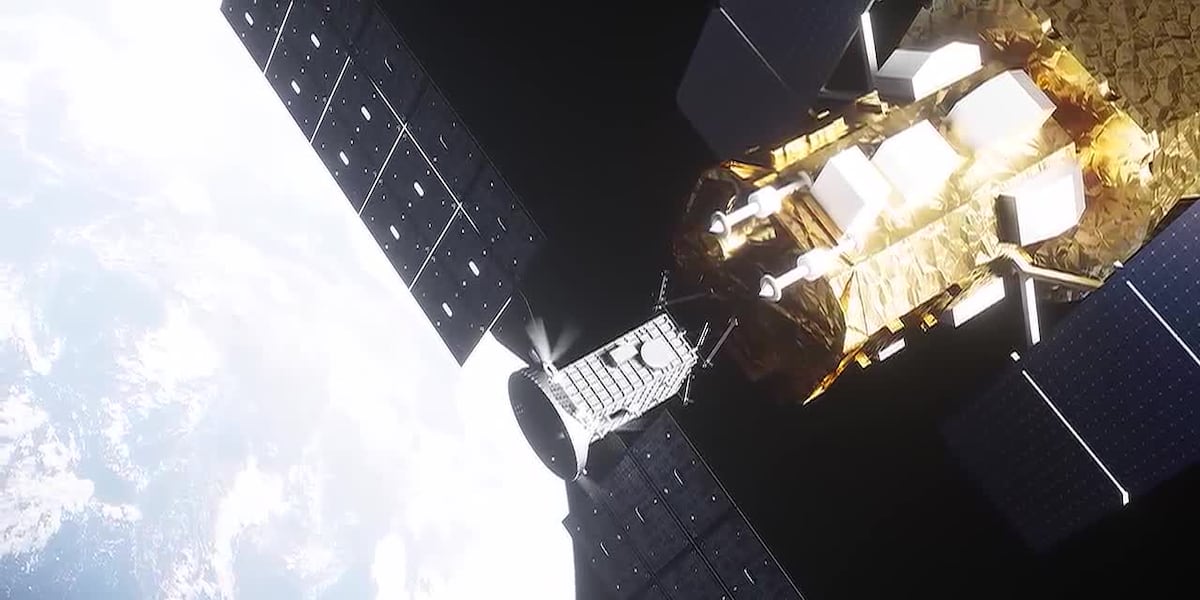
NASA's 22-year-old Swift Observatory is losing its battle against Earth's gravity. The 3,200-pound telescope is expected to reenter the atmosphere in October or November 2026 after a $30 million rescue mission failed to save it WBKO. A spacecraft built by Katalyst Space Technologies approached Swift and tested its robotic arms, but control problems and fuel shortages prevented it from capturing or boosting the aging observatory back to a stable orbit WTOC.
Most of Swift will burn up during reentry. Any debris that survives is unlikely to hit populated areas, as it would probably splash down in the ocean or land in an unpopulated region WBKO. For now, NASA is using Swift's remaining time to collect as much science data as possible before atmospheric drag makes normal observations impossible WTOC.
Solar Activity Accelerated the Telescope's Fall
The sun's activity pushed Swift down faster than expected. Around 2024's solar maximum, intense sun activity heated Earth's upper atmosphere, making it denser and thicker 13abc. This extra density created more drag on Swift's orbit, pulling it lower much quicker than NASA had predicted.
Swift will likely stop working as a functional telescope once it drops below 185 miles (300 kilometers) in October 2026 WBKO. Below that altitude, atmospheric drag will make it impossible to point the telescope accurately at targets. The constant fight against gravity will consume too much fuel just to maintain orientation.
Katalyst's Rescue Effort Hit Technical Obstacles
Katalyst Space Technologies took on an extremely tight deadline. NASA awarded the company $30 million in September 2025 to build, test, and launch a rescue spacecraft called Link—all in just nine months Western Mass News. This compressed schedule is unusually fast for space missions.
The Link spacecraft reached Swift and proved its robotic capture arms worked. But control-system glitches drained too much fuel WTOC. Without enough fuel left for a final push, Link couldn't grab Swift or boost it to a higher orbit. Shawn Domagal-Goldman, NASA's Astrophysics Division director, called it "a high-risk, high-reward mission" that still provided valuable lessons for future rescue attempts Western Mass News.
Swift's Final Mission: Collecting Data Before the End
Rather than give up, NASA restarted Swift's science operations WLBT. For the next several months, the telescope will observe asteroids, comets, and gamma-ray bursts—the targets it has tracked for 22 years. Every observation counts before drag makes pointing the telescope too difficult to manage.
The Swift Observatory has been one of NASA's most productive tools. Losing it is sad for scientists, but the controlled fall and final data collection offer a respectful end to two decades of discoveries. Most of the telescope will vaporize on reentry, with any pieces that remain likely falling harmlessly into the ocean or empty land WBKO.
Sentiment
Mostly NegativeNEGATIVENEUTRALPOSITIVE
Publishers
13
Articles
83
Reach
96
A
AnonymousAuthor


