Escalating Ebola Crisis
DRC Faces Largest Ebola Outbreak Amid Severe Funding Shortfalls and Conflict
Anonymous
Key Points
1
The IOM says it has supported more than 33 million health screenings across the region, providing information and referrals to millions of people. Its response uses population-mobility mapping and flow monitoring to identify high-risk corridors, border communities, official points of entry and informal crossings.
2
IOM Director General Amy Pope said, “Close cooperation across borders is vital to containing the disease,” while warning that the organization has received less than one-third of the funding required for its response.
3
The outbreak is described as the DRC’s 17th Ebola outbreak, and the Africa Centres for Disease Control and Prevention and UNAIDS are working with national authorities to verify reports of unusually high deaths among people living with HIV in Ituri.
4
The DRC government has made healthcare free during the Ebola crisis, while community organizations in affected areas such as Bunia are referring people with Ebola symptoms to treatment centers alongside their efforts to preserve HIV care.
5
CARE said the detection of Ebola in South Ubangi, more than 1,000 kilometres from the outbreak’s starting point in Ituri, demonstrates how widely the virus has spread and why community engagement, surveillance and referral systems must be strengthened.
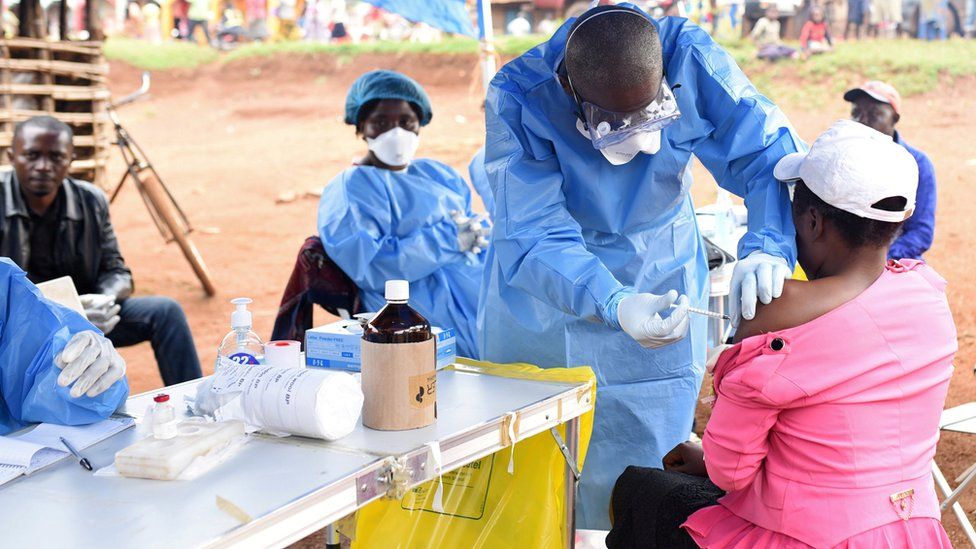
The Democratic Republic of the Congo faces its largest Ebola outbreak ever, with more than 7,400 confirmed cases and over 3,600 deaths as of mid-September Mirage News. The virus has spread rapidly across multiple provinces, reaching South Ubangi—more than 1,000 kilometers from where the outbreak started in Ituri. Conflict, mass displacement, and weak health systems are making it nearly impossible to stop the disease.
The International Organization for Migration has screened over 33 million people and is monitoring high-risk borders and river crossings Mirage News. But the organization has received less than one-third of the funding it needs. Meanwhile, Ebola is disrupting HIV treatment for thousands of patients, forcing community groups to deliver medicine and trace people who miss appointments Mirage News.
How the Virus Spread Across the Region
The outbreak began in Ituri province but has now jumped to at least five other regions, including South Ubangi. Overcrowded displacement camps, broken water systems, and ongoing violence have created perfect conditions for the virus to spread. Families fleeing conflict move constantly, taking Ebola with them across borders and into new communities.
US and International Community Mobilize Funding
The United States announced an additional $267 million in funding to fight the outbreak 24 News HD, bringing its total commitment to $886 million SG Head Topics. This major injection comes as the crisis overwhelms the DRC's healthcare system. The money will support screening, treatment centers, and disease tracking across the region.
Climate Disasters Could Make Things Worse
El Niño-related floods and droughts are expected to hit the DRC soon, threatening to worsen the crisis Newsy Today. Rising waters will contaminate drinking supplies and displace more families into camps where disease spreads easily. Health services already damaged by conflict will struggle further. Women and girls face the highest risk of infection and violence during these disasters.
Communities Step In to Save HIV Patients
The DRC government made all healthcare free during the crisis, but Ebola has scared patients away from clinics. In cities like Bunia, community workers are now chasing down people with HIV who skipped appointments and delivering three-month medicine supplies to their homes. Without these efforts, thousands could die from HIV complications while the world focuses on Ebola.
Sentiment
Mostly NegativeNEGATIVENEUTRALPOSITIVE
Publishers
17
Articles
19
Reach
36
A
AnonymousAuthor


