Asteroid Bennu Birthplace Revealed
NASA Asteroid Samples Suggest Bennu Formed Near Early Solar System Water-Ice Line
Anonymous
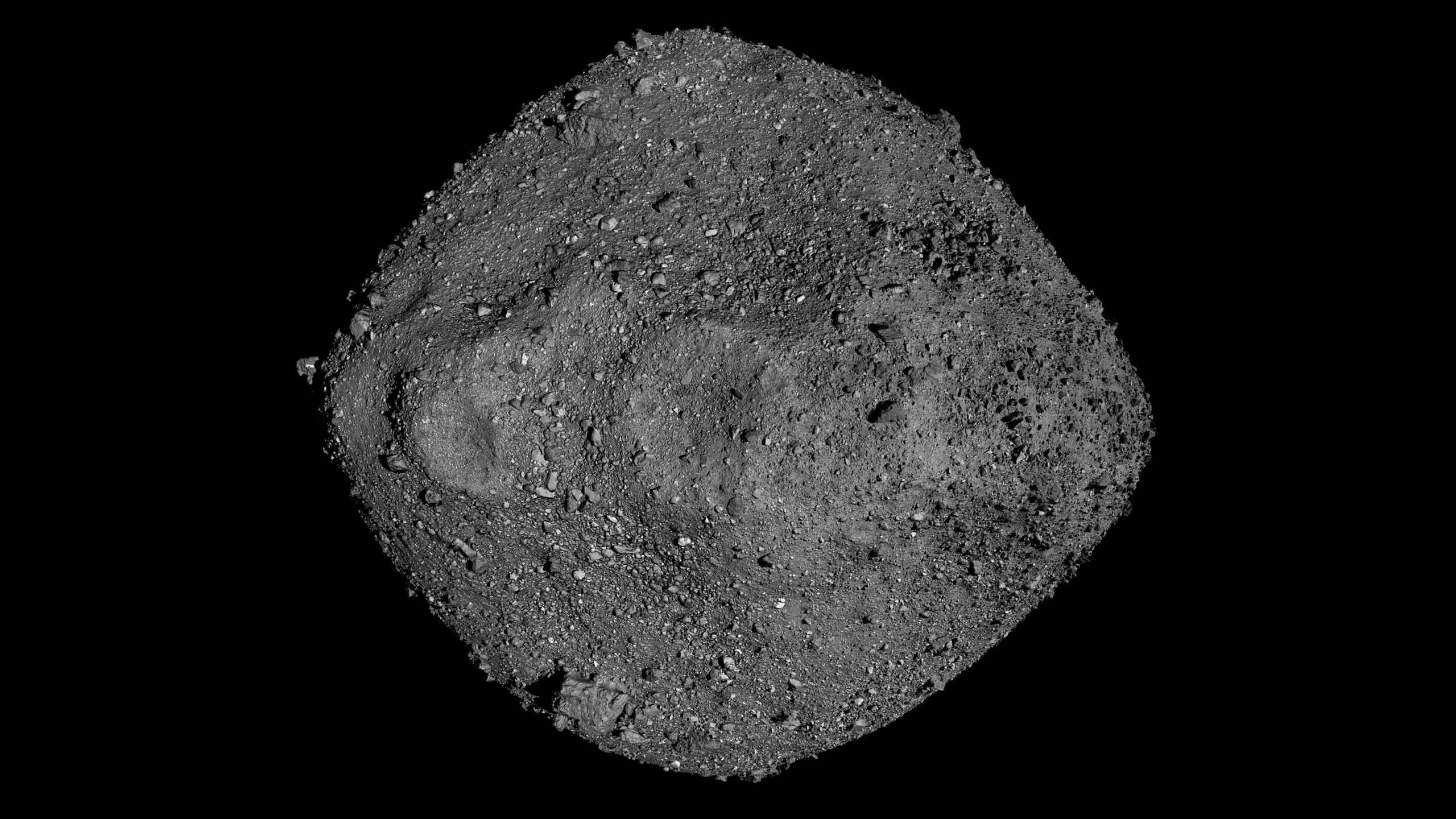
Analyses of samples returned from asteroid Bennu by NASA’s OSIRIS-REx mission suggest its parent body formed near the early solar system’s water-ice line, a transition zone between hotter inner regions and colder outer reaches, rather than solely in the distant outer solar system as scientists had often assumed. Researchers at ETH Zurich examined iron, titanium and chromium isotopes and found a well-mixed chemical signature that links Bennu to asteroid Ryugu and rare CI chondrites, pointing to a shared reservoir of primordial dust. The findings offer clues to how material from different parts of the young solar system mixed and provide a rare glimpse of the ingredients from which the planets formed.
Key Points
1
The analysis examined five distinct portions of Bennu material. Iron and titanium isotopes were evenly distributed in the grains, and Bennu’s iron-isotope composition overlaps more closely with inner-solar-system material than that of many other carbon-rich meteorites.
2
The OSIRIS-REx capsule returned about 120 grams of Bennu material to Earth in September 2023; ETH Zurich’s Maria Schönbächler received half a gram for her team’s analysis.
3
At Bennu’s proposed birthplace, the young Jupiter may have acted as a “cosmic gatekeeper,” stirring and mixing material from the inner and outer solar system, according to the account of the findings.
4
Bennu orbits the Sun every 1.2 years and comes within roughly 300,000 kilometres of Earth every six years—a close approach that helped make it an accessible target for a sample-return mission.
Sentiment
Mostly PositiveNEGATIVENEUTRALPOSITIVE
Publishers
6
Articles
9
Reach
15
A
AnonymousAuthor


